
Other Power Tools
Angle grinders, SDS breakers, nail guns, routers, plate compactors, and more - the specialist power tools you will need at different stages of a UK extension project.
Beyond drills and saws, an extension will introduce you to a range of specialist power tools. Some you will hire once and never need again. Others you will wonder how you ever managed without.
An angle grinder trims a steel lintel that arrives too long and grinds back old mortar. An SDS breaker breaks out concrete slabs. A nail gun makes short work of nailing off roof and floor timbers. A plate compactor consolidates the sub-base before your slab goes down. A router cuts worktop joints, hinge recesses and edge profiles.
Each guide explains what the tool does, when to hire and when to buy, what to look for, and the technique and safety rules that prevent expensive mistakes and injuries.
Where to start
Read the angle grinder guide first, because it is the tool most likely to turn up on your site and the one most likely to hurt someone. Then read SDS breaker and plate compactor before groundwork starts: both are usually hired, both carry vibration exposure limits, and compaction is something building control cares about. If anyone is cutting indoors, the dust extractor guide explains the dust control rules your builder has to follow.
The guides, grouped by job
Breaking out and groundwork. The SDS breaker for slabs, the plate compactor for sub-base, and the concrete mixer, including when a ready-mix lorry makes more sense.
Cutting and fixing. The angle grinder for steel, brick and mortar, and the nail gun for first and second fix timber.
Shaping timber. The router for worktops and hinges, the electric planer for trimming doors, the hand plane for the final pass, and the belt sander for heavy stock removal.
Dust control. The M-class dust extractor that connects to the tool, and the wet-dry vacuum for general clean-up, with the difference between them explained.
Stripping paint. The heat gun and the infrared paint stripper, which is the safer choice where old paint may contain lead.
Where these fit in the build
Breakers, mixers and compactors belong to excavation and muck-away, foundations and footings and the ground floor oversite. The grinder comes out for steels and lintels, the nail gun for the roof structure, and the router and planer at kitchen installation.
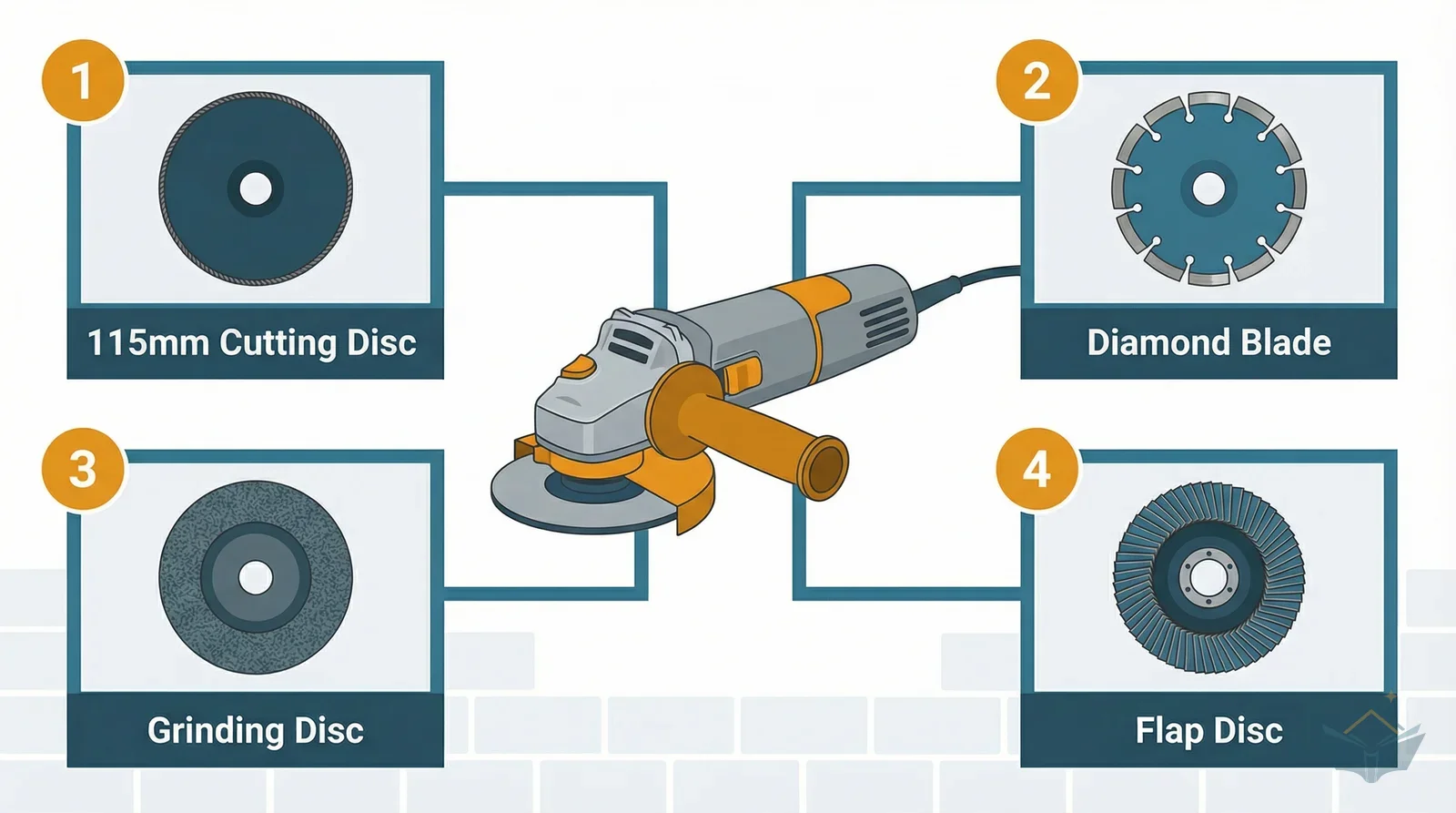
Angle Grinders: The Definitive Guide for UK Extension and Renovation Work
Everything a homeowner needs to know about angle grinders: sizes, disc types, safe technique, what to buy at each budget tier, and when to hire instead.
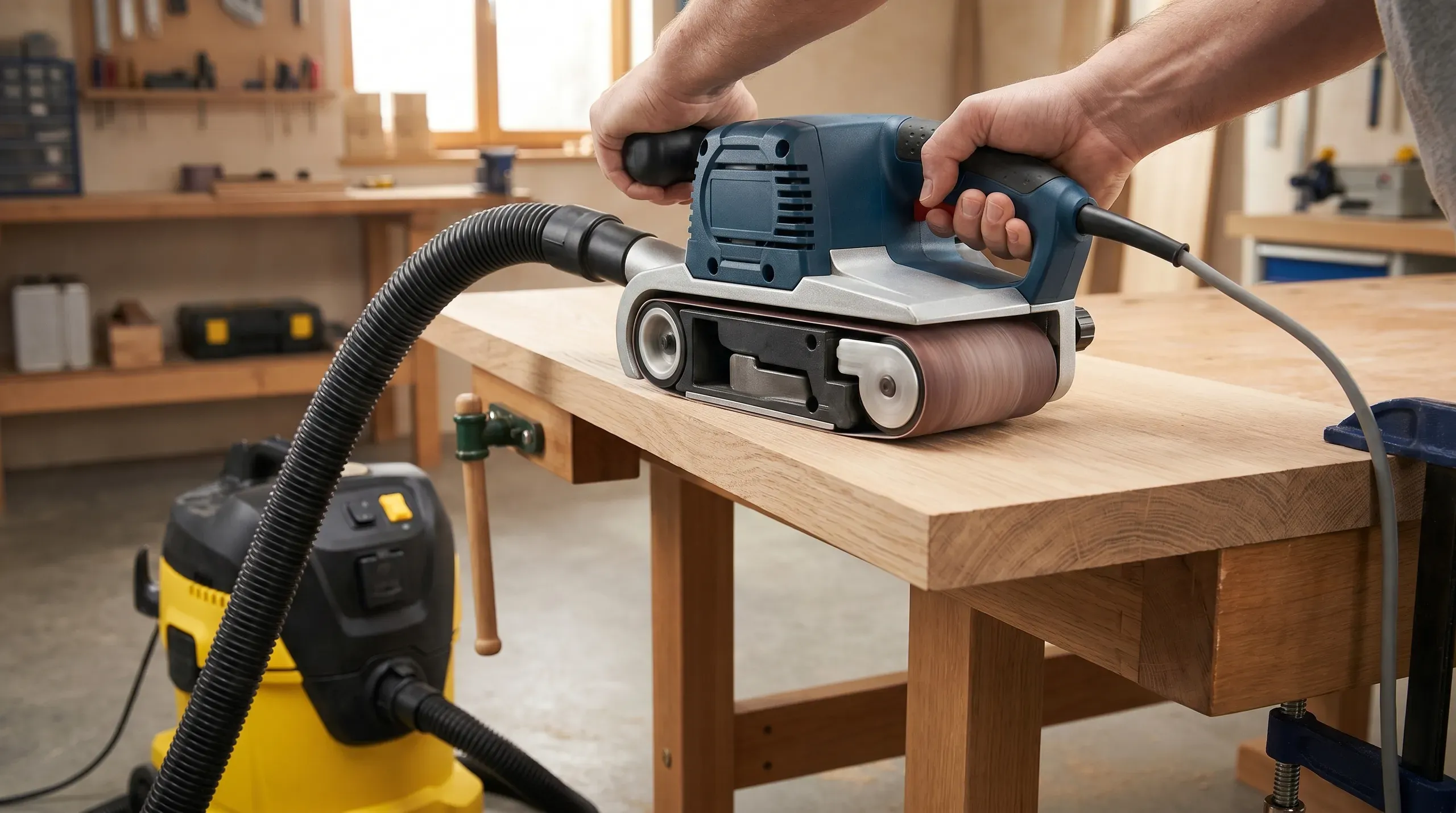
Belt Sander: Aggressive Stock Removal, Grit Sequence, and When Not to Use One
How to use a belt sander after planing, choose grits 60 to 120, set up dust extraction for COSHH, and know when an orbital sander is the safer choice. UK prices included.
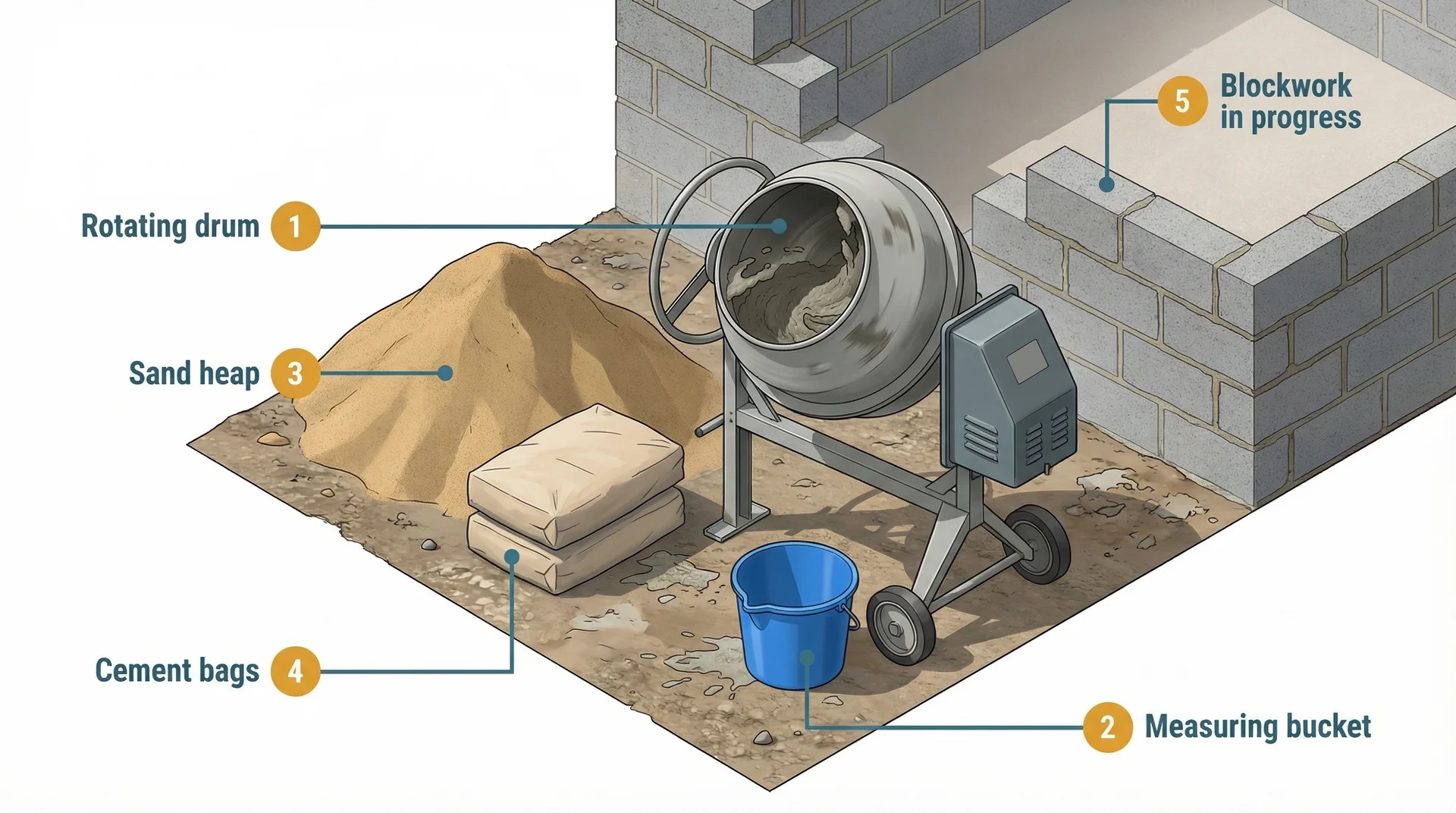
Concrete Mixer: The Complete Guide for UK Extension and Renovation Work
Everything you need to know about hiring and using a concrete mixer on site: mix ratios, loading order, cleaning, hire vs buy, and when to call a ready-mix lorry instead.
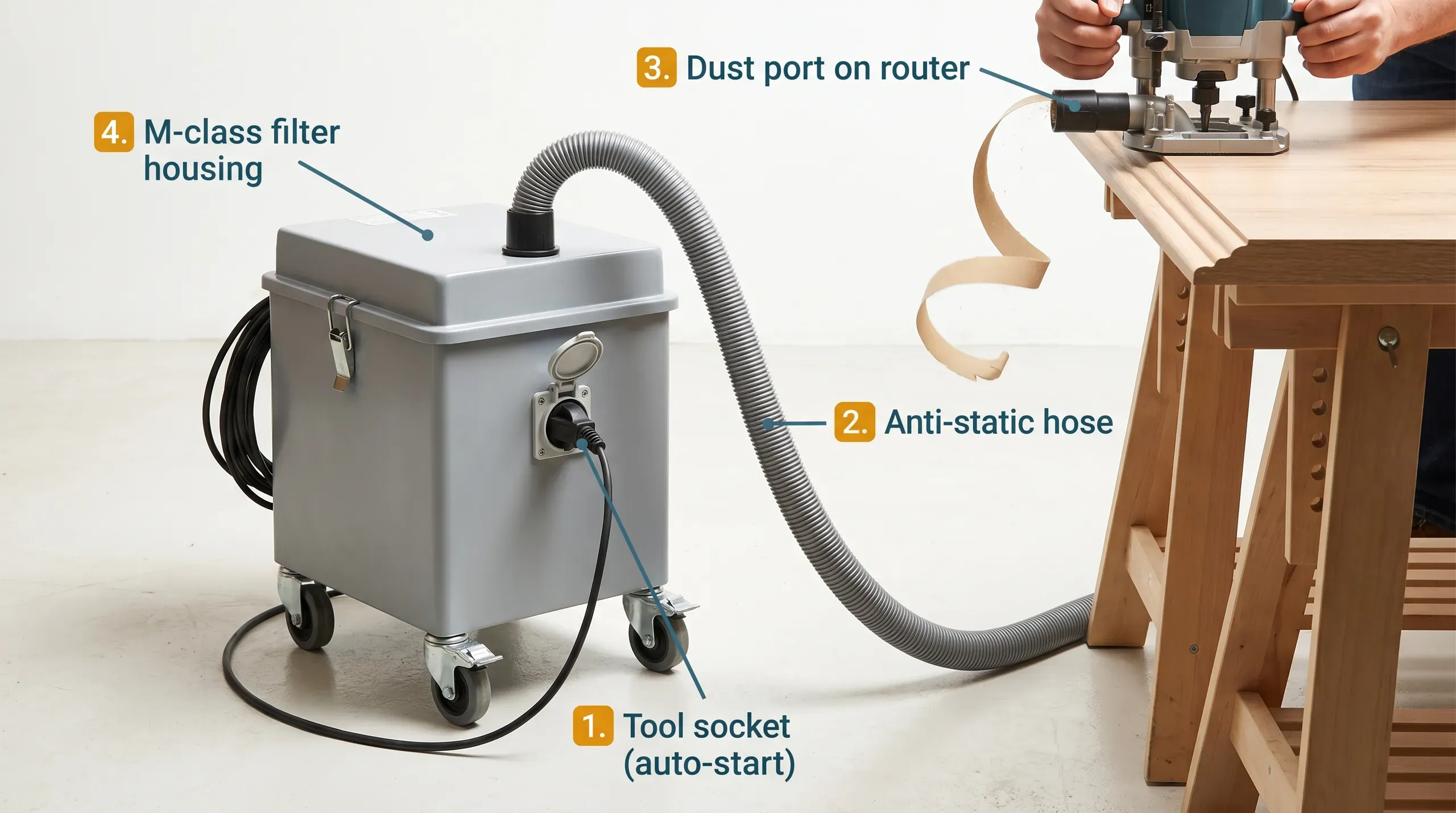
M-Class Dust Extractor: Tool-Connected Fine Dust Capture for Indoor Work
What an M-class dust extractor is, why it's a legal requirement when machining MDF or hardwood indoors, and how auto-clean and auto-start change the game on a renovation.
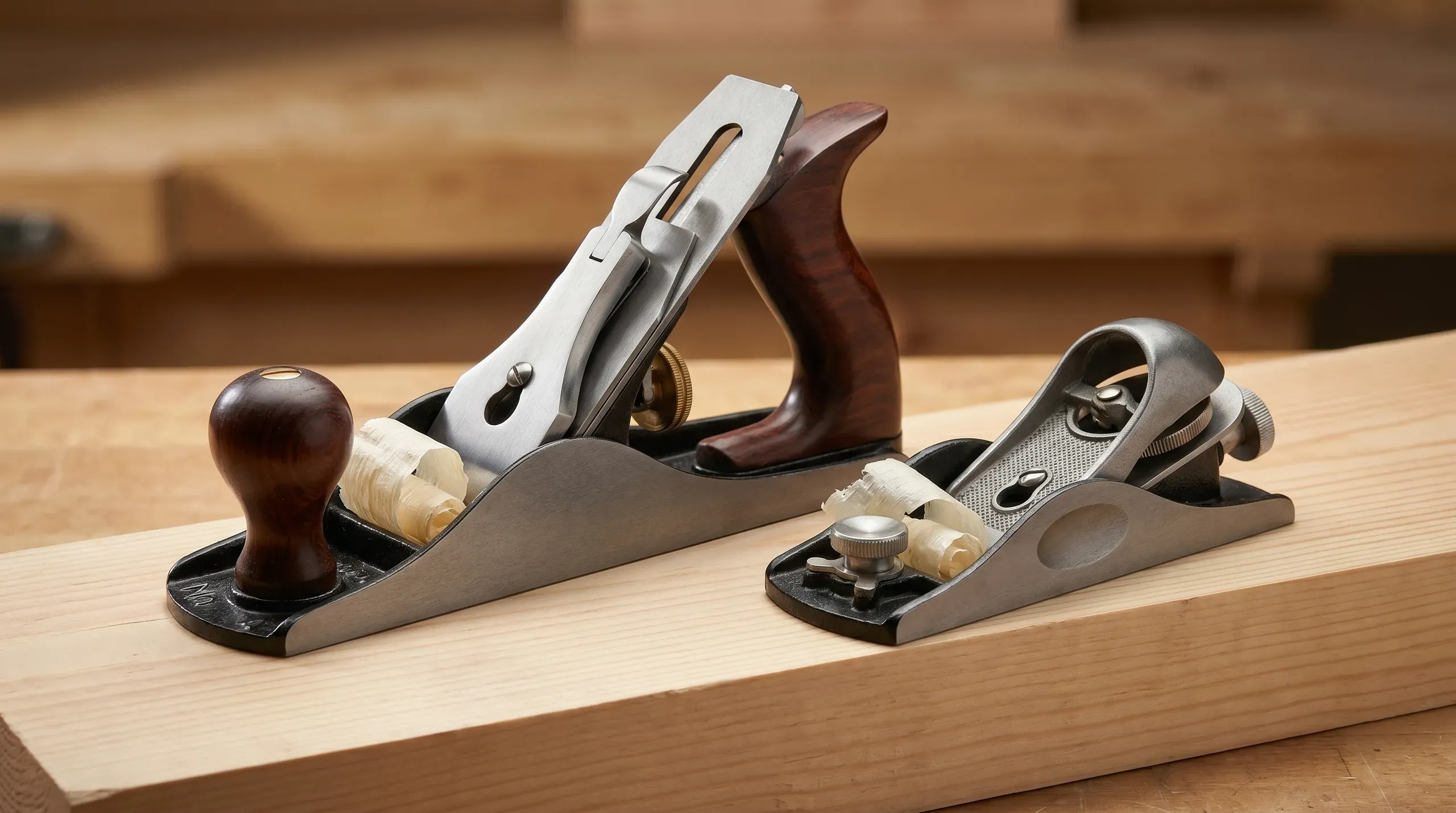
Hand Plane: Block, Smoothing, and Jack Plane Guide for UK Site Work
How to choose, set up, sharpen, and use a hand plane for door fitting, end grain trimming, and final-pass adjustments. UK prices, brand tiering, and the complement to an electric planer.
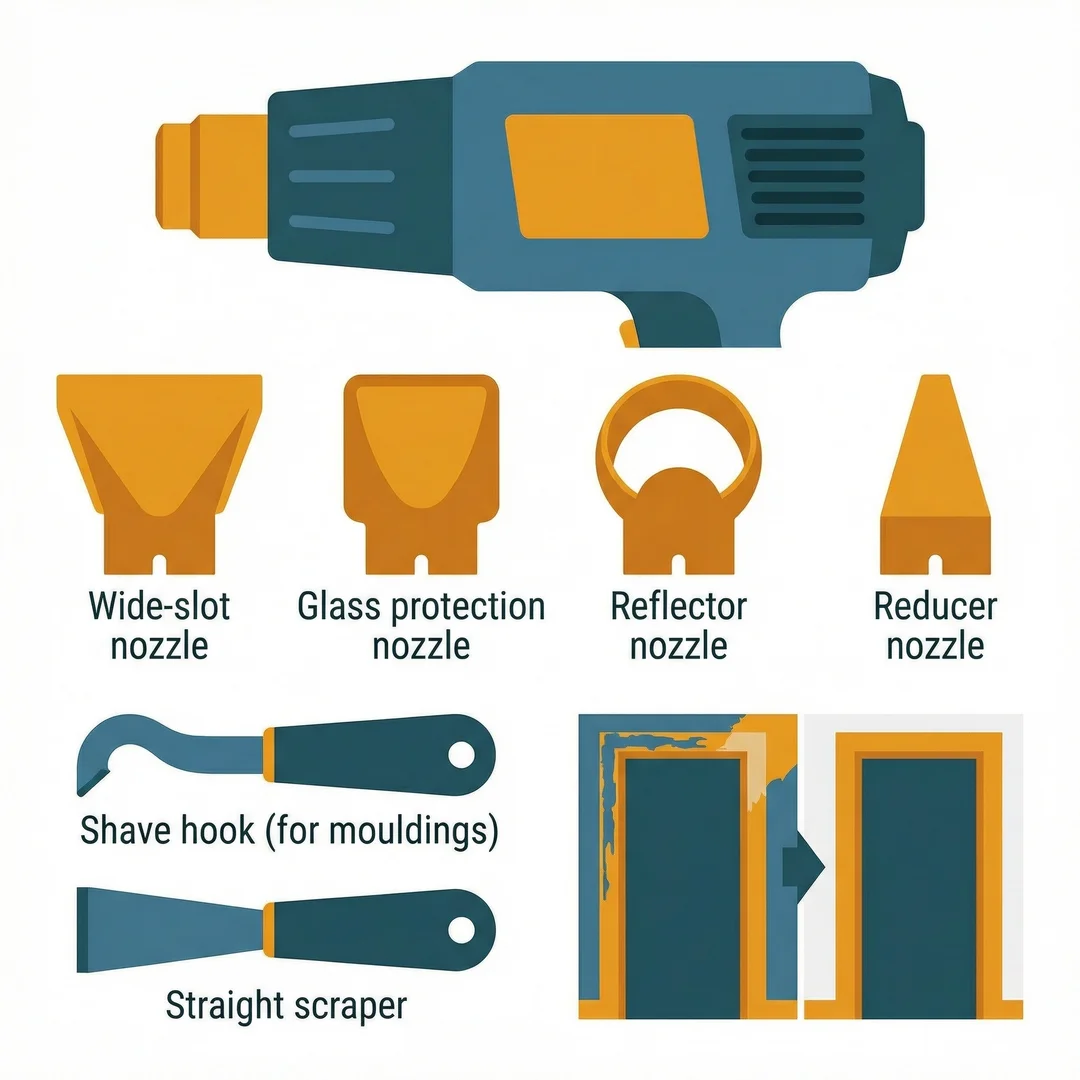
Heat Guns: The Complete Guide for UK Home Renovation
Everything a homeowner needs to know about heat guns: temperature settings, nozzle types, paint stripping technique, the lead paint rules, pipe bending, and what to buy.
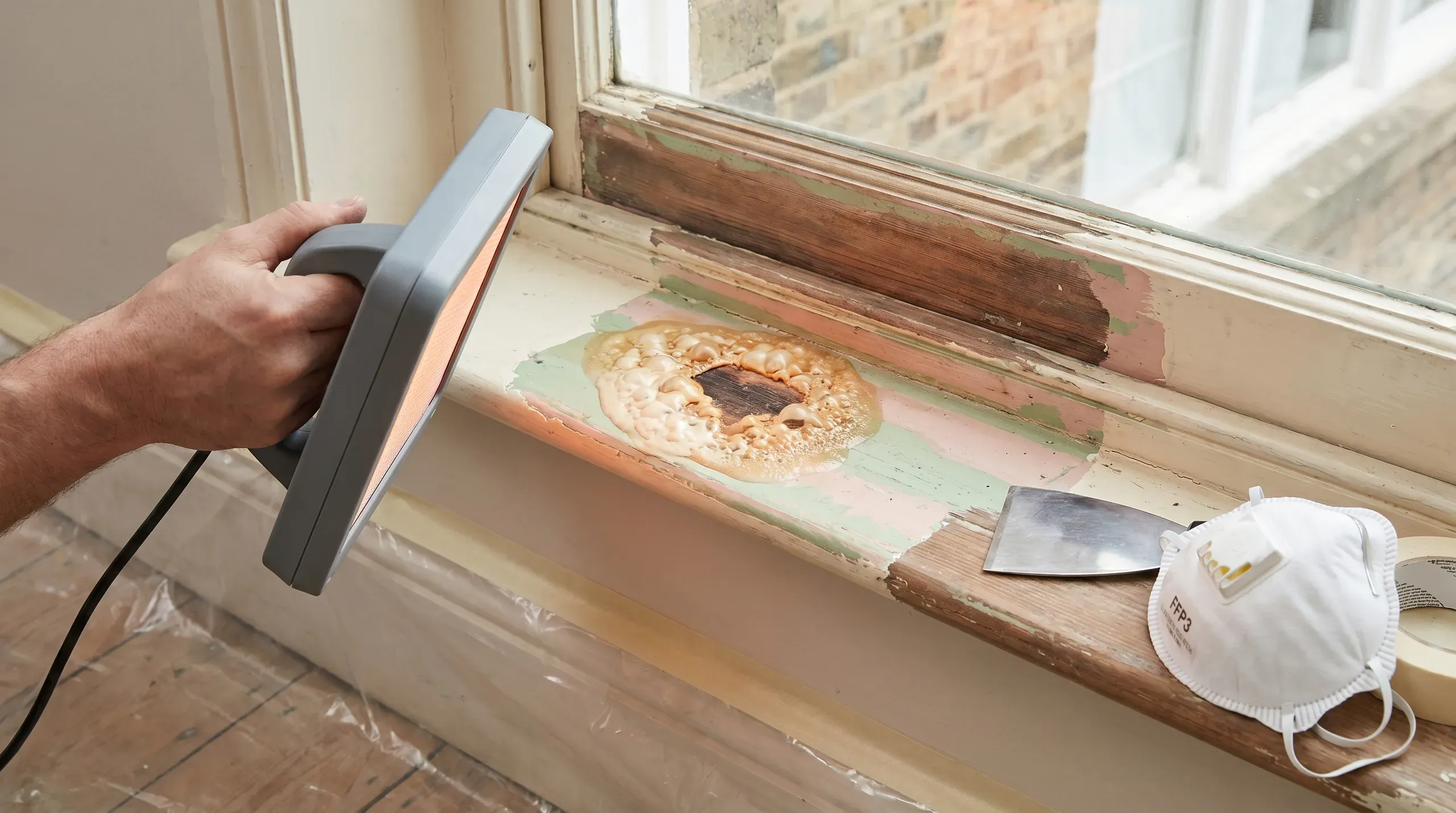
Infrared Paint Stripper: The Lead-Safe Way to Strip Paint from Pre-1970 Properties
Why infrared beats a heat gun on lead paint, how to use one without scorching timber, what to buy (Spengar vs Speedheater Cobra), and the CLAW 2002 rules for lead-paint disposal.
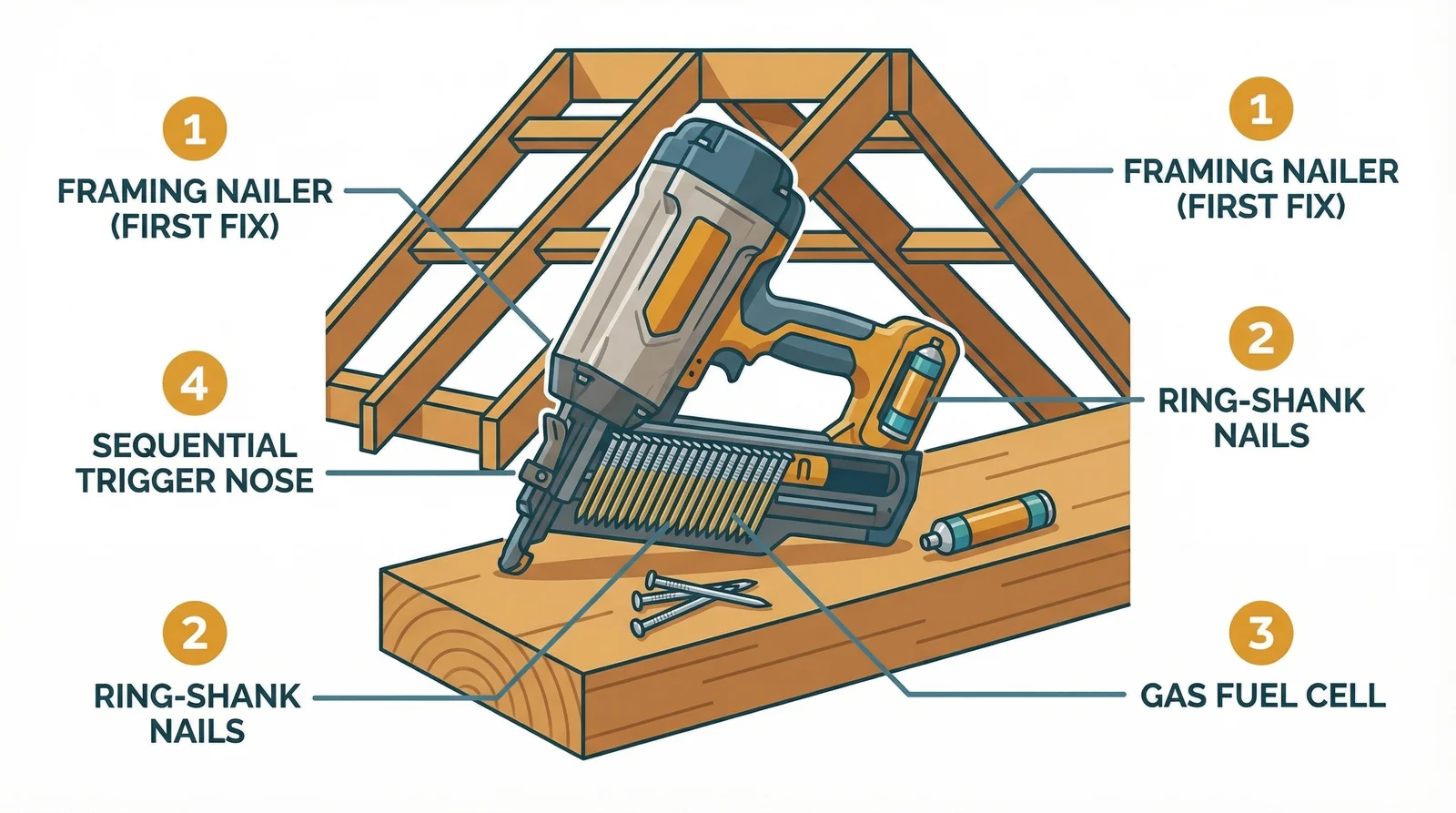
Nail Guns: First Fix, Second Fix, Gas vs Pneumatic - The Complete UK Guide
Gas or pneumatic? First fix or second fix? Ring-shank or brad? Everything a homeowner needs to choose, use, and buy the right nail gun for extension work.
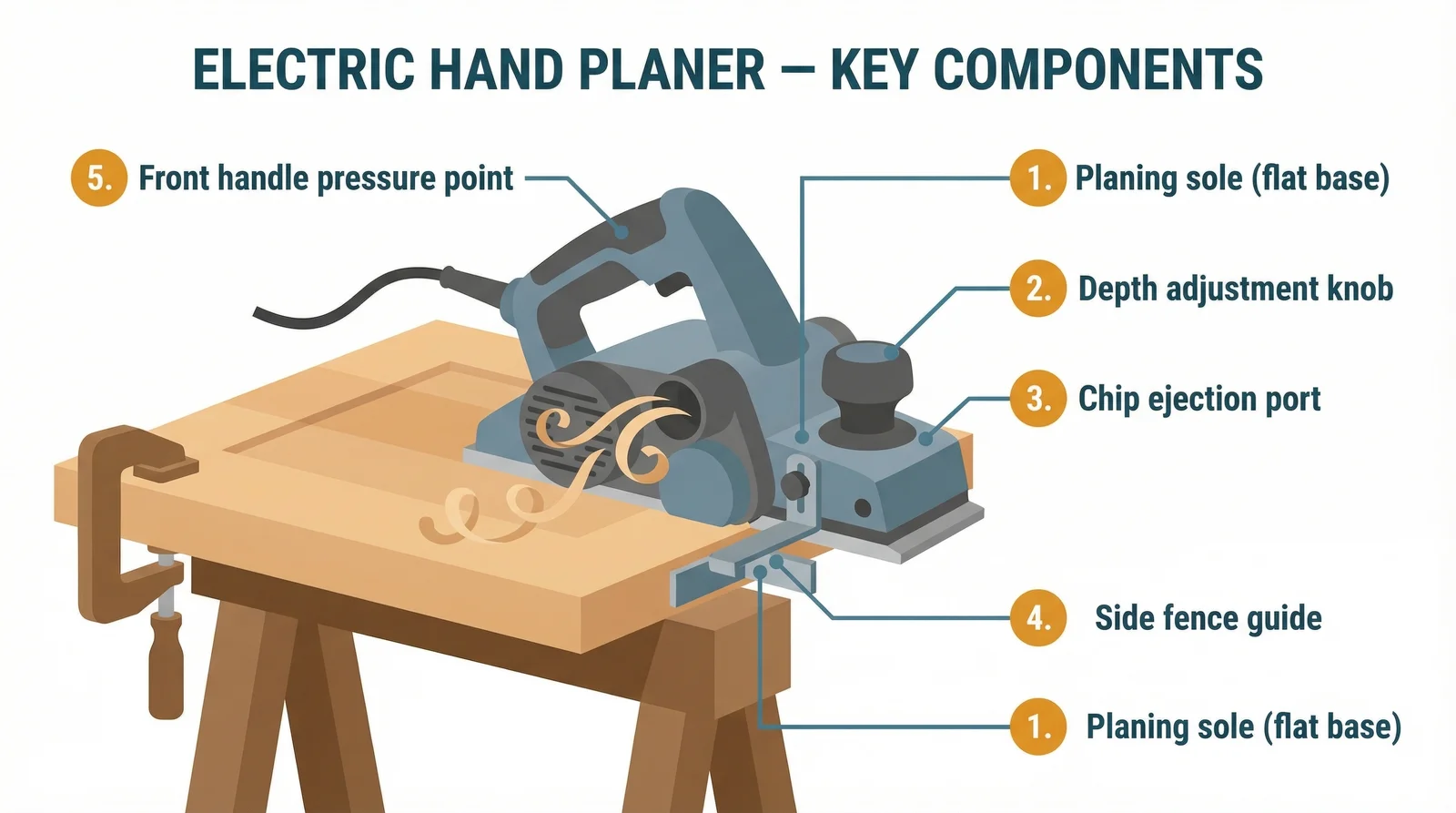
Electric Planer: Door Trimming, Timber Levelling, and Blade Guide
How to trim a door, set depth correctly, choose blades, and know when to use a planer vs a circular saw. Covers budget to pro models with UK prices.
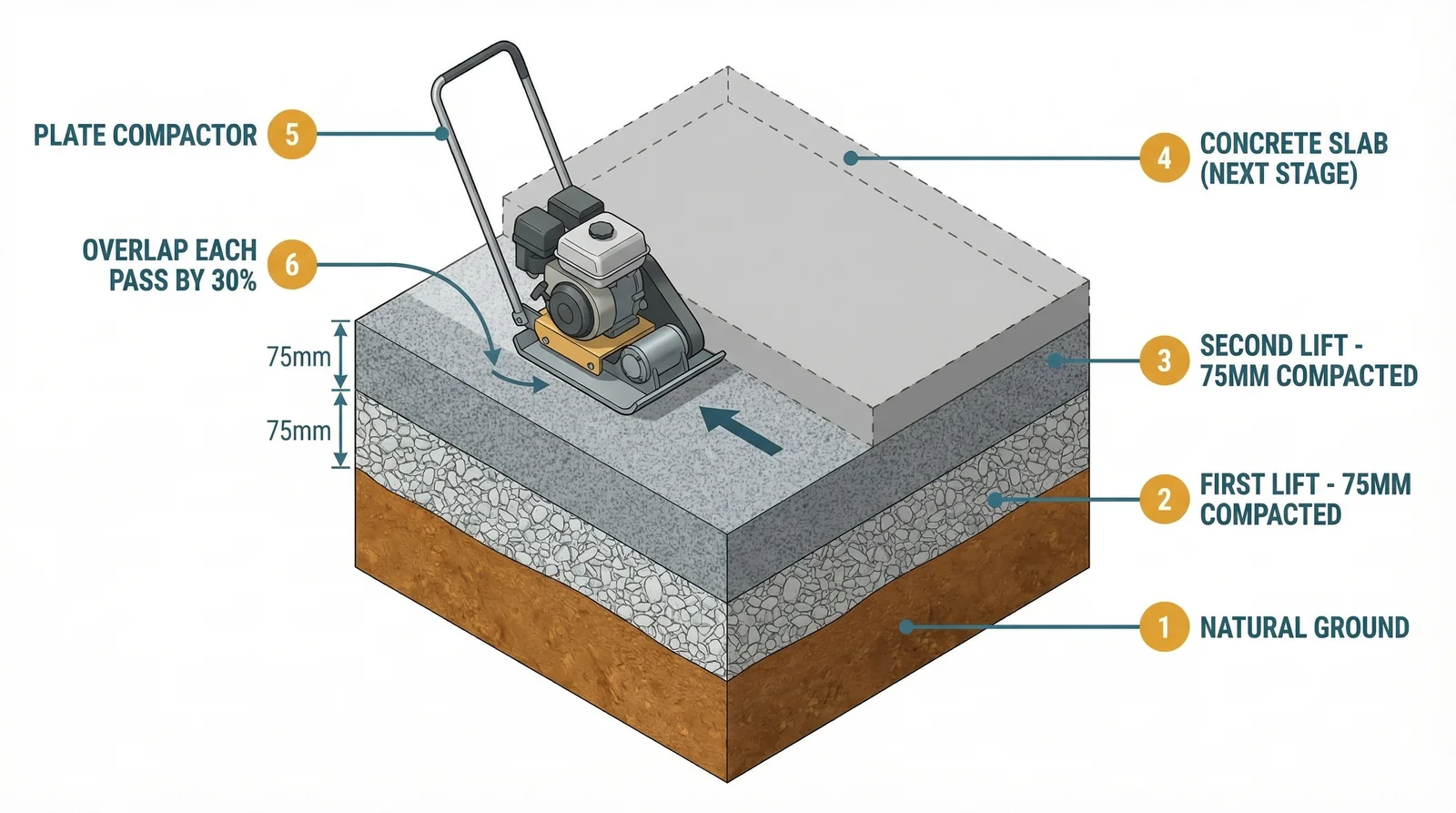
Plate Compactor (Wacker Plate): The Complete Guide for UK Extension Work
Everything you need to know about hiring and using a wacker plate: layer thickness limits, passes, technique, HAVS risk, and when the building inspector cares.
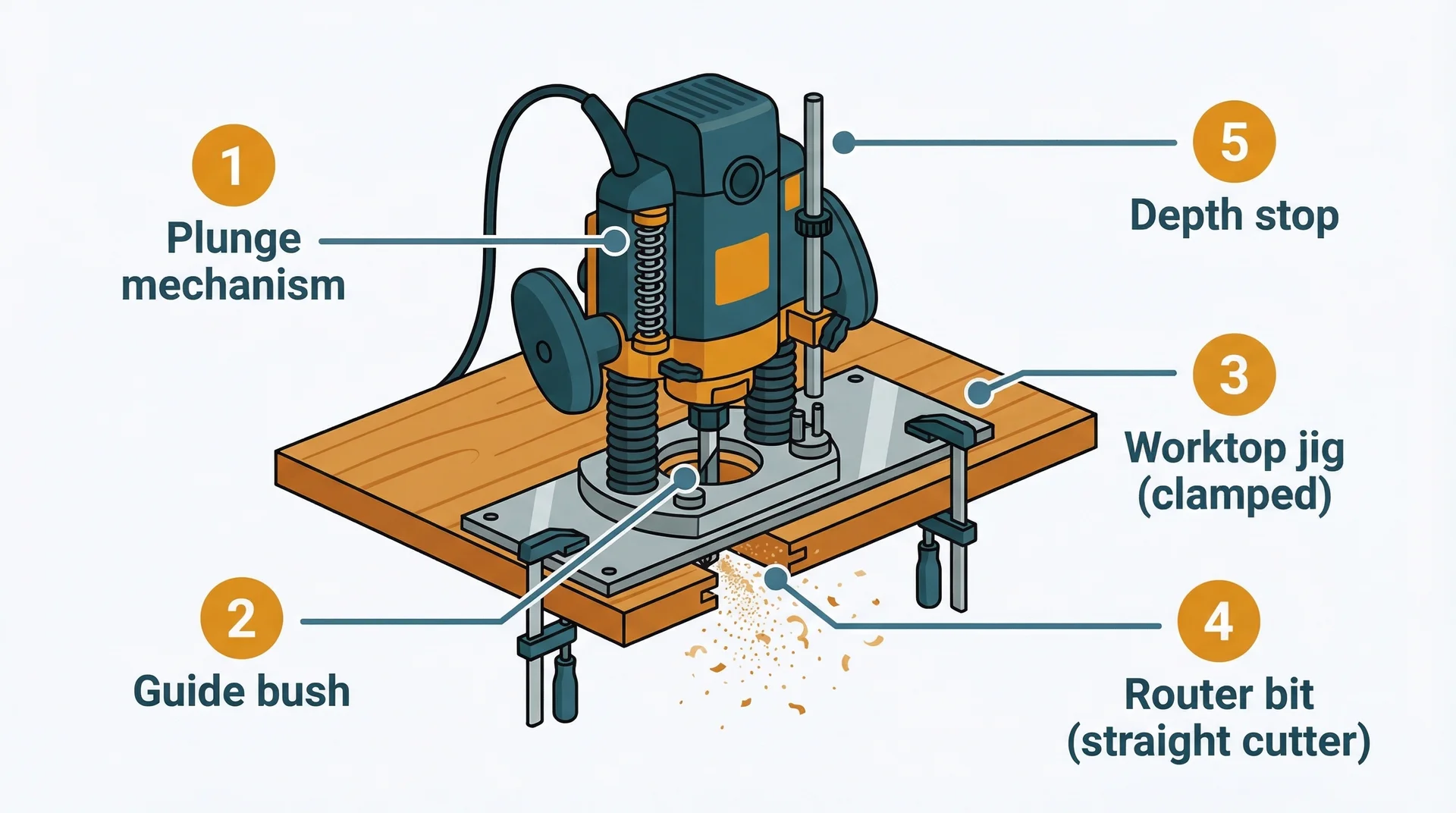
Router: Hinge Recessing, Worktop Joining, and Edge Profiling
How to choose and use a router for extension work: hinge recesses, worktop joints, edge profiles. Covers collet sizes, bit types, jigs, and UK prices from £40.
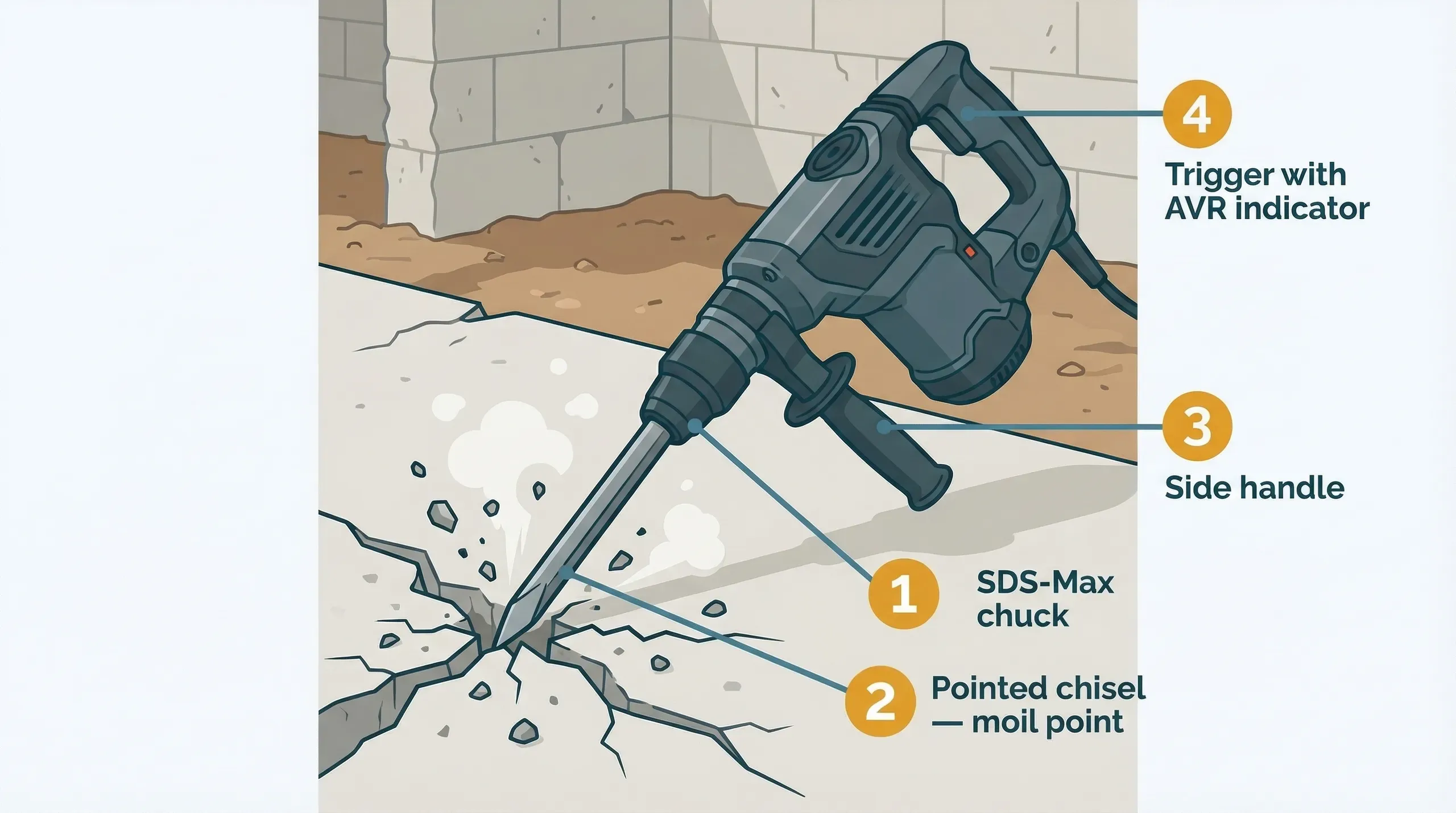
SDS Breaker: The Complete Guide for UK Extension and Renovation Work
Everything you need to know about SDS breakers (kango hammers): hire vs buy, joule ratings for concrete slabs, chisel types, safe technique, and HAVS limits.
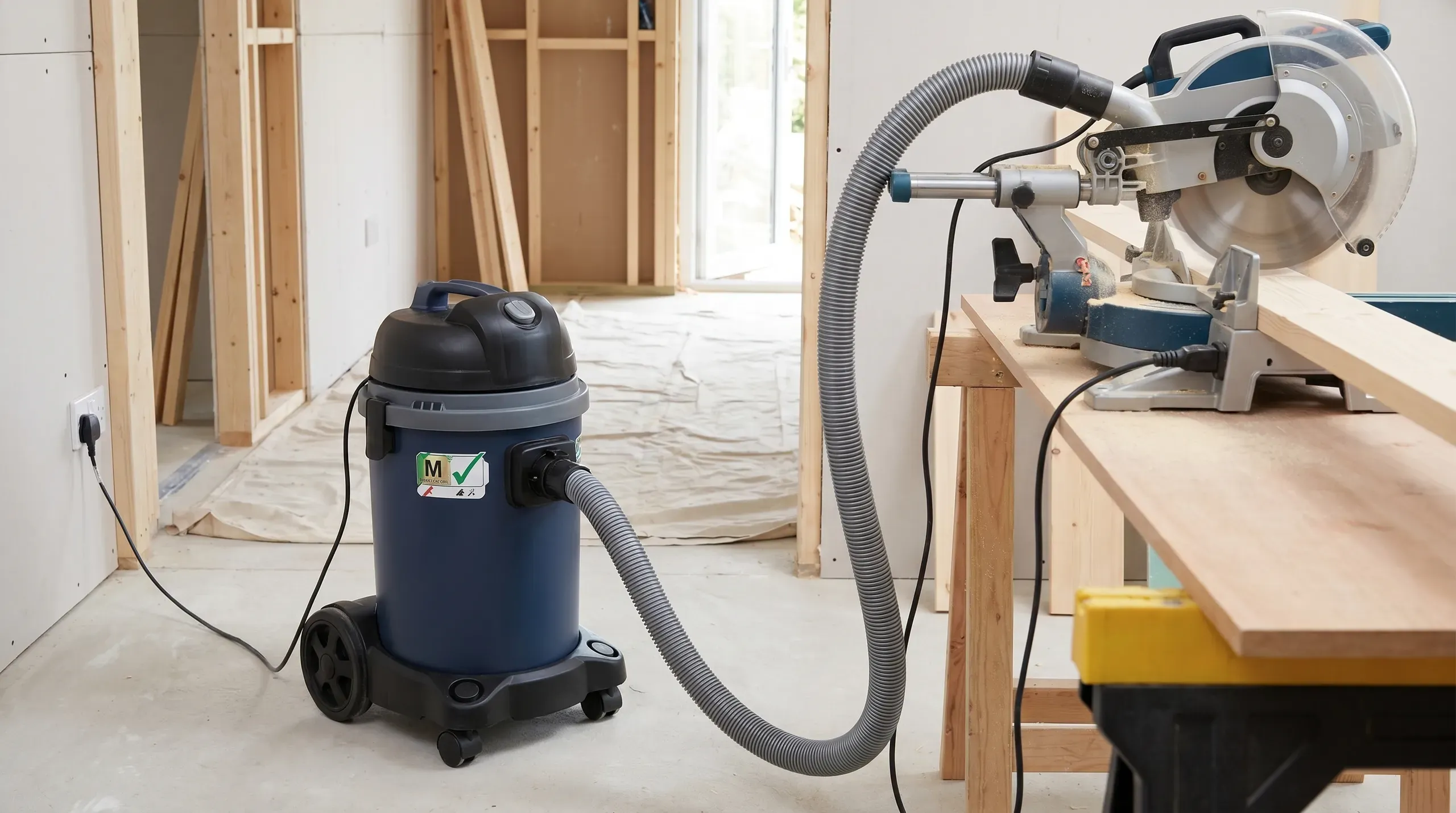
Wet-Dry Vacuum: Site Cleanup, Flood Recovery, and M-Class Compliance
Why a homeowner needs an M-class wet-dry vacuum on a UK build, how it differs from a dust extractor, what to buy, and the COSHH rules your builder is legally bound by.