
Aggregates
Hardcore, pea gravel, coarse aggregate, all-in ballast, and blinding concrete are the bulk groundwork materials that arrive on tipper lorries and form the base layer under every foundation, slab, and drainage run.
Aggregates are among the first deliveries on any extension and a large part of the groundwork quote. Loads of crushed stone, gravel and ballast arrive early in the build, and the layers they form decide whether your slab cracks, whether your drains stay supported, and whether building control is happy to sign off the groundwork.
These guides cover the loose granular materials an extension uses: hardcore (MOT Type 1) for the compacted sub-base, pea gravel for bedding drainage pipes, coarse aggregate and all-in ballast for site-mixed concrete, and blinding concrete as the level working surface over the hardcore. Each page explains what the material does, how to work out the quantity, and what to check on delivery.
Where to start
Read hardcore first, because it goes under every extension slab and has to be laid and compacted in thin layers before building control will accept it. Then read pea gravel, since the depth and size of the bedding around your drainage pipes is part of what the inspector checks before the trench is backfilled.
The guides, grouped by job
Under the slab. Hardcore for the sub-base, and blinding concrete to give a level surface for the membrane and reinforcement.
Around the drains. Pea gravel for bedding and surrounding underground pipes.
Site-mixed concrete. All-in ballast, the pre-blended mix of sand and stone, and coarse aggregate for when you mix sand and stone yourself. Both pages explain when site-mixing makes sense against ready-mix.
Where these fit in the build
Spoil comes out at excavation and muck away, concrete goes into the trenches at foundations and footings, and pea gravel goes in with the drainage. Hardcore and blinding belong to the ground floor oversite and floor build-up, which building control checks at the drainage and oversite inspection. The floor build-up estimator and the foundation concrete calculator help you estimate quantities.
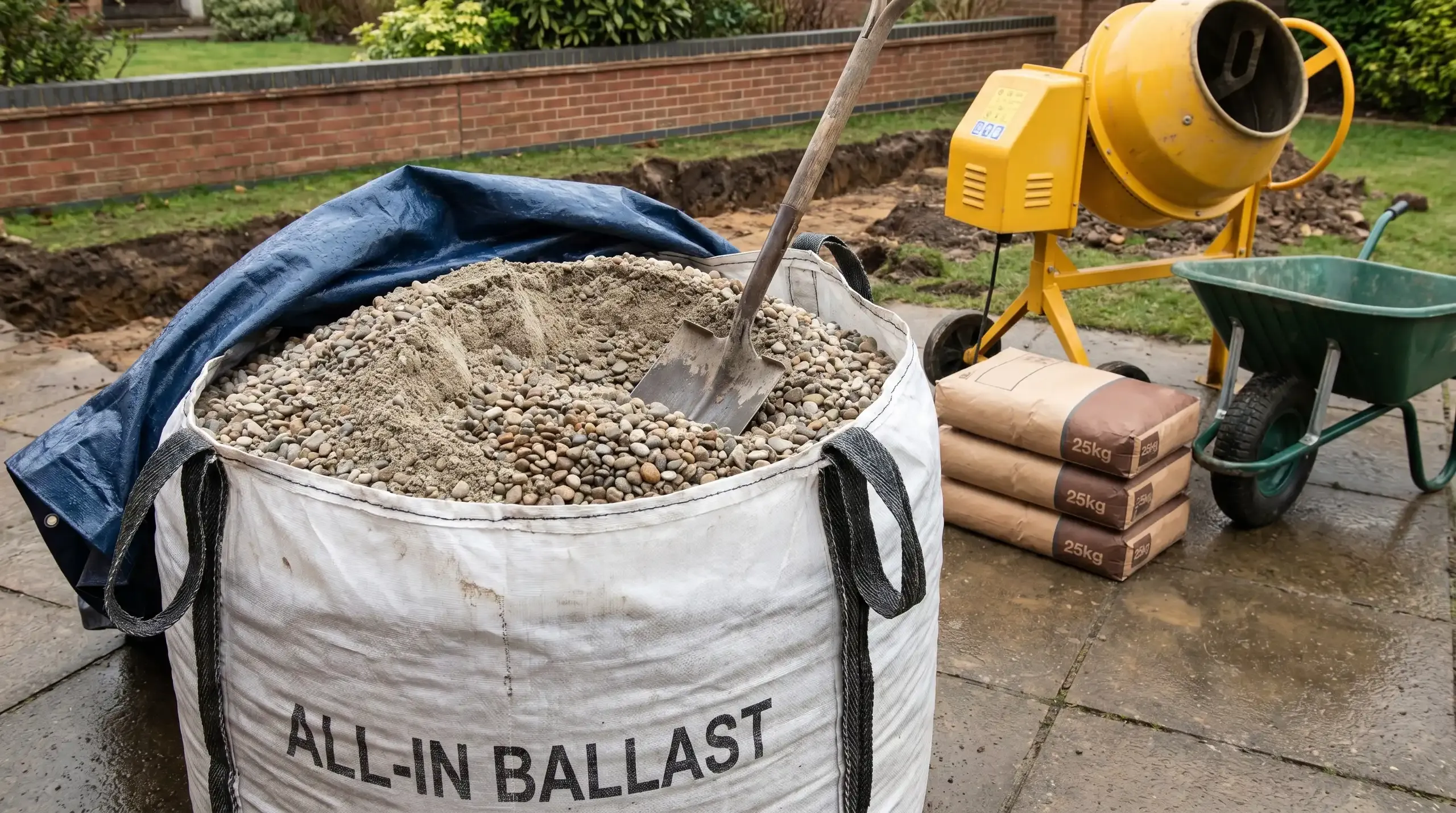
All-In Ballast: The Pre-Blended Aggregate for Site-Mixed Concrete
The definitive UK guide to all-in ballast: BS EN 12620 spec, the right cement:ballast ratio, bulk bag vs loose load pricing, and the foundation mix mistake to avoid.
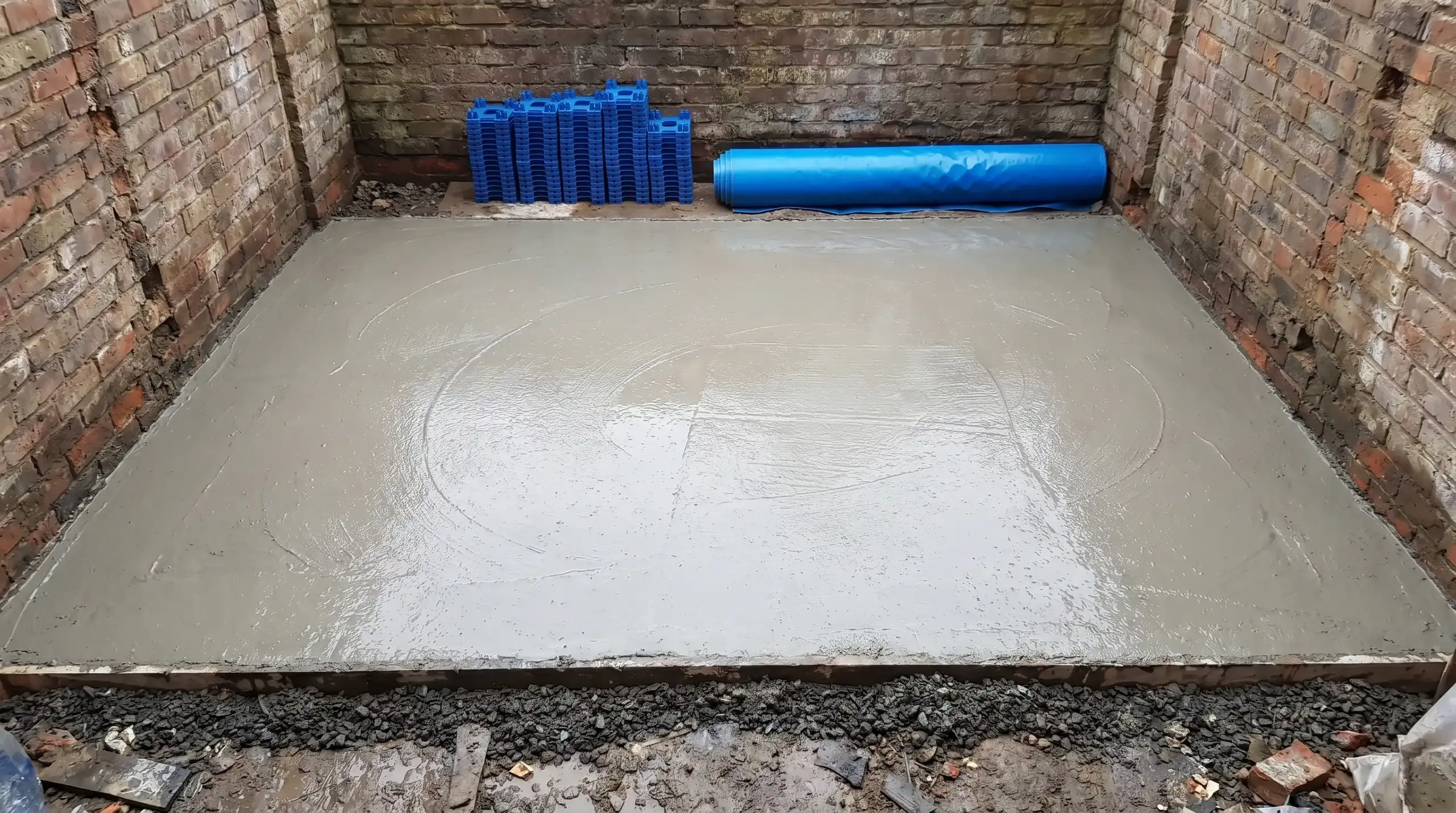
Blinding Concrete: The 50mm Layer That Halves Your Reinforcement Cover
C8/10 GEN 1 blinding concrete costs £96 – £138 per m³. The 50-75mm layer that turns a hardcore subbase into a working surface and cuts cover from 75mm to 40mm.
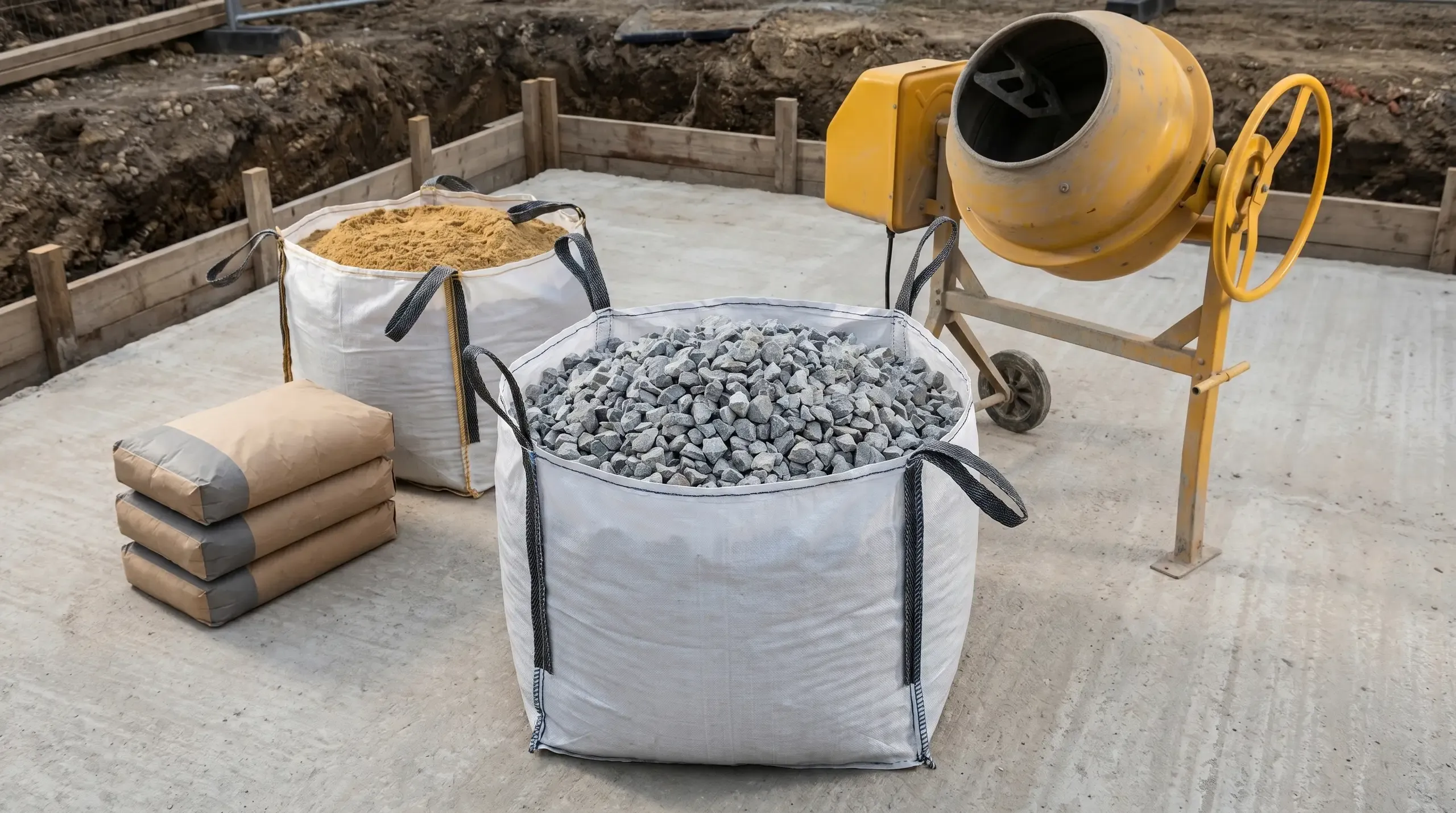
Coarse Aggregate (20mm Gravel): The Stone for Site-Mixed Concrete
UK guide to 20mm coarse aggregate: how it differs from all-in ballast, mix ratios, quantities, and when site-mixing beats ready-mix at £59 – £75 per bulk bag.
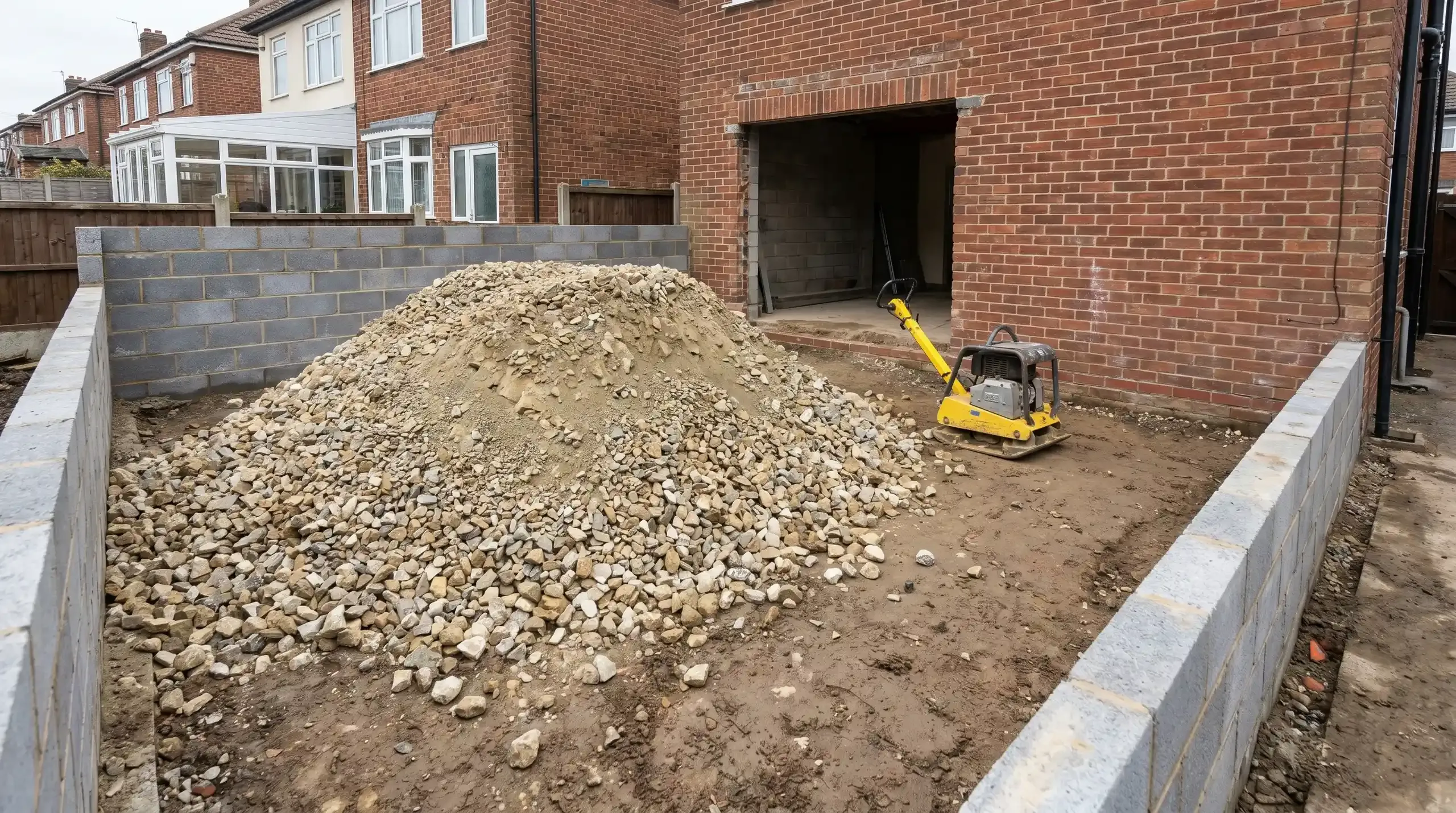
Hardcore (MOT Type 1): The Compacted Layer Under Every Extension Slab
Complete UK guide to MOT Type 1 hardcore for extension foundations. Quantities for a 30m² extension, compaction in 75-100mm lifts, BCO inspection points, and prices from £35-45/tonne.
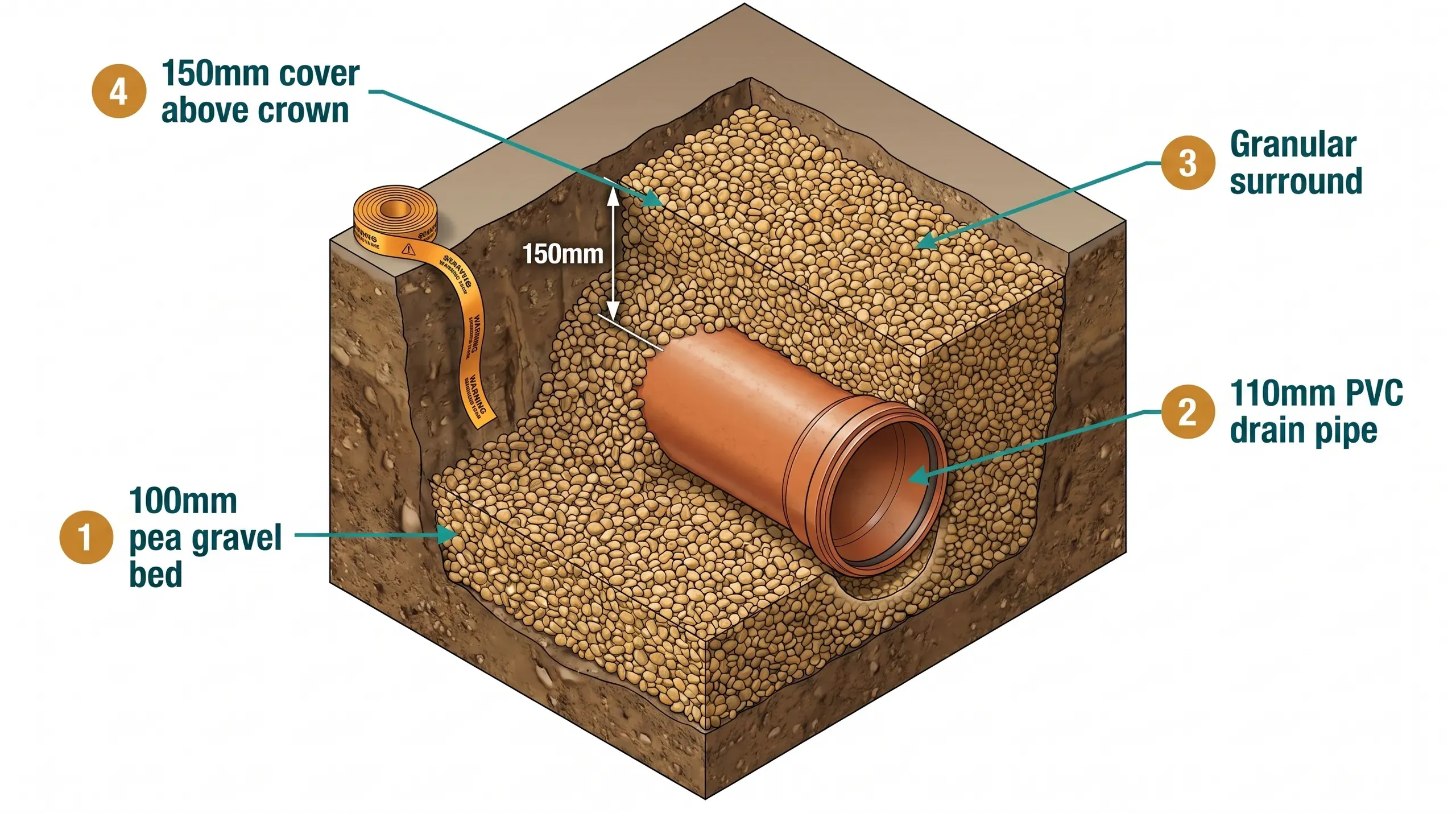
Pea Gravel: The £100 Material That Decides Whether Your Drainage Passes Building Control
Pea gravel is the bedding and surround for underground drainage pipes. Get the depth, particle size, and inspection sequence right - or fail Part H. £40-75 per tonne.