
First Fix
Electrics, plumbing, and insulation before the walls close up
8 tasks in this phase
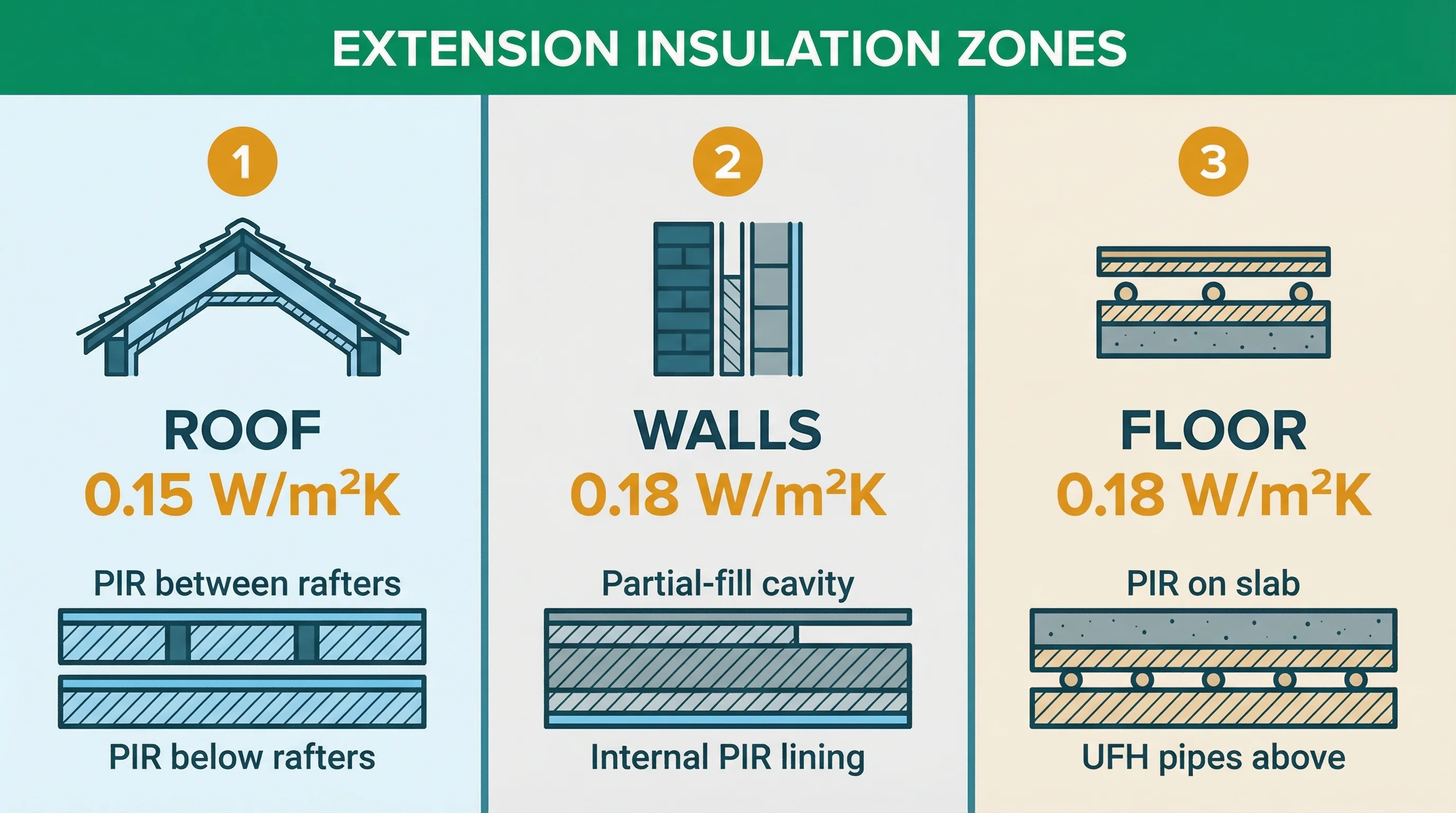
What first fix covers, and the order the trades run in
First fix is everything installed while the structure is still open and then buried behind plasterboard: cables, pipes, waste runs, extractor ducting, heating, insulation, and the timber noggins that will carry wall units and brackets later. For the split against the finishing trades, read first fix vs second fix.
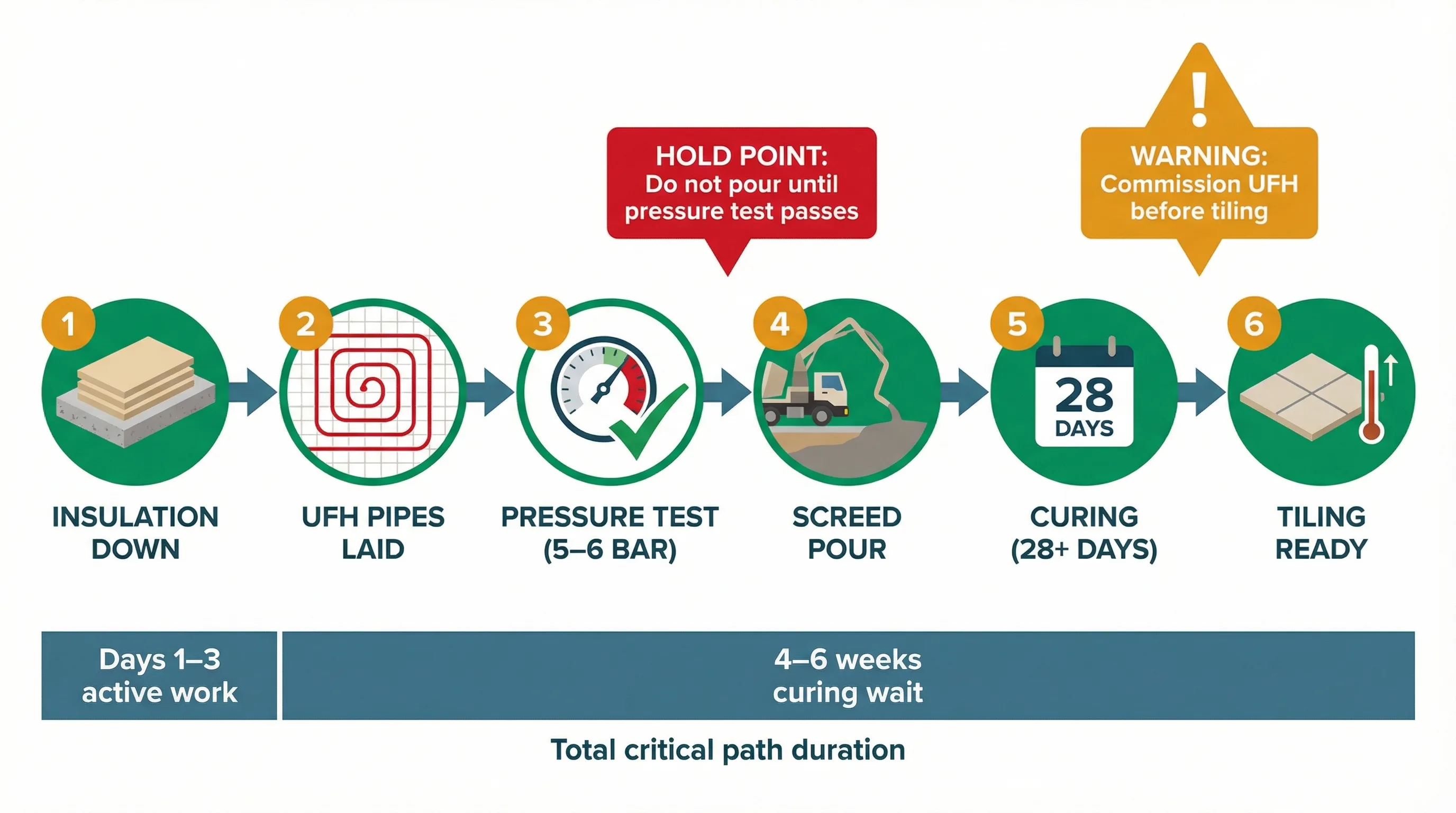
Work starts once the shell is watertight and the floor build-up is set out. Below-floor drainage and waste connections come first, because everything above sits on their levels. Floor insulation and heating pipework follow. Underfloor heating changes the entire floor build-up and has to be laid, pressurised, and left under pressure before screed goes anywhere near it. Decide it at the front of this phase.
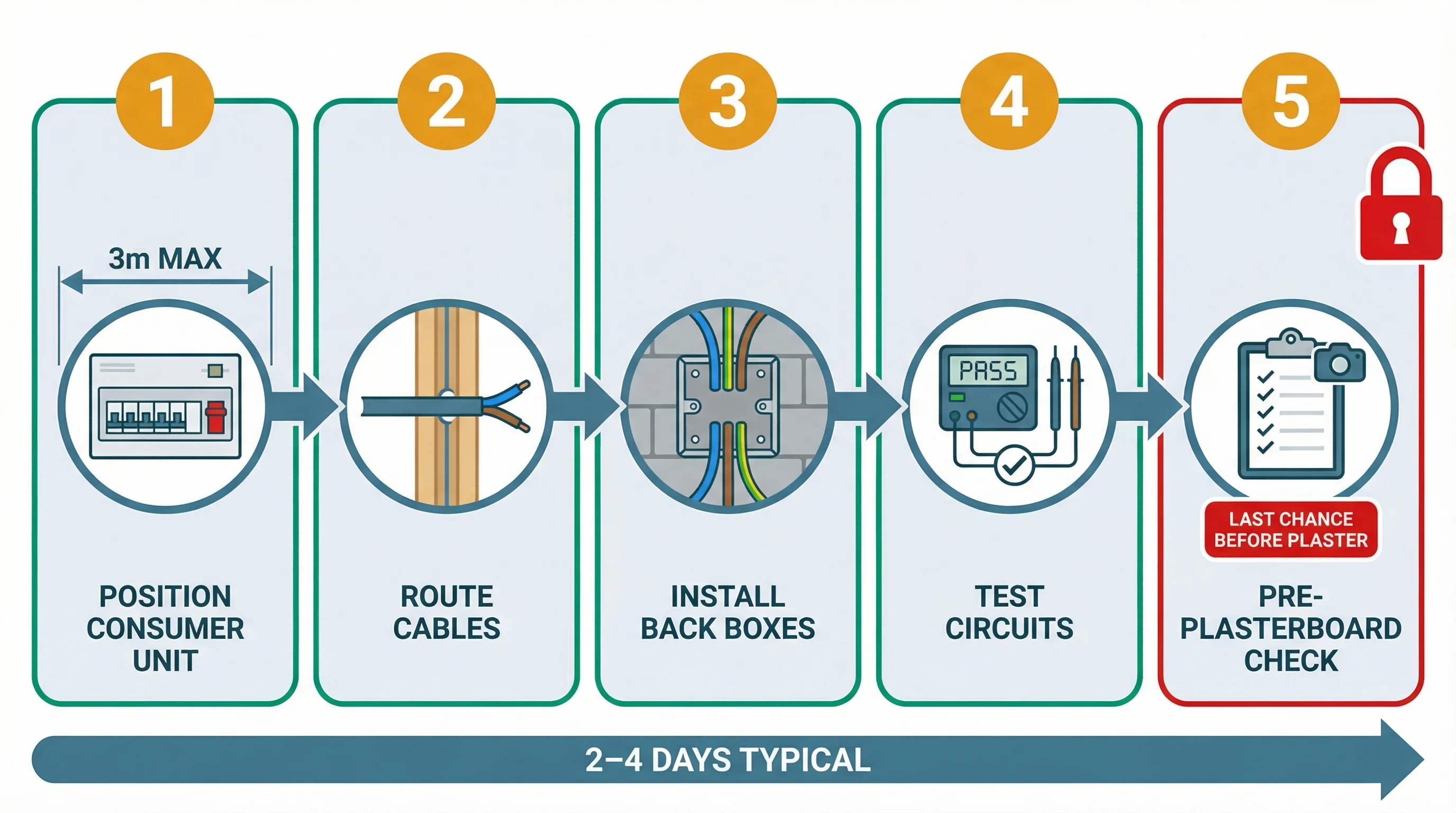
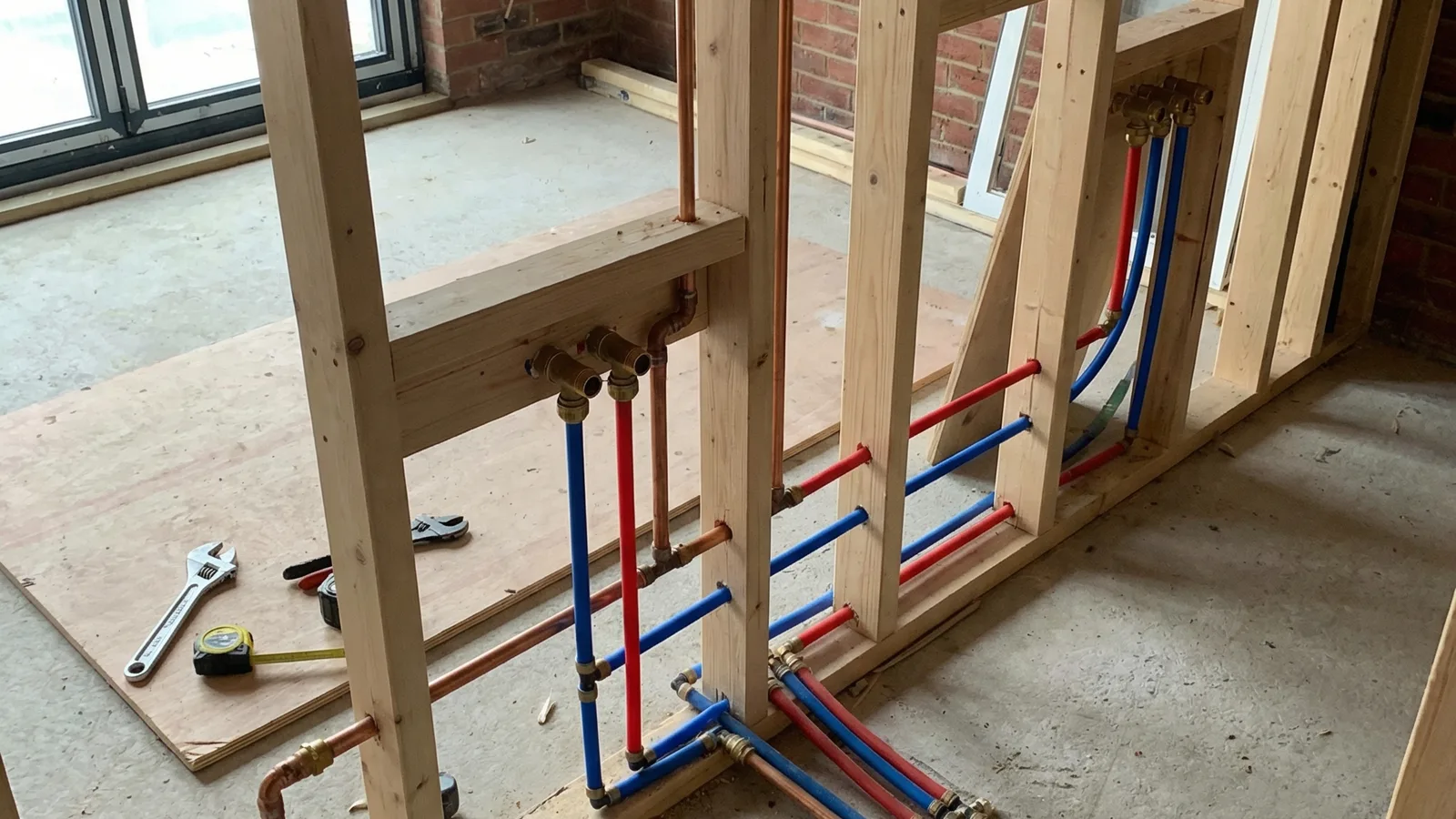
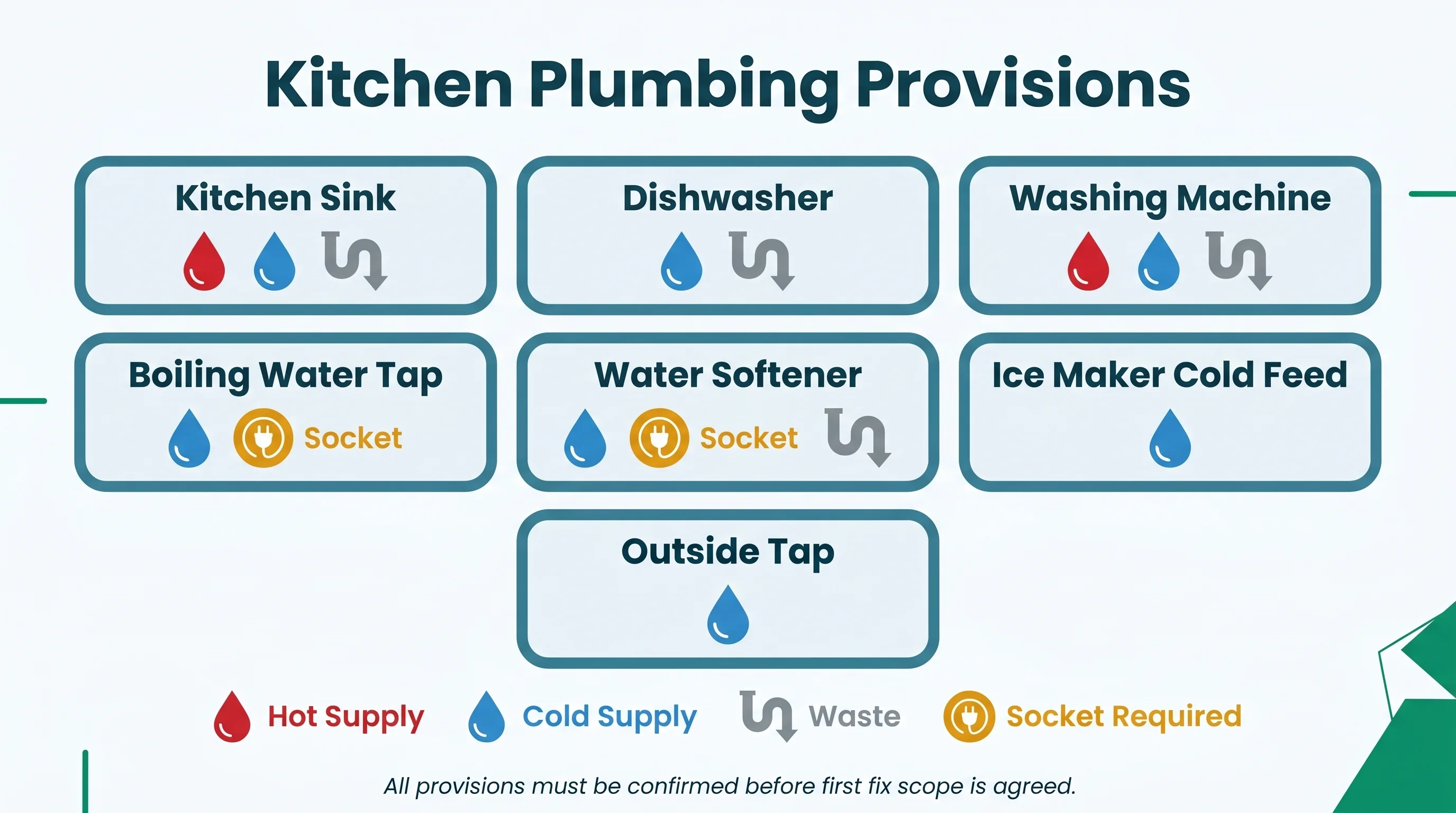
Then walls and ceilings. The plumber runs supply and waste to the sink, the dishwasher, and any island position. The electrician chases in cable routes, fits back boxes, and pulls the circuits the kitchen needs. Those two trades compete for the same joists and stud bays, so book them in the same week and expect to referee.
Insulation goes in last, immediately before boarding. It is also the item most often rushed, because by that point everyone on site wants the plasterer in.
The kitchen layout has to be settled before anyone drills
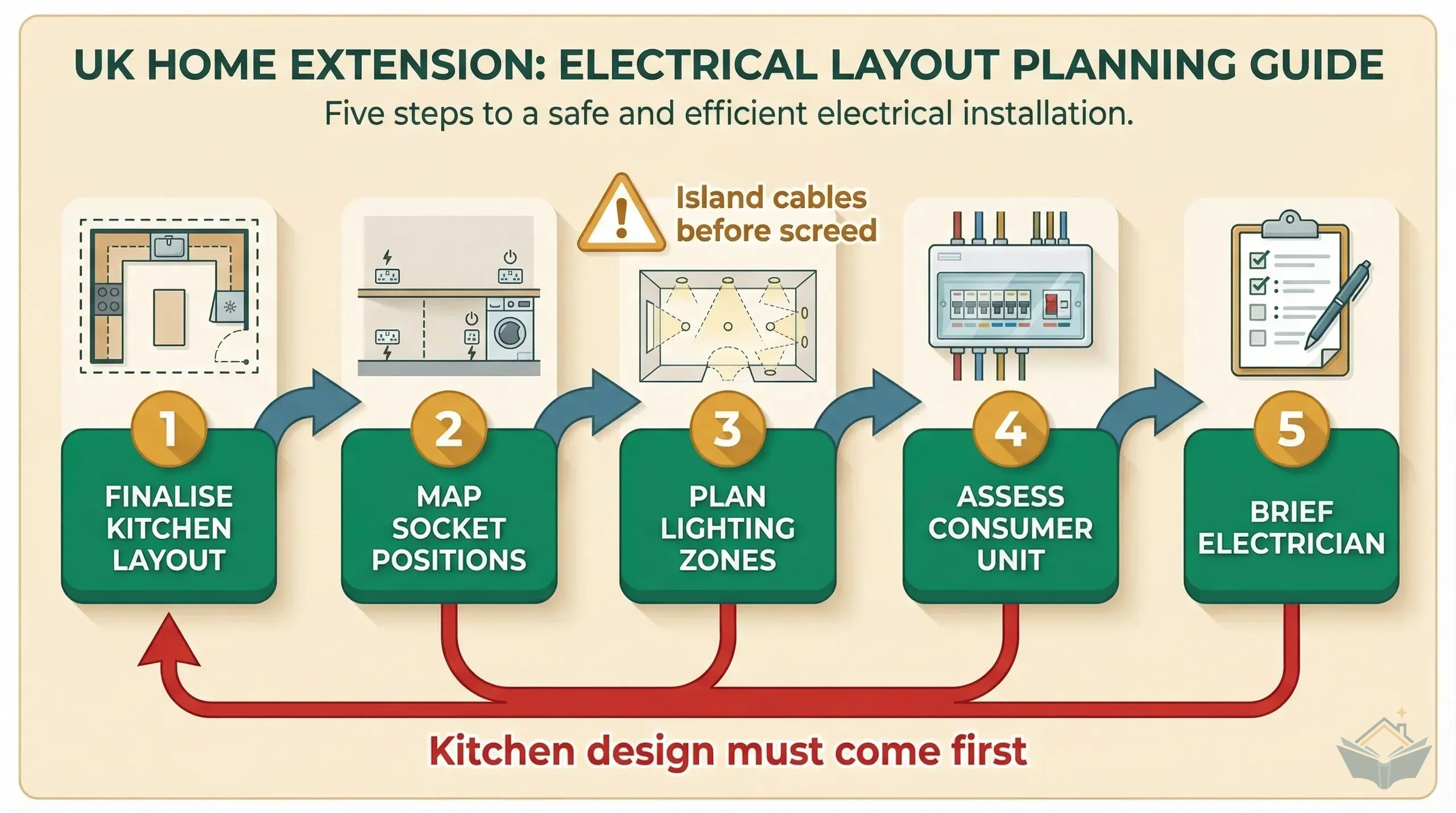
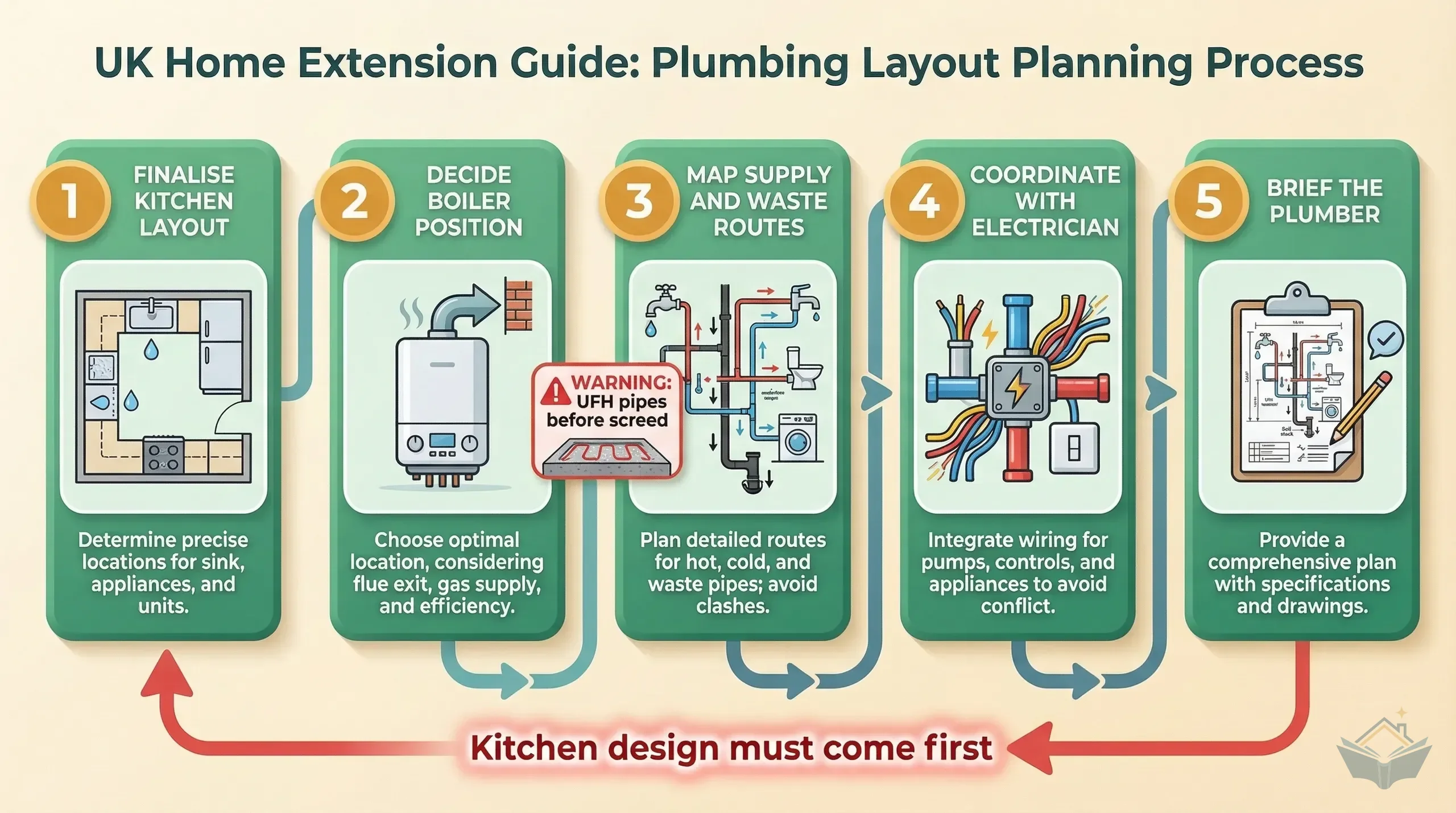
Socket heights, switch positions, appliance circuits, the extractor route, and every waste run come off one drawing. Without that drawing there is no first fix, only guessing. An electrician asked to guess will put sockets on a wall that later disappears behind a tall unit, and the cooker feed on the wrong side of the room. Settle the plan at measuring and layout, then wire to it.
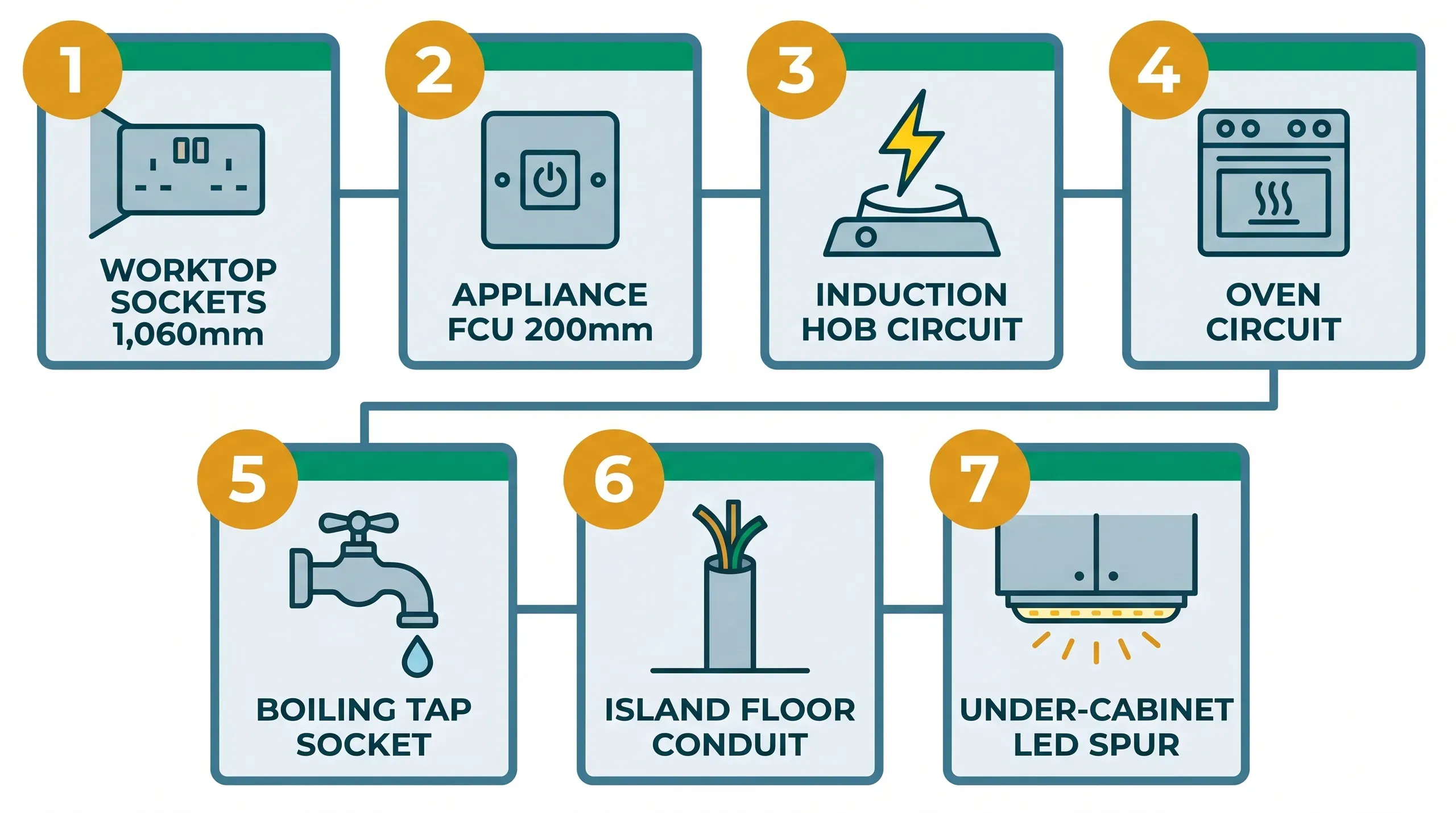
Turning that plan into something trades can price and install is two separate jobs. Electrical layout planning fixes circuits, positions, and lighting zones. Plumbing layout planning does the same for supply, waste, and anything that needs both. A kitchen adds demands a general spec never mentions, and kitchen electrical provisions covers what to specify for appliances, islands, and under-cabinet lighting.
Bring the real appliance list to site, with model numbers and unit dimensions rather than intentions. An integrated appliance ordered later at a different depth moves the socket behind it, and by then the wall is closed.
Photograph everything before the boards go on
Once plasterboard is up, this phase becomes invisible for the life of the house. The only record that survives is the one you make yourself.
Walk every wall and ceiling with a phone before boarding, shooting overlapping frames with a tape measure in shot against a fixed reference such as a door opening or a corner. Wide shot, then close. You want to state later where a cable runs, not estimate.
That record pays back in three separate ways. It tells whoever drills into a wall a decade from now where not to drill. It settles disputes about what was installed when a defect surfaces months later. And it is evidence for building control, which now expects photographic proof of insulation as installed rather than a description of it.
Use the same walk to check the work rather than just capture it. On insulation, look for boards pressed tight with no gap behind them, continuity where the extension meets the existing house, and a vapour control layer taped at every overlap and pipe penetration. Small gaps do disproportionate damage, and this is the last day anyone can see them.
The sign-off points that close the phase
Building control inspects before plasterboard, and that visit covers structural connections, insulation, fire stopping, and cavity barriers. Book it yourself and hold the plasterer back until it has happened. An inspector who arrives after boarding can require the work to be opened up, which means stripping walls finished the week before.
The new circuits an extension kitchen needs are notifiable under Part P. (In England a kitchen is not a special location, so it is the new circuits that make the work notifiable, not the room.) Either the electrician is registered with a competent person scheme and self-certifies, or building control inspects and tests instead. Confirm which route applies and check the registration before work starts, because the certificate gates your final sign-off. First fix electrics covers what to agree up front.
Pipework gets pressure tested while it is still visible, and it stays under test until the boards go on. First fix plumbing sets out the checks. Any work on the gas supply or a hob needs a Gas Safe registered engineer, and its paperwork belongs in the same file as the rest.