
Completion
By Ian · first-hand account · 7 min read
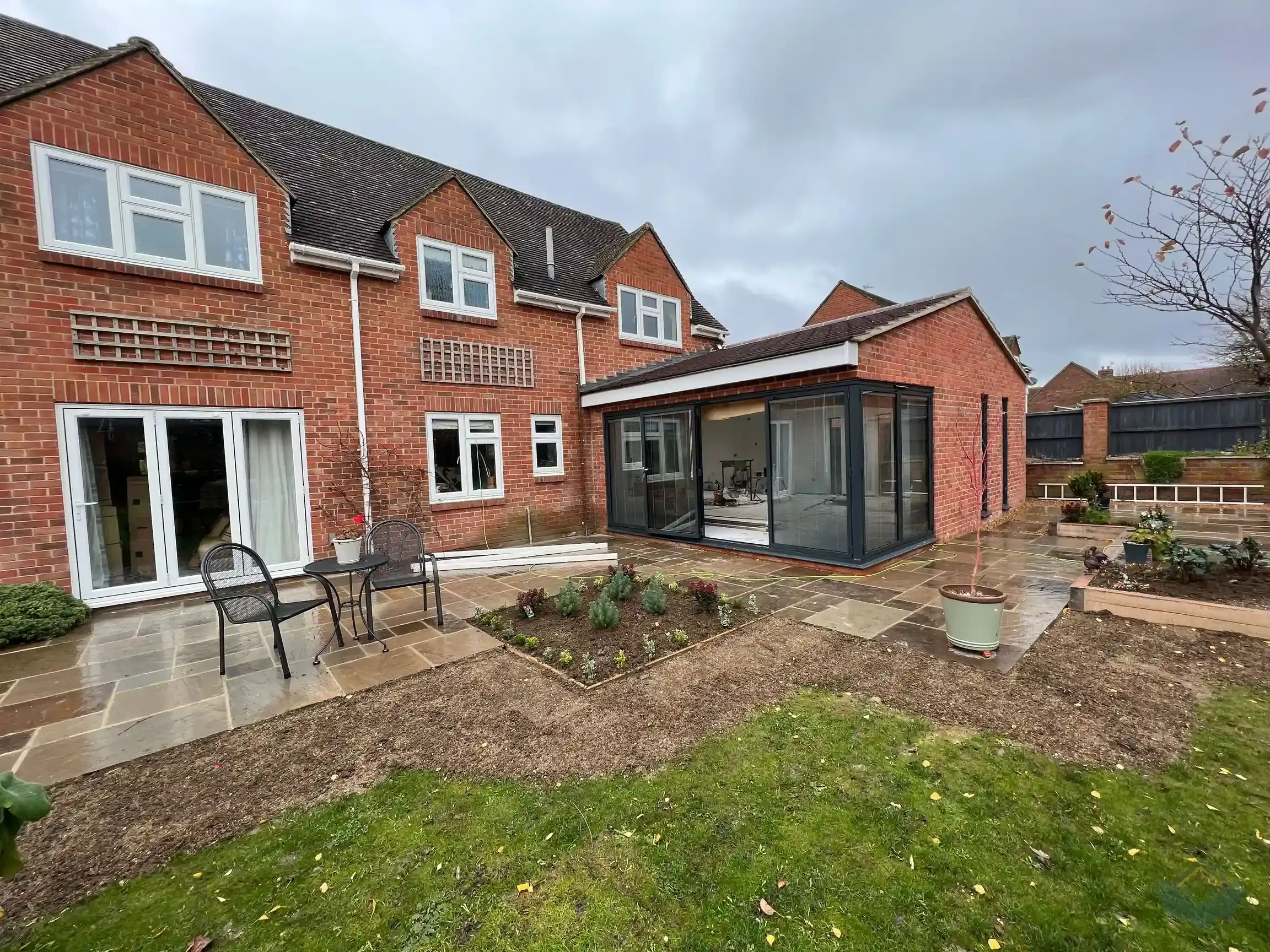
The room was finished in the middle of January 2023. The build was not finished for another twelve months, and almost none of that year involved anybody doing any work.
Tiling completed on 10 January. The builder's final account was settled on 13 January, a closing payment of £2,560 after agreed deductions, £150 of them for the gas callout the summer before. The painter took his last money on 15 January. Worktops and shelf lighting went in on the 16th and 17th. After that the house looked finished to anybody who walked into it, and the file at building control stayed open until 10 January 2024.
The jobs nobody puts on a programme
The guide for this: Snagging Checklist
The electrician was back through January on second fix, chasing an RCD that kept tripping. On the 19th I paid £124.83 to off-hire the excavator that had been standing on the drive since the autumn, and only because the landscaper reminded me. I had forgotten it existed.
The side gate went on over February and March, £780 to the painter, £350 down and £430 on completion. The last substantial plumbing happened on 13 March. In April there was an argument about a pipe: I had expected the feed to the fridge ice maker to sit inside the original plumbing quote, and it did not. We settled it on materials only, a £140 invoice withdrawn and replaced by one for £60. In June the kitchen fitter came back for two days to modify cabinets and install the LED shelf lighting. In July the wine cooler threw a fault and iced up, and an authorised engineer came out under warranty. In October the architect and I exchanged the last emails of the project.
No snagging list was ever produced. Every one of those items was raised and resolved by message as it surfaced. Things did get fixed, which is the argument for doing it that way, and at no point could anybody have told you what remained outstanding, which is the argument against.
The other build, outside
The guide for this: Garden and External Works
While the inside was being plastered, a second job was running in the garden, and it was the one my family actually looked at every day.
The landscaper started in late October 2022 by clearing the rubbish off the front, then fixing a water leak so the digger could get down the side passage at all. Five minutes after I told him there was a cable running between the extension and the garage, he went through it. The old patio came up next, and slowly, because the intention was always to salvage the Indian sandstone rather than skip it.
Those slabs are the reason the price moved. He quoted £6,350 on 21 September 2022 for block paving. Three days later the quote went to £7,000, because we had decided to lift the old sandstone and relay it instead. Both figures are quotes, and they are the only paper record of what the garden cost me, because I paid him in cash as the work went along, in several smaller withdrawals. No single payment for the garden exists on my build sheet or in the bank feed. It sits outside the construction total in any case, on scope, since the garden was never part of the extension contract. A cash job that leaves no trace is also a cash job nobody can check afterwards, including me.
He laid the new patio to string lines on a mortar bed through early November. None of it is quick. The bed goes down and gets scratched up, the line gets set, the slab is bedded, and then the level comes out again for the next one.
He worked outwards from the rear of the extension towards the garage, mixing reclaimed slabs in with new ones as he went rather than laying the old and the new in separate blocks.
By 5 December the patio was complete and the flowerbeds were planted. The gutters were still not on the building.
Demolition rubble had been barrowed round from the rear all through the autumn, and the soil dug out for the patio joined it. Between the two the gravel drive was wrecked, and our neighbour's went the same way. Nobody plans for this. It is not on a drawing, no trade owns it, and it is the first thing anyone sees.
Four bags, £411.46, and the cheapest money in the whole build for what it bought. The permission also carried a condition requiring parking for four cars in place before the extension was occupied, so the drive was coming back one way or another.
Grass was the last thing to arrive and the only part of the job that could not be paid to go faster.
The certificates that held the file open
The guide for this: Completion Certificate
Building control wanted four things before they would issue anything. An electrical installation certificate. A Gas Safe certificate for the boiler. The boiler commissioning and service records. And their own approval of every piece of structural and drainage work, which by then they had.
On 8 September 2023 the officer asked me where the gas and electrical certificates were. I told him I was still waiting for both and started chasing. That was eight months after we moved into the room, and it is the moment I discovered I had quietly assumed certificates turn up by themselves when a trade finishes.
The plumber never issued his. The Gas Safe Register eventually opened proceedings against him for failing to provide it, and that is what moved it. Not me, and not the council. The electrical side closed on 20 December 2023 when the consumer unit was finally certified, which needed four additional RCBOs for a bit more stability on the board, £60 of the £300 paid on the 27th. That is more than a year after second fix.
The gas certificate arrived on 9 January 2024. I forwarded it to building control the same day.
1 day
Between the last outstanding certificate landing and the completion certificate being issued. The council was never the bottleneck. The twelve months the file stayed open were spent waiting on one trade document I had no power to compel.
Warning
Make the certificate a condition of the final payment, in writing, before the trade leaves site. Once you have paid in full the only lever left is a complaint to the body that registers them, and that route does work, but it takes months. "Practically finished" and "signed off" can be a year apart, which matters if you are treating completion as a milestone for insurance, a warranty, a remortgage or a sale.
What actually worked with building control
The guide for this: Building Control Final Inspection
Photographs and short videos sent ahead of a formal inspection got approvals faster, every time, and sometimes removed the need for a visit. Changes told to the officer before they were built were handled by email; the one change built first, the ridge beam substituted in timber, was spotted by the officer in the site photographs and took eight days to put right. A written summary of a proposed change was usually enough for him to assess it without coming out. Against all of that, response times ran to a month or more when the office was busy, so anything sitting on the critical path had to go in early rather than when I got round to it. And at the end they wanted as-built drawings, because what the building is and what the original design said it would be had stopped being the same thing somewhere around the second steel revision.
The number
The builder quoted £45,500 in June 2021 for his part of the work. He was paid £53,854.93 across the job, and that is the smallest of the gaps in this story.
Construction, kitchen excluded, finished at £122,150. The kitchen itself, meaning units, appliances, worktops, the utility fit and the lighting, came to £59,766. All in, £181,916 on a 55m² footprint. Thirty-five months separated the first conversation with the architect on 17 February 2021 and the certificate on 10 January 2024, and roughly fifteen of those had trades on site.
What I would tell someone standing where I stood
Keep a log from the first phone call. Every date in this chapter came out of a spreadsheet I started before there was a drawing, and it is the only reason I could ever argue about anything with any authority. The gap in that log is the garden, and the garden is the one job I paid for in cash.
Write the certificates into the payment schedule rather than trusting they will follow. Budget time and money for the outside, because the patio, the drive, the fence and the lawn are the part your family lives with and the part that appears on nobody's programme. Tell building control what you intend to change before you change it, and send photographs unprompted. Above all, separate the day the room works from the day the project closes, because on this build those were twelve months apart and only one of them felt like an ending.
When your own build reaches this point, the completion phase guides cover the final inspection, the documents to collect, the snagging list I never made, and what a completion certificate is actually for. If you are earlier than that, the full kitchen extension tree sets out the whole job in order, first drawing through to this one.
Frequently asked questions
Do this phase on your own build
Step-by-step guidance for the tasks this chapter covers.
Want the numbers behind this build?
Every invoice from this extension, category by category, in the spreadsheet used to track it. Reuse it for your own budget.
Get the cost ledgerPlanning your own extension? The Access Pass covers the same ground as a step-by-step guide you can work through.