
Completion
Final inspections, snagging, and signing off
5 tasks in this phase
What the completion phase covers
The extension looks finished. Walls are painted, the kitchen is in, the floor is down, and the vans have stopped arriving. That is the point where most homeowners mentally close the project, and it sits roughly halfway through the phase that matters most for what the property is worth later.
Completion is about evidence. Nothing in this phase changes how the room looks. What it changes is what you can prove: that the work was signed off, that the new circuits were tested and notified, that gas work was carried out by someone registered to do it, that the steel over the opening was sized by an engineer and installed as drawn. A future buyer's conveyancer will ask for that file. Their lender may make it a condition of the mortgage. Assembling it years after the event, once trades have moved on and companies have dissolved, is far harder than collecting it while everybody is still contactable.
There is a second reason not to drift out of this phase quietly. The final payment is the last piece of influence you have. Released, a snag list becomes a favour you are asking for. Held, it is a condition of getting paid.
The final inspection and the completion certificate
Building control has been visiting at set stages throughout the build, and those earlier visits are covered by what building control inspects, with the full sequence across the whole project set out in building control inspection stages. The visit that belongs to this phase is the last one.
The final inspection looks at the finished building rather than at hidden work. The inspector is checking the things that only exist once the job is complete: ventilation and extraction actually running, smoke alarms fitted and interlinked, drainage connected and tested, glazing and insulation matching what was approved, guarding and safe access where levels change. Work through the building control final inspection before you book it, because the visit is also when you hand over the certificates the inspector needs in order to sign anything off.
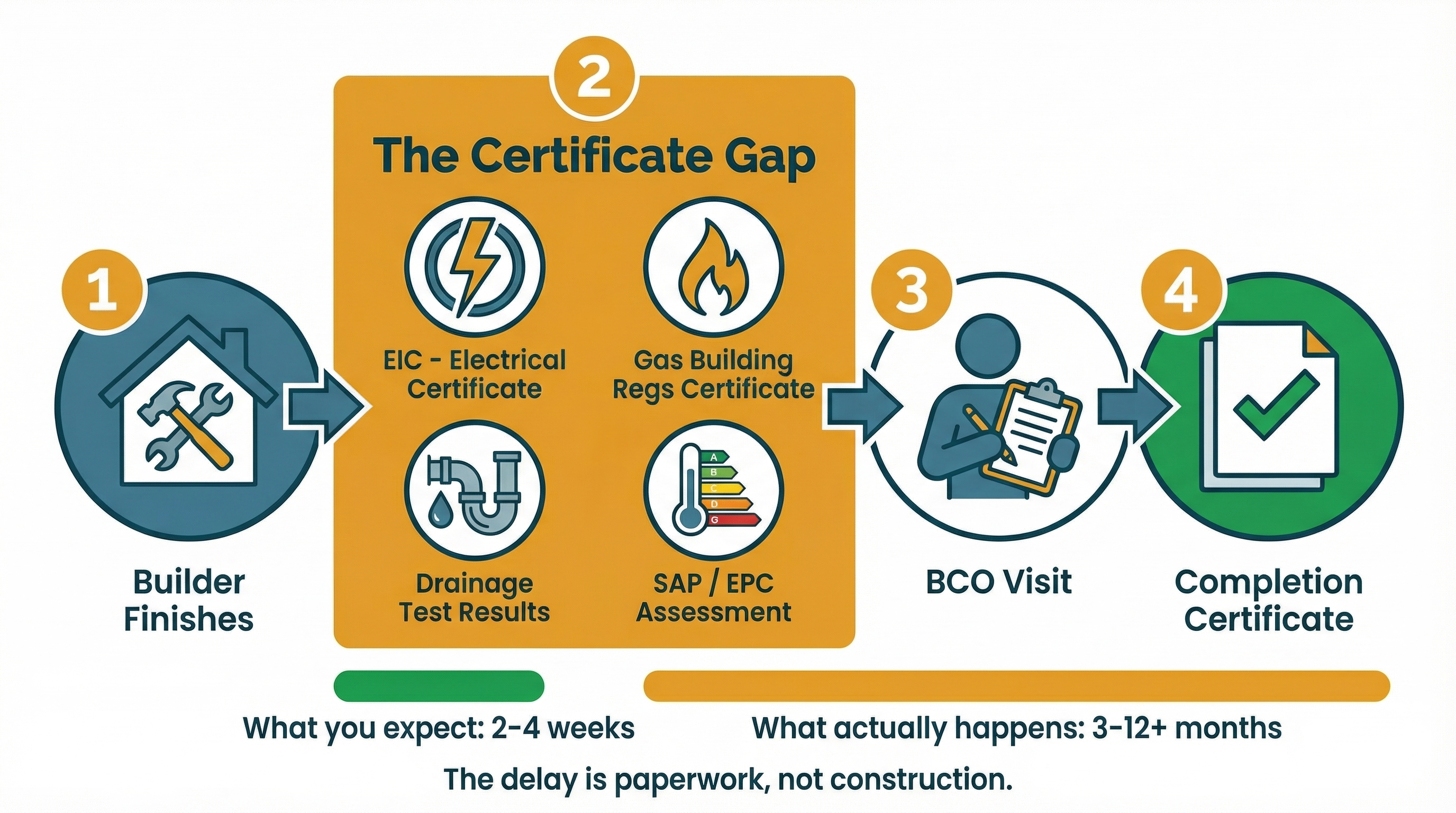
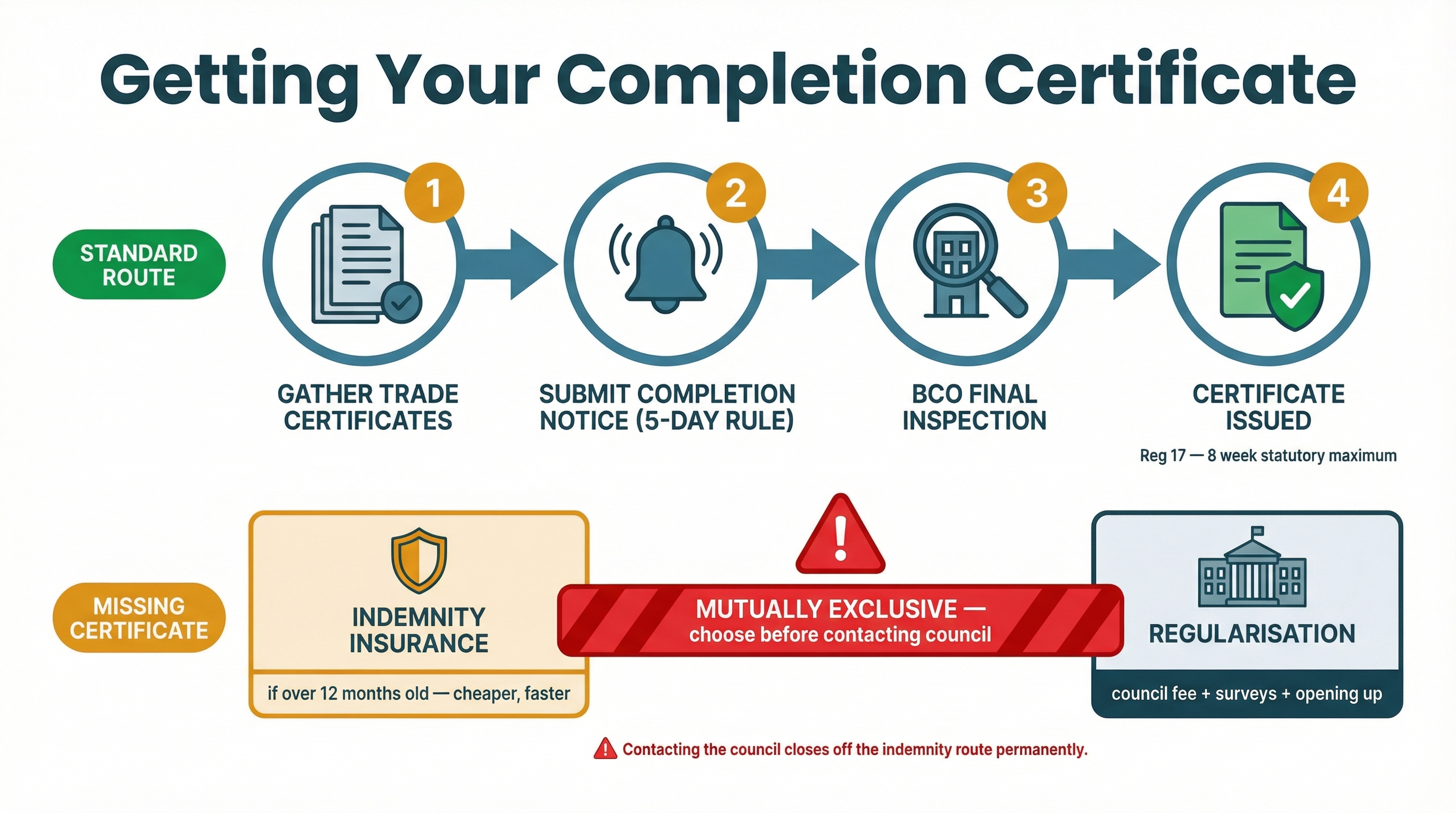
Sign-off produces the completion certificate, and it is not issued automatically. It is issued when the file is complete, so an outstanding electrical notification or a missing gas record will hold it up indefinitely while you sit at home assuming all is well. Getting the completion certificate covers how to request it, what usually stalls it, and what to do when nothing arrives.
The file you should be holding at the end
One folder, kept digitally and on paper, containing:
- The completion certificate from building control
- Electrical installation certification for the new circuits, plus the notification confirmation
- Gas documentation for any appliance or pipework installed or moved
- The structural calculations and the approved drawings the build was priced and inspected against
- Warranties and guarantees: glazing, roof covering, boiler, appliances, and any insurance-backed guarantee
Chase every one of these from the trade who created it, by name, while the job is still fresh in their mind. A verbal assurance that something "has been notified" is not a document, and it is worth nothing at a future sale.
Snagging before the final payment, and the loose ends
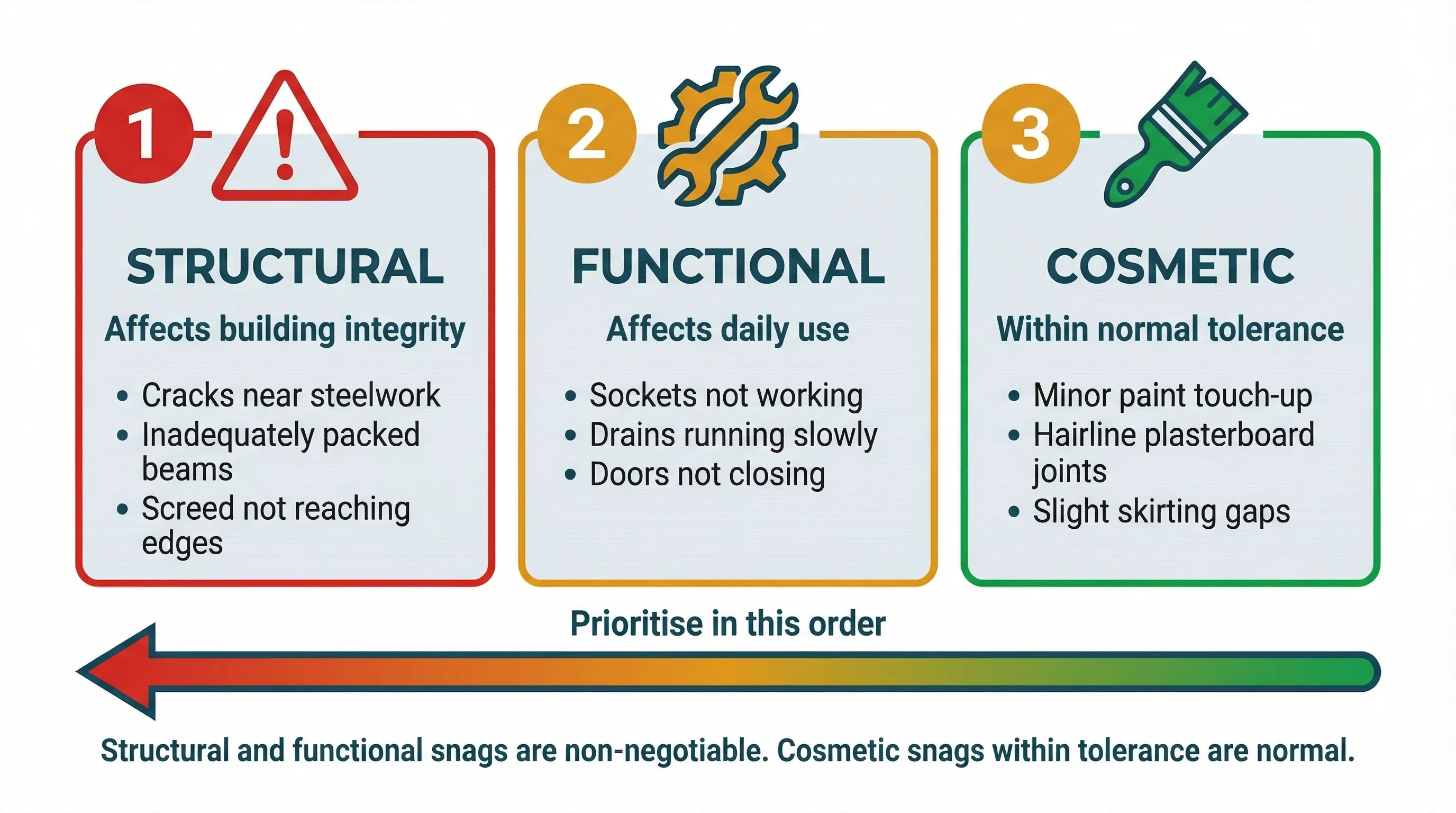
Snagging is the systematic walk-through that produces a written list of defects: doors binding, a socket left off the finished wall, silicone lines that gape, tiles that step, paint that has not covered. Do it in daylight, room by room, against the snagging checklist, and issue the list in writing rather than mentioning items as you notice them.
Sequencing matters more than thoroughness here. The list goes to the builder before the retention or final stage payment is released, which is why the payment terms agreed back in contracts and payment schedules decide how much control you have now. Remedial work almost always disturbs paintwork, so the final touching-in described in decoration follows the snag fixes rather than preceding them.
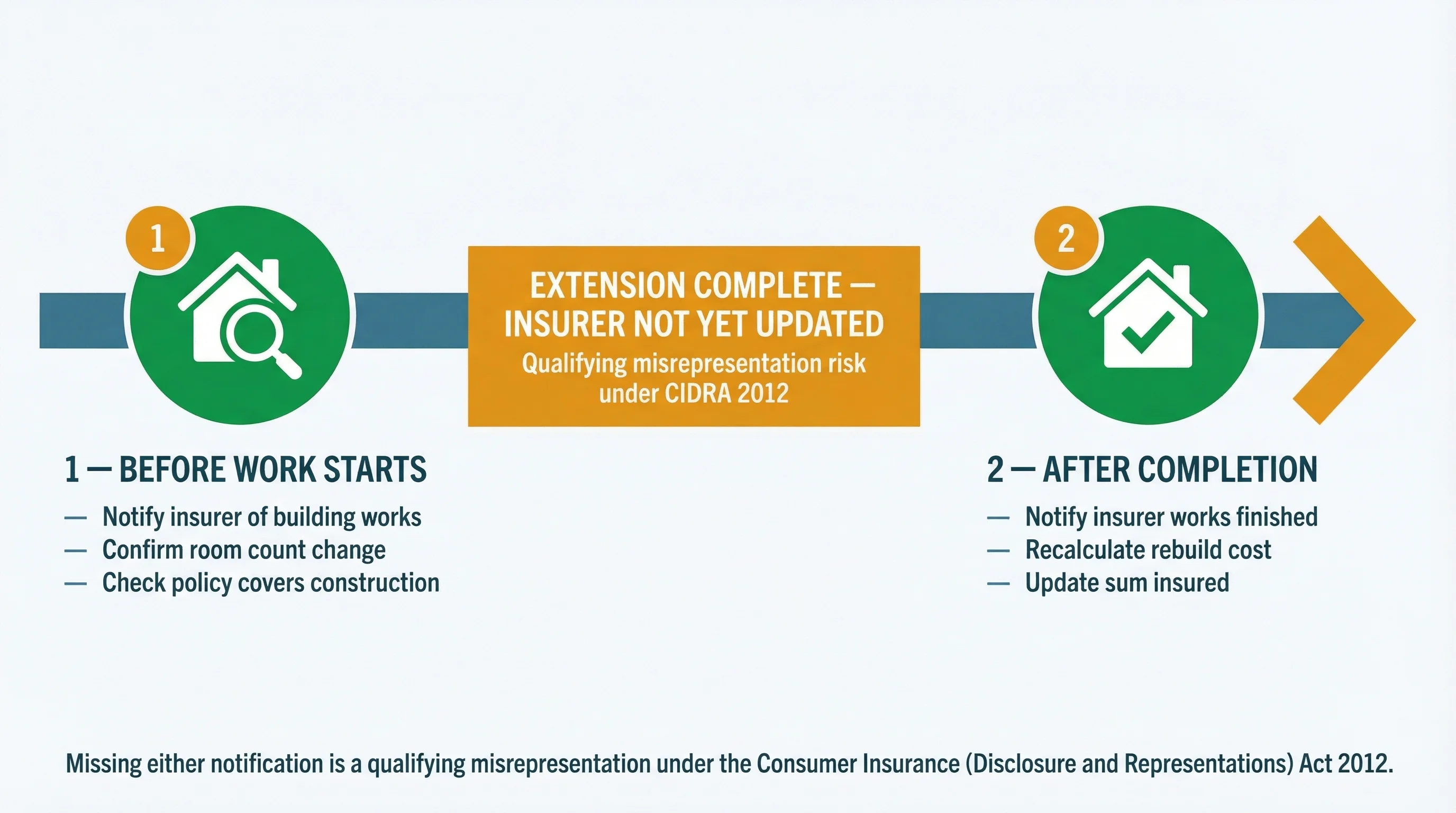
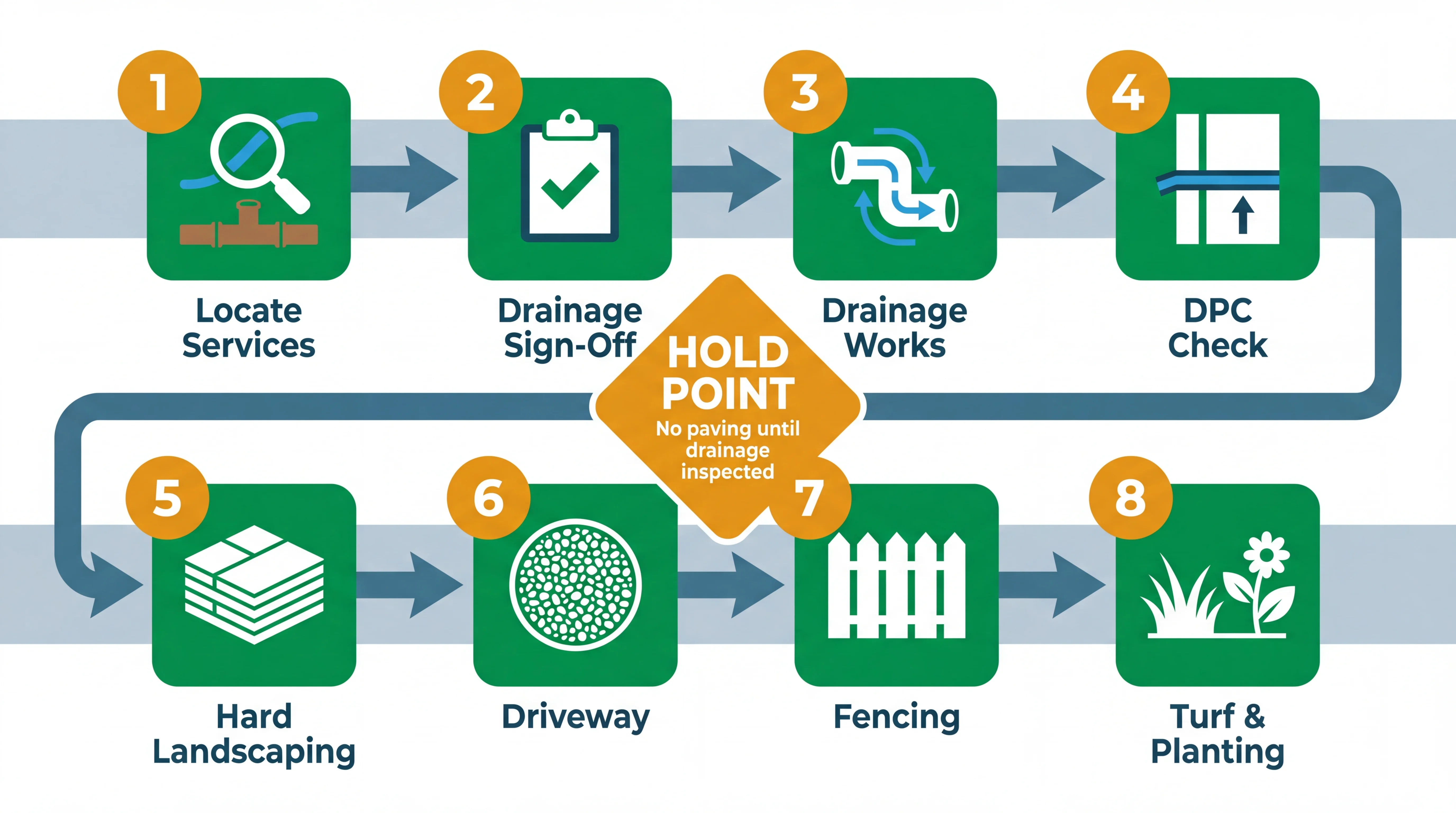
Two practical items get forgotten. Your buildings insurance covers a smaller house than the one you now own, and an under-insured property can see a claim reduced proportionally, so updating your home insurance belongs on the list now rather than at renewal. The ground outside is still a building site: spoil heaps, churned lawn, paths that no longer line up, and levels that need to fall away from the new wall rather than towards it. Garden and external works closes that out.
Finish the paperwork with the same discipline you gave the build. It is the part you will actually need again.