
Structure
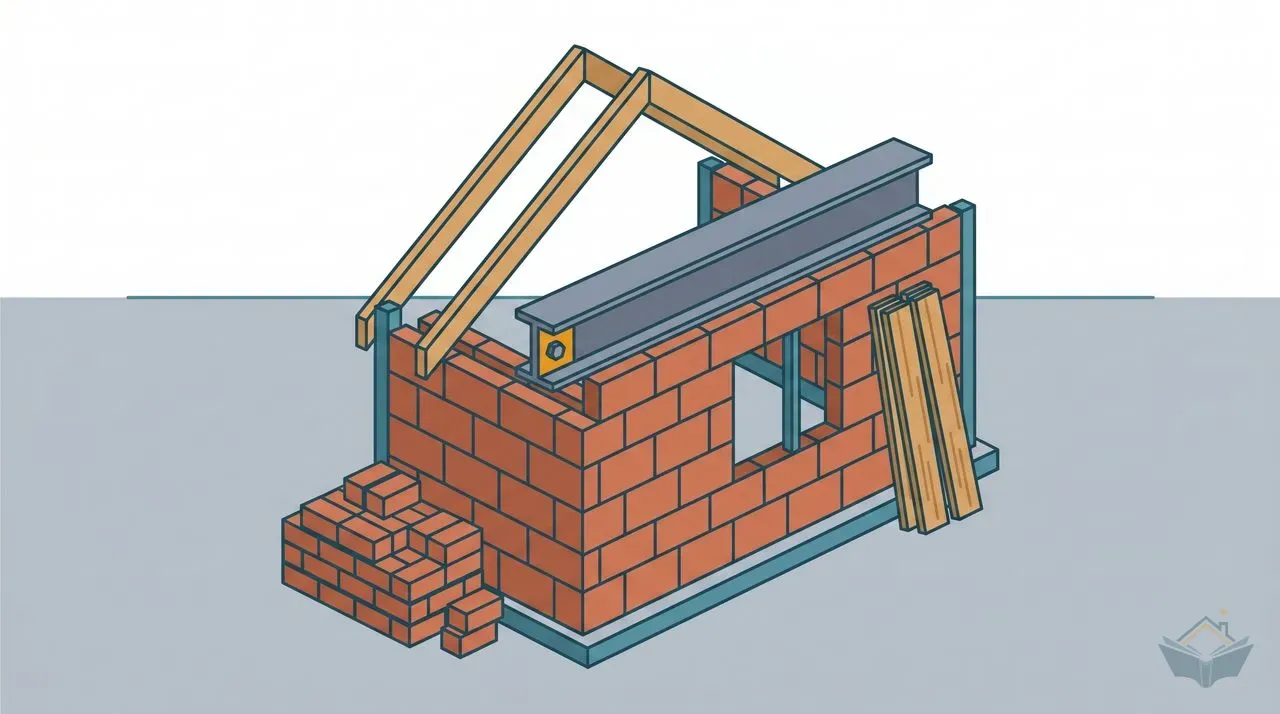
Walls, roof, steels, and making it watertight
9 tasks in this phase
1 Free with email
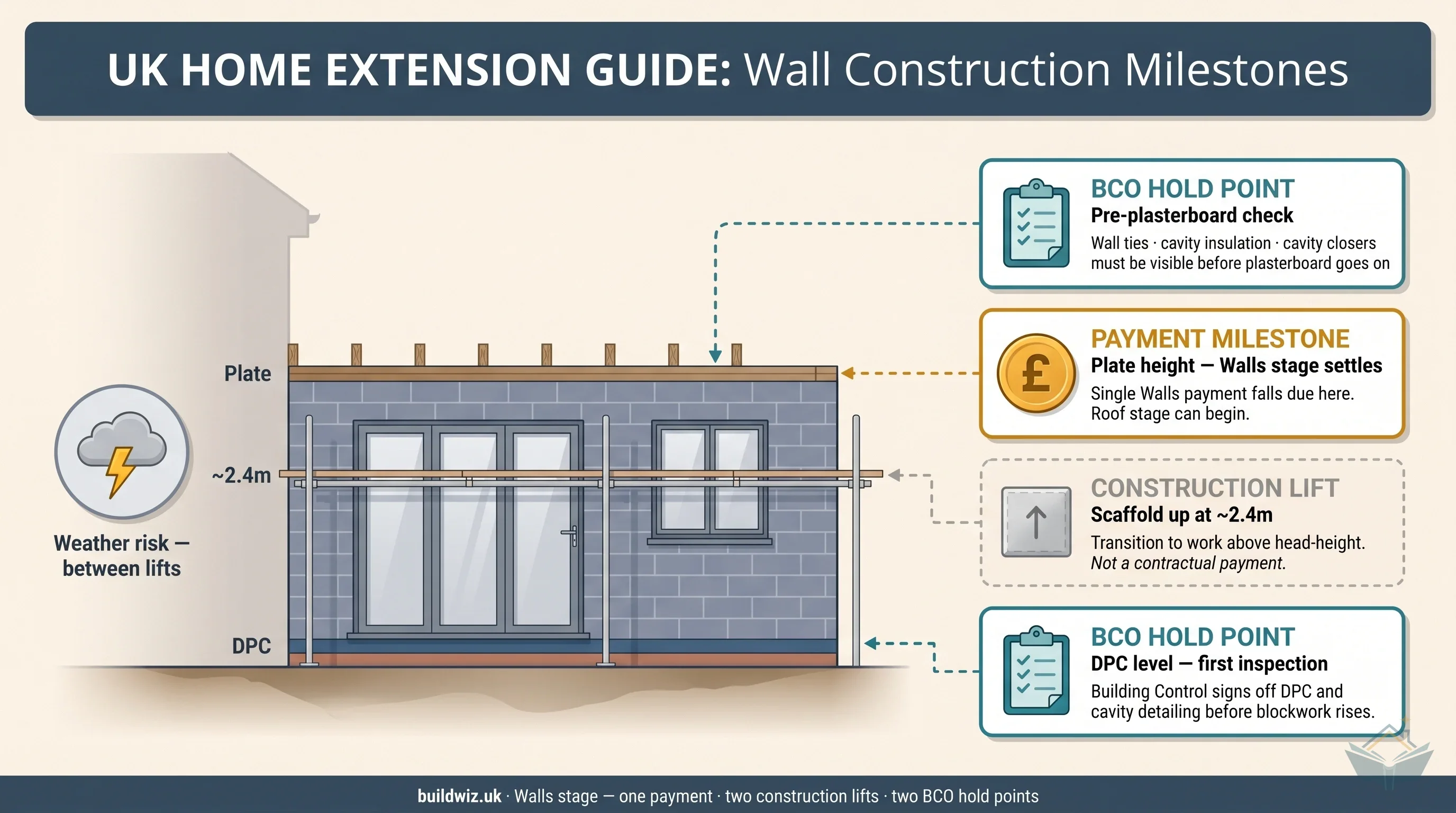
Walls and Blockwork: Building Up from DPC
What happens as your extension walls go up, from DPC to plate height. Covers cavity wall construction, block types, wall ties, cavity closers, scaffolding, weather risks, and the quality checks you need to do at each payment milestone.
2
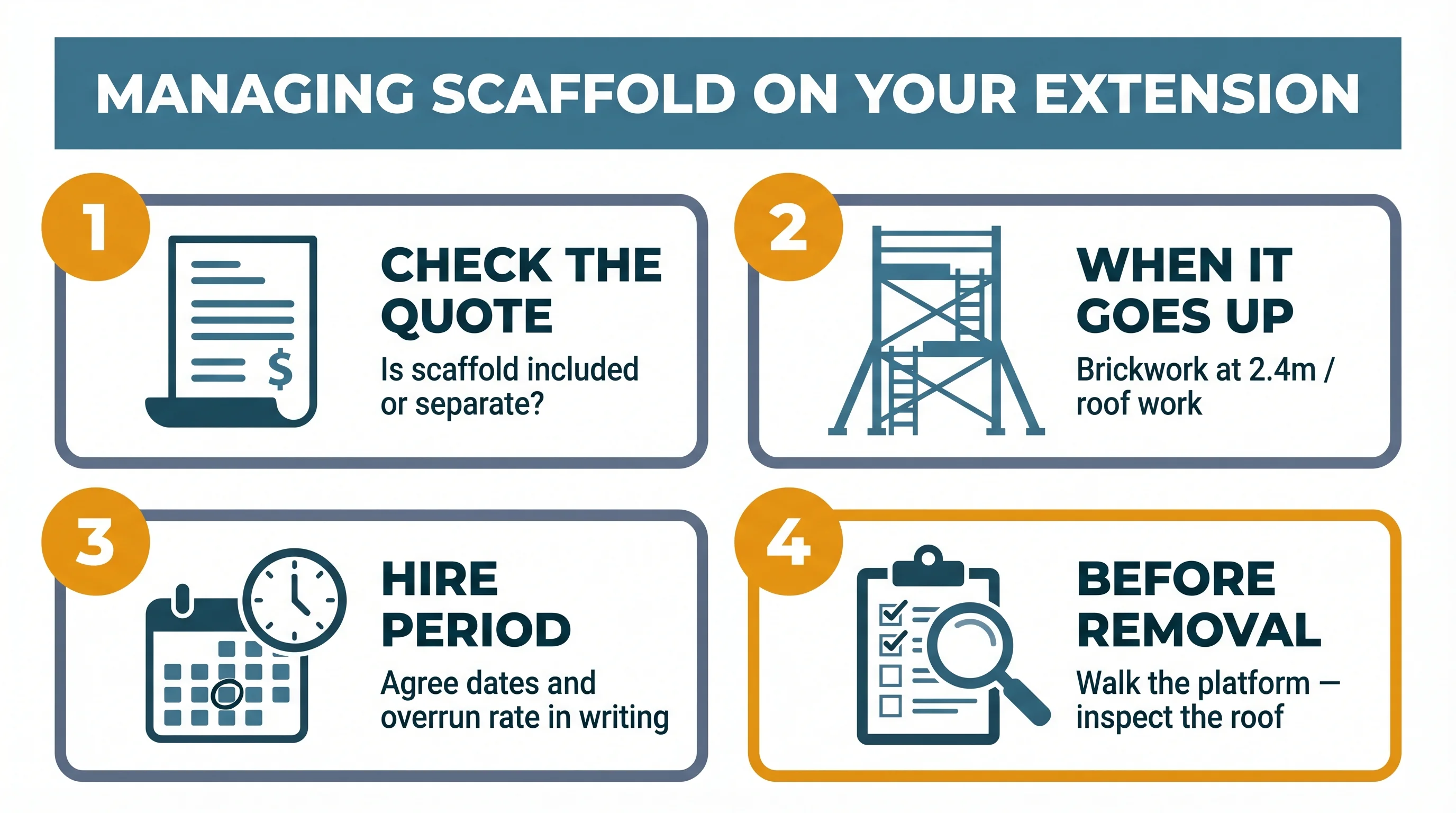
Scaffolding
How to manage scaffolding for your extension: checking it's in the builder's quote, typical hire costs (£1,200 – £2,500), highway licences, neighbour access rights, and the pre-removal inspection that prevents expensive re-work.
3
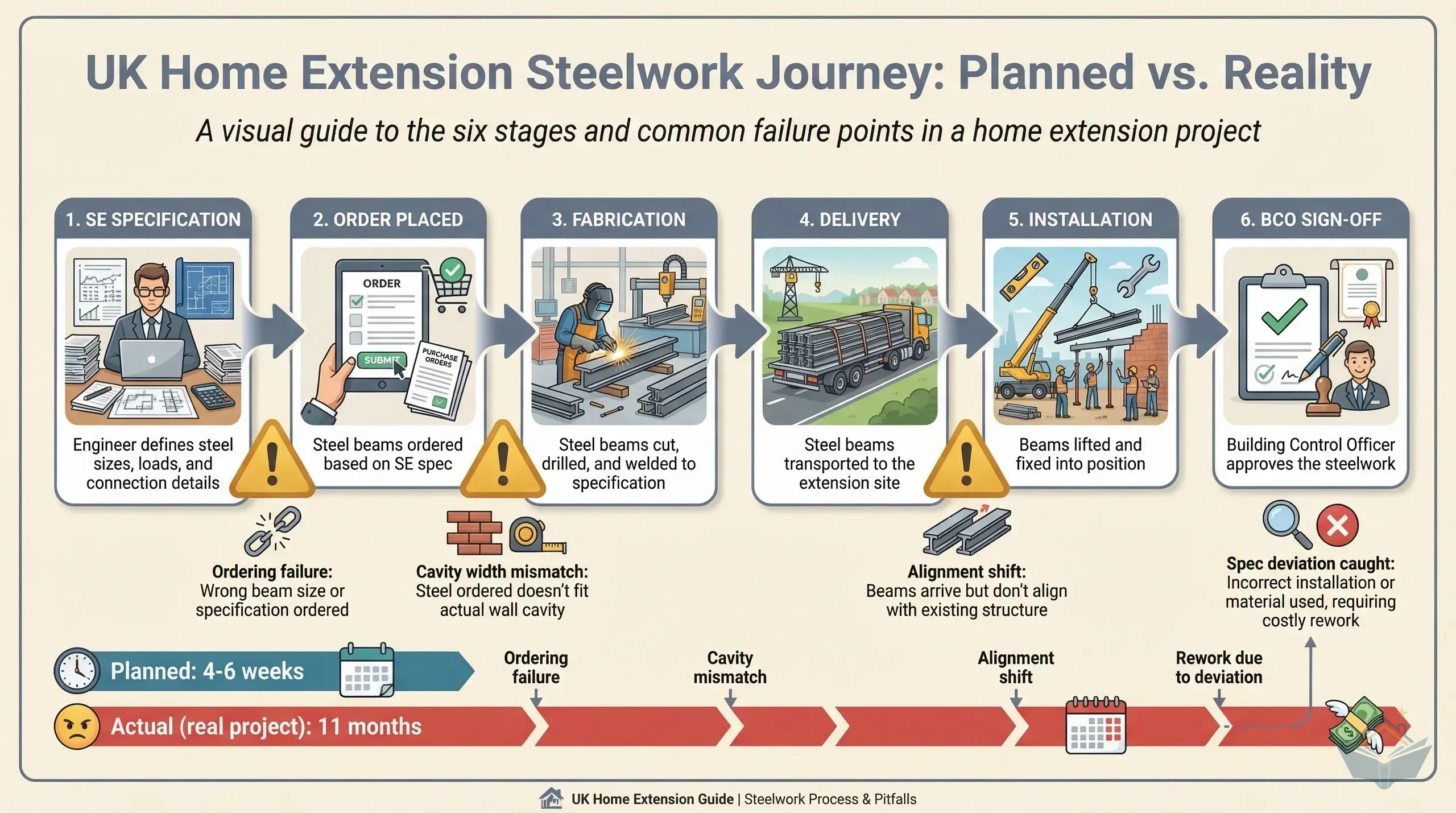
Structural Steels and Lintels for Extensions
What structural steels do, who specifies them, how to verify your order, and why extension steelwork routinely exceeds initial quotes. Covers cantilevers, cavity width problems, and the ordering failures that delay builds by months.
4
Roof Structure: Getting Your Extension Watertight
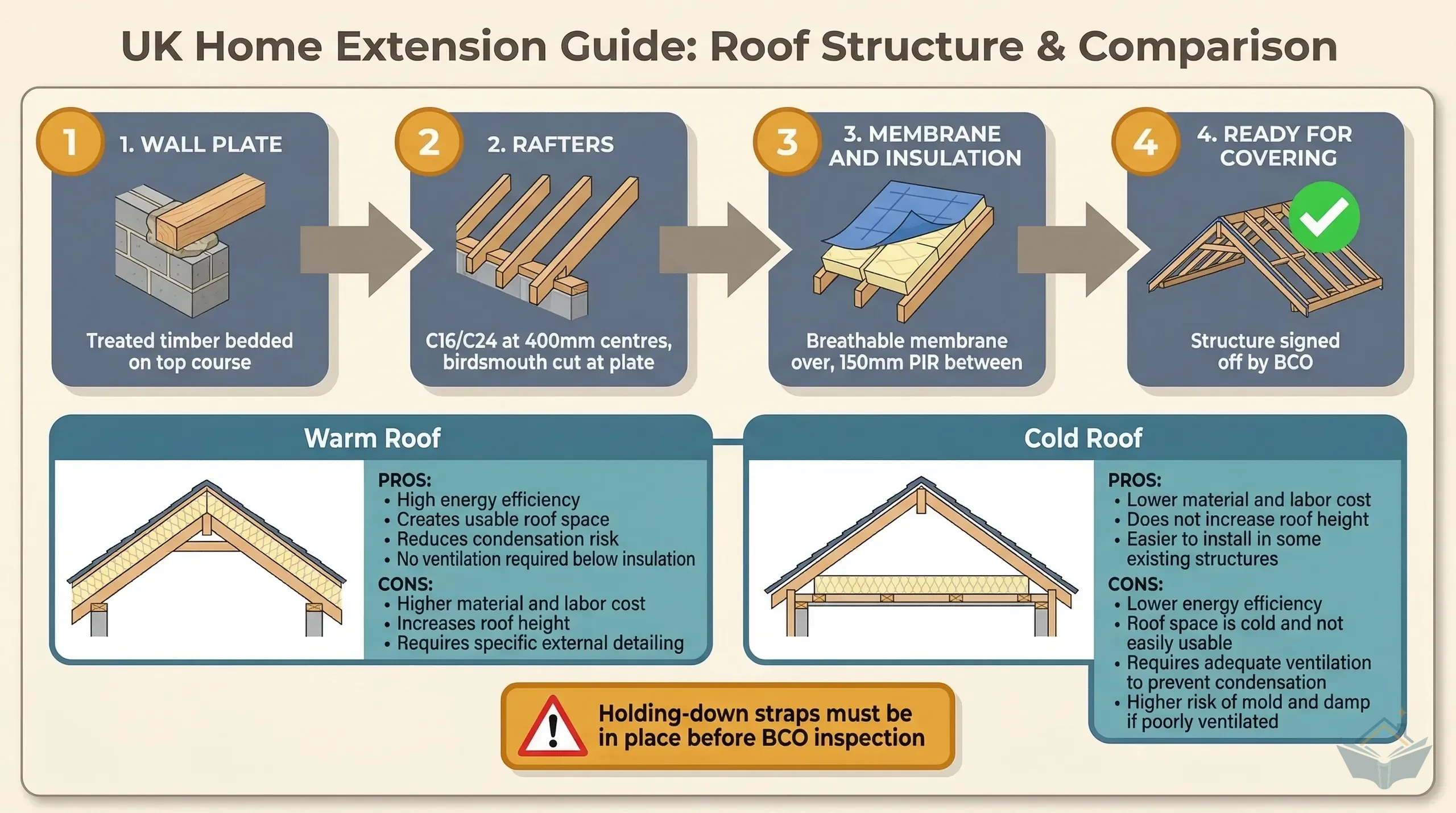
How the timber roof frame goes onto your extension: wall plate, rafters, ridge, and warm roof insulation. Covers cut roofs vs trusses, the ridge beam vs ridge board distinction that catches builders out, warm roof construction, and what building control inspects before you cover anything up.
5
Roof Windows and Rooflights
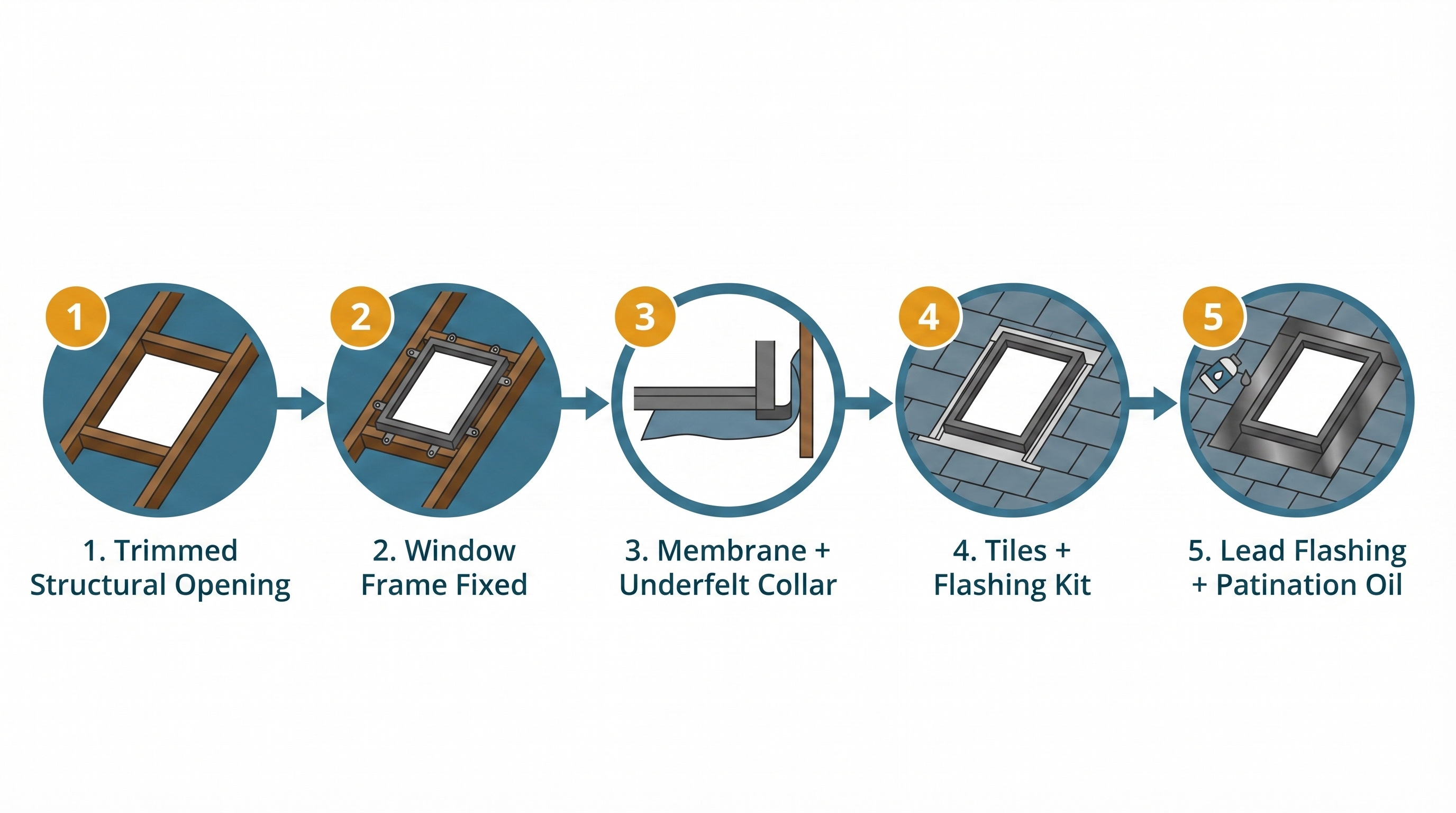
Specify, order, and install roof windows correctly for your extension. Covers Part L U-values (max 1.4 W/m²K), Part F ventilation, membrane grade, lead flashing, and the pre-scaffold inspection that prevents expensive re-work.
6
Roof Covering for Your Extension
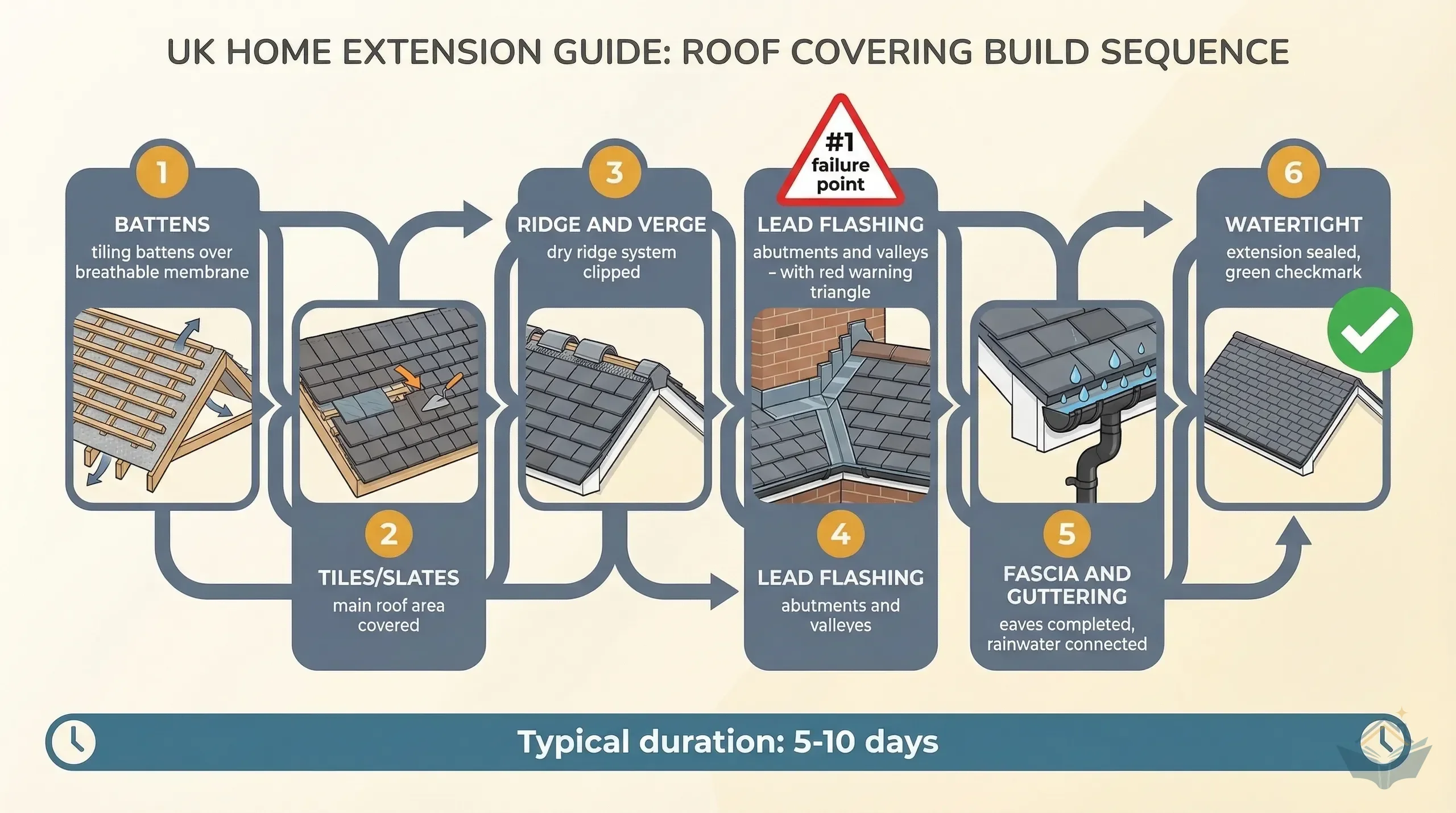
What goes on top of your extension roof structure: tiles, flat roof membranes, lead flashing, dry ridge systems, fascia, soffits, and guttering. Covers the lead flashing failures that cause 90% of extension roof leaks, the roofer-window coordination problem, and a pre-payment inspection checklist no other guide gives you.
7
Windows and Doors: Ordering, Lead Times, and Installation
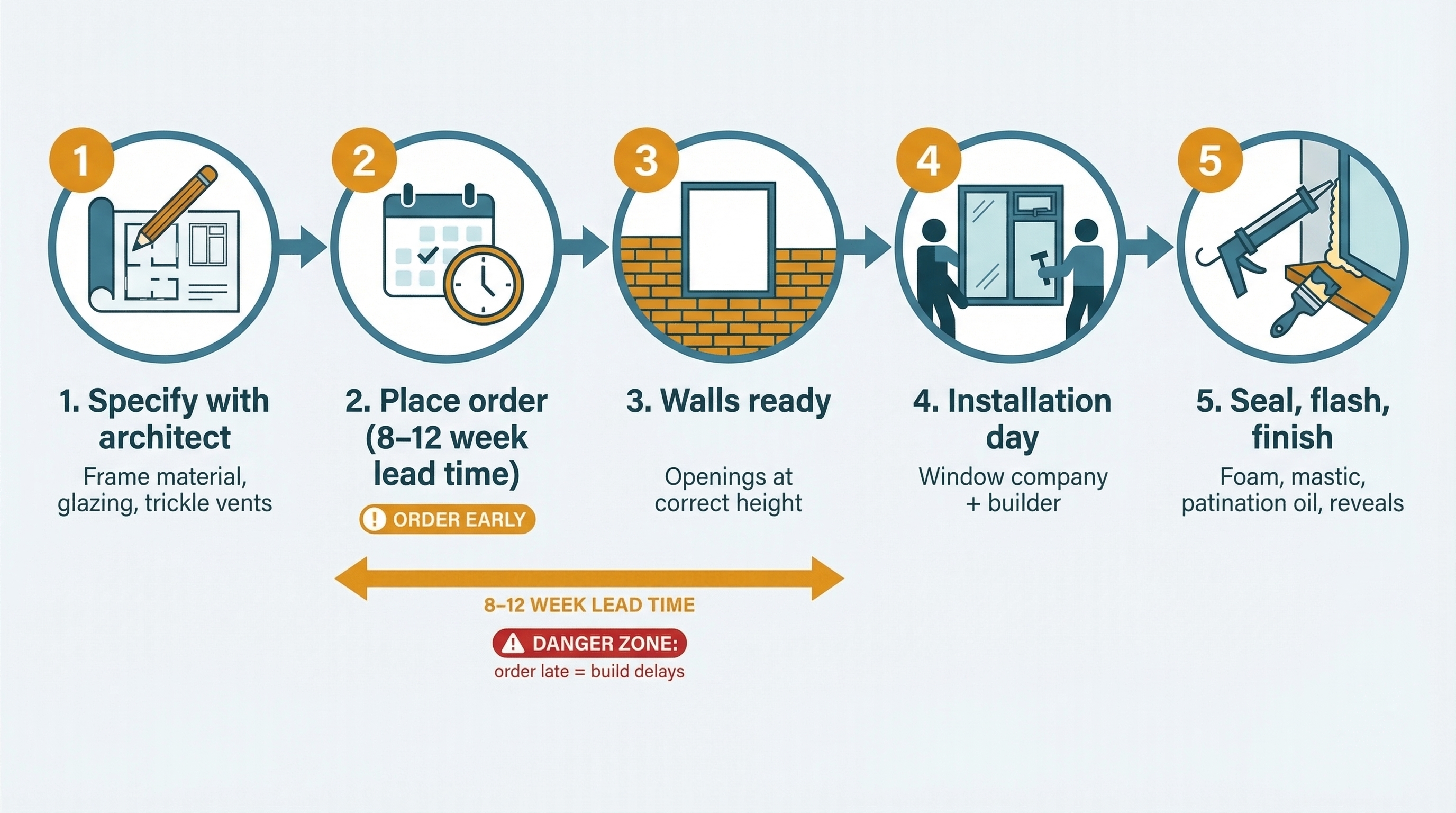
How to specify, order, and install extension windows. Covers frame materials, glazing specs, the 8-12 week lead time trap, installation day checks, and the sealing details everyone misses.
8
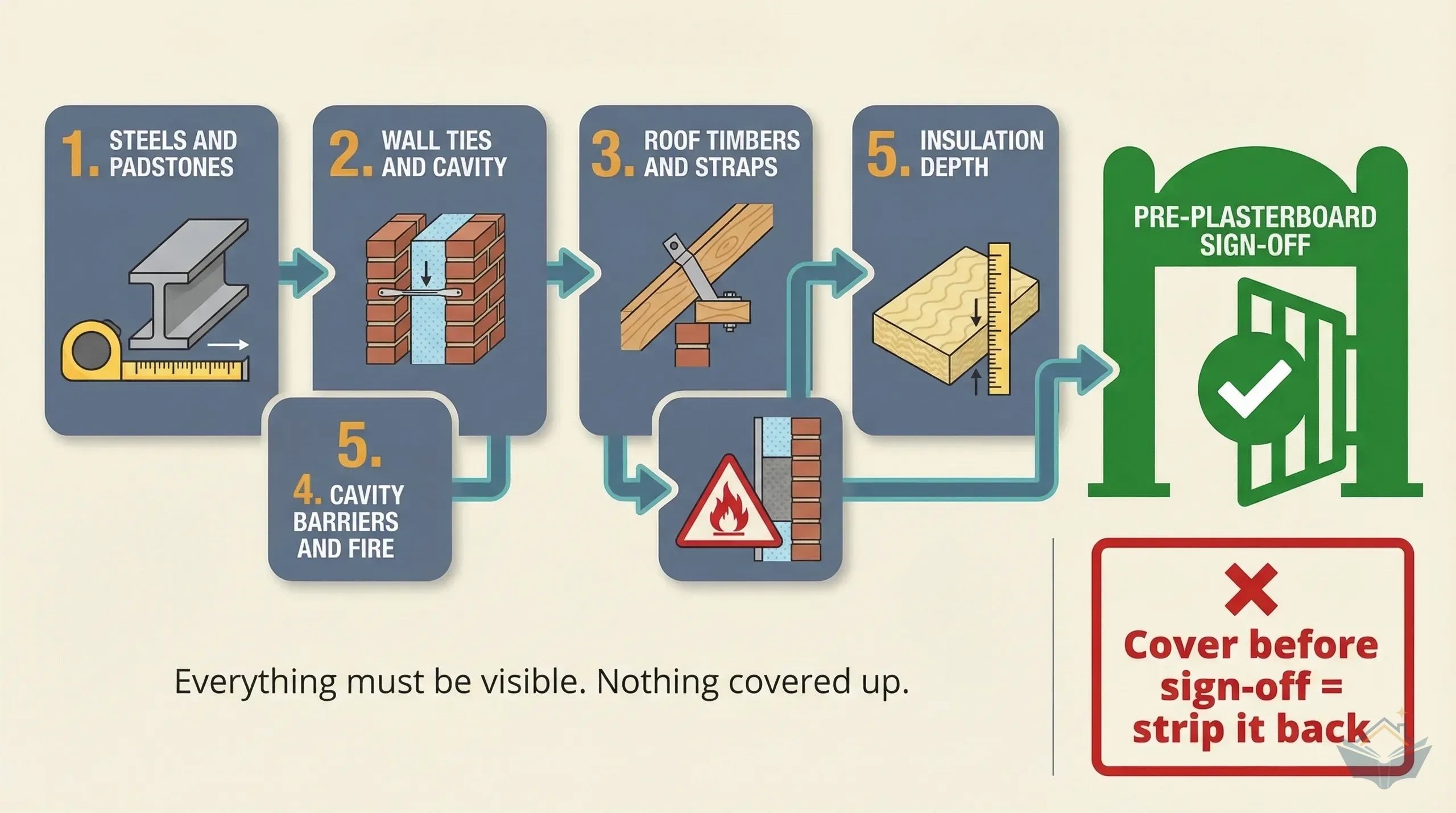
Building Control Inspection: Structure
What the BCO checks at the structural stage of your extension: steels, wall ties, cavity barriers, roof timbers, and the pre-plasterboard inspection that catches problems before they're hidden forever.
9
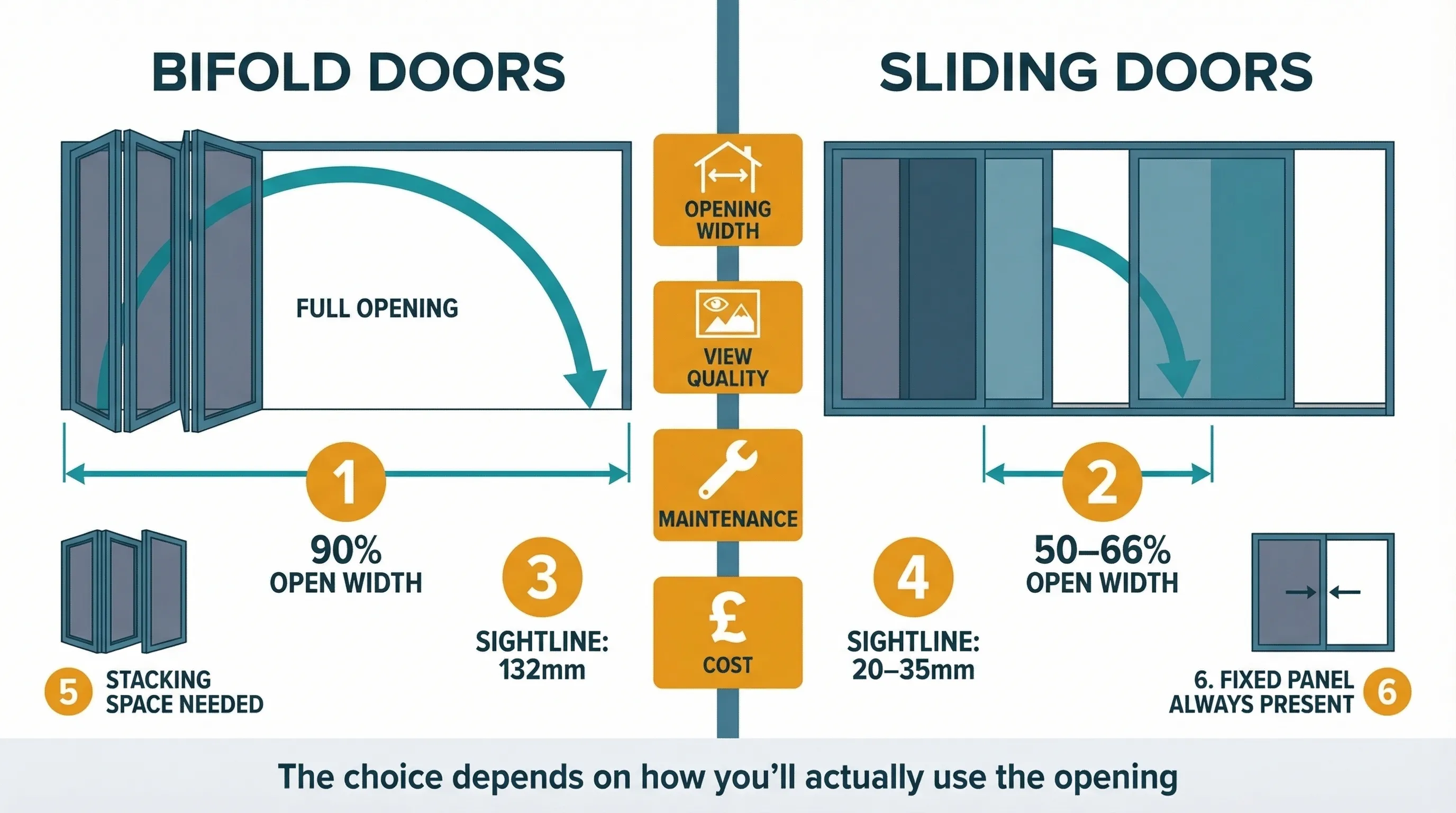
Bifold and Sliding Doors for Extensions
How to choose between bifold and sliding doors for your extension, protect your money from supplier failure, and get the installation right. Aluminium bifolds from £3,150 – £7,200.