
Groundwork
Foundations, drainage, and getting out of the ground
10 tasks in this phase

What groundworks for a house extension actually covers
Groundworks for house extensions start with the first peg in the lawn and end with the finished floor build-up. Almost every part of it is invisible by the time the roof goes on, and that is the defining feature of the phase. Get it right and nobody ever sees your best work. Get it wrong and someone is breaking concrete out with a jackhammer.
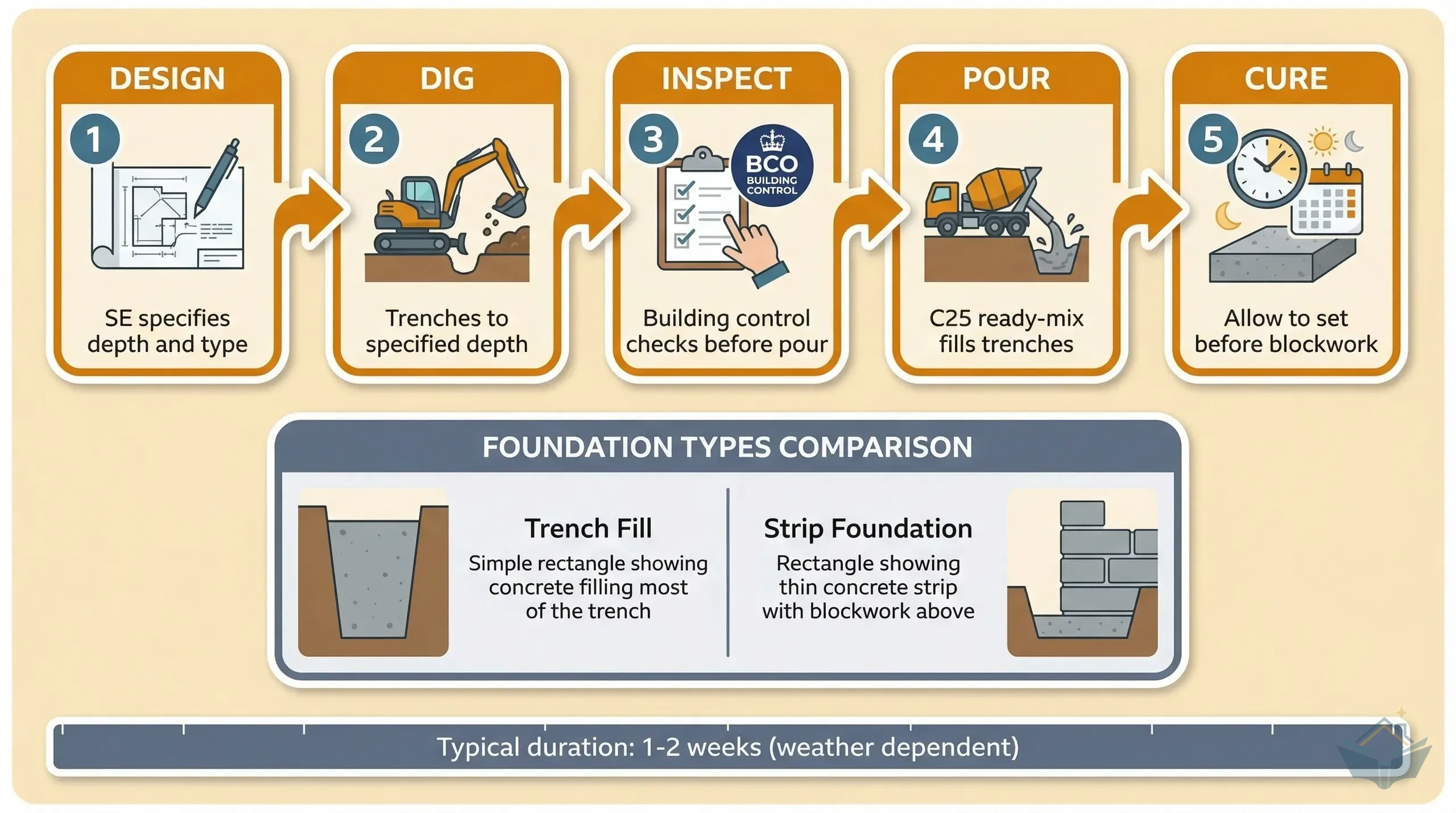
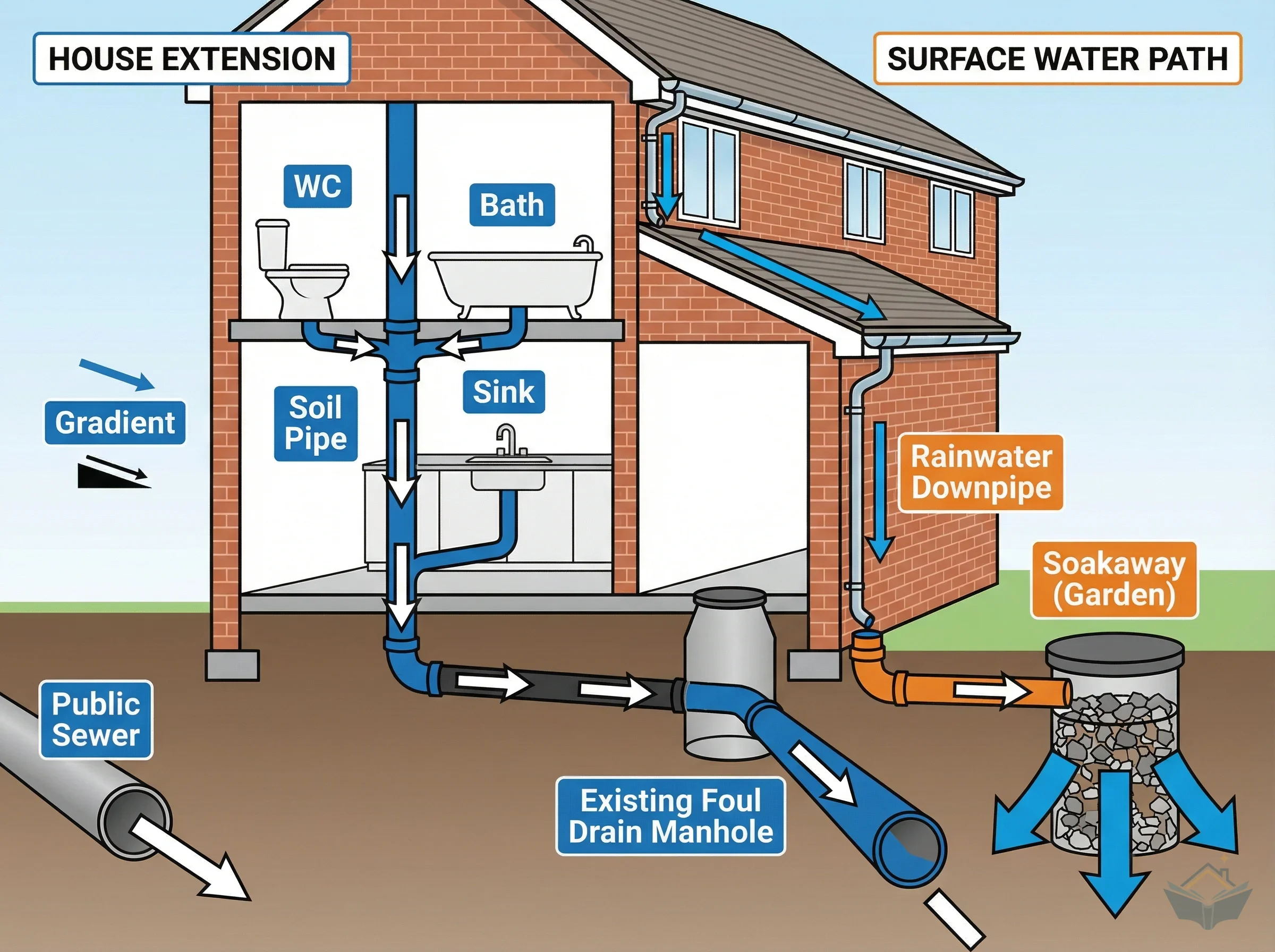
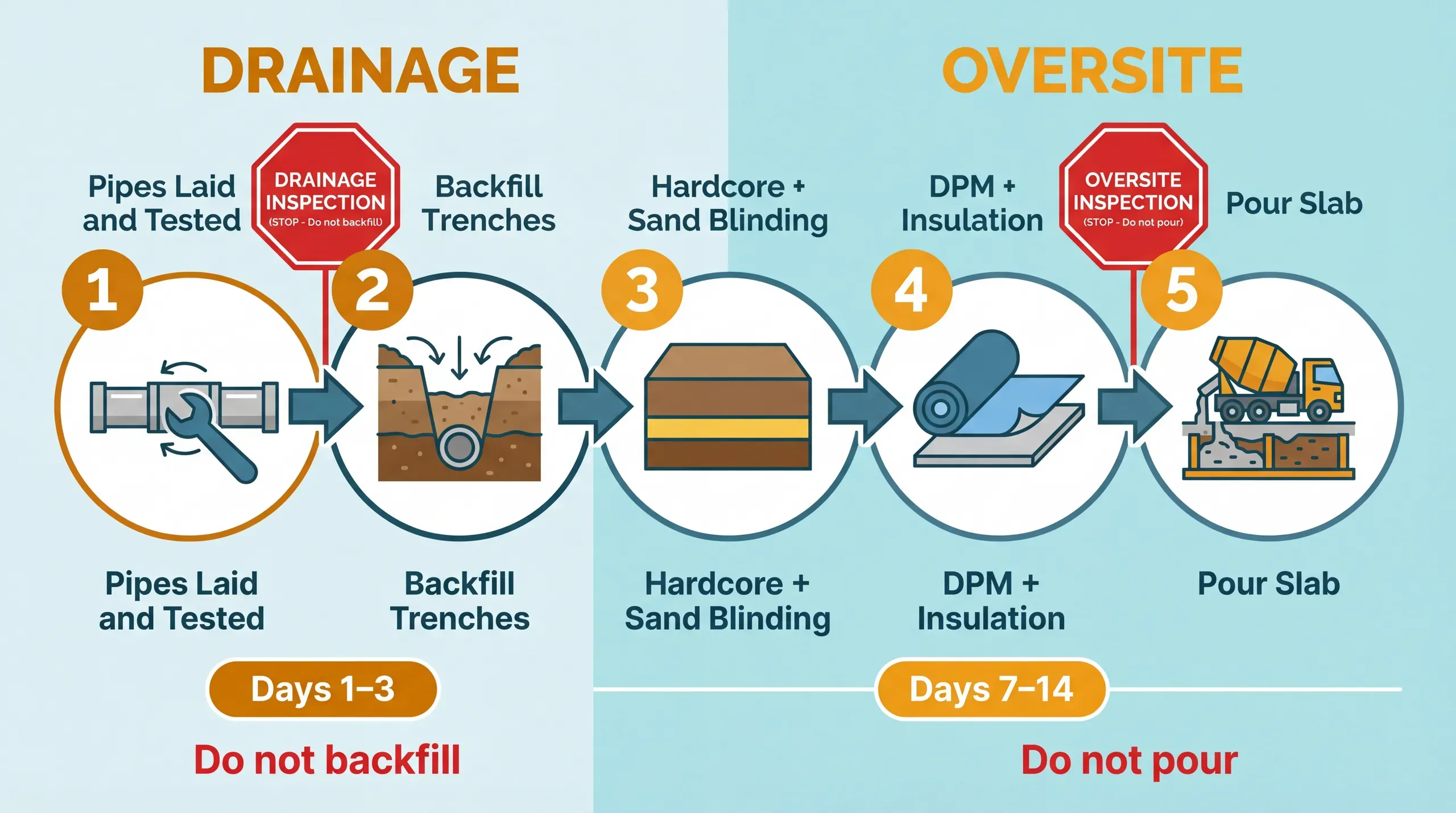
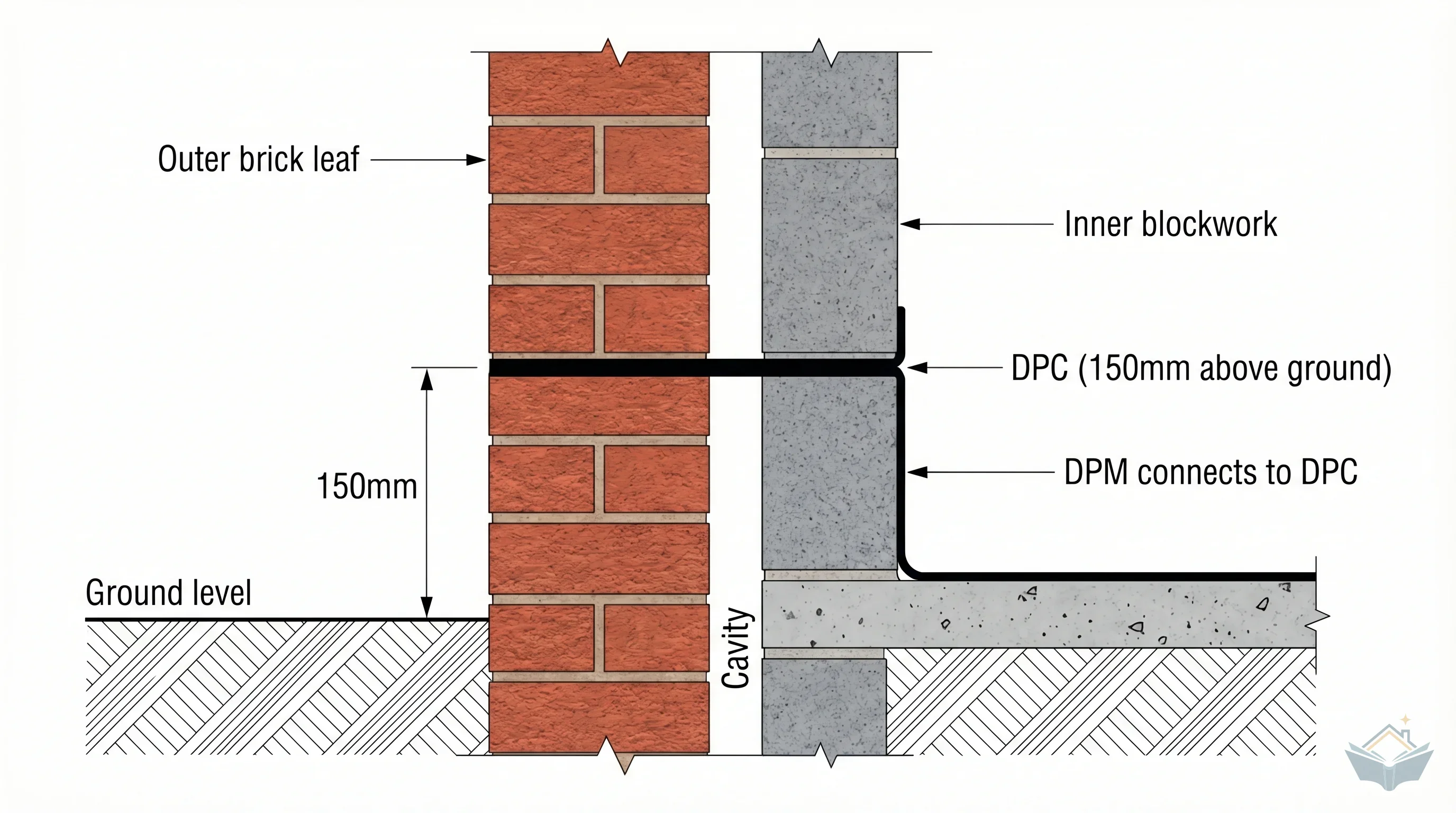
Extension groundworks run in a fixed order, because each stage buries the one before it. Services are traced first, then the footprint is set out against the house and the boundary. The dig follows, then the foundations go in. Drainage runs are laid and connected, often while the digger is still on site. The oversite build-up goes down under the floor next: hardcore, blinding, membrane, insulation. The slab is poured, the damp proof course is bedded into the walls at the correct level, and the phase closes. In flagged postcodes, radon measures are built into that same floor build-up rather than retrofitted later.
Two things make this list longer in practice than it looks on paper. Drainage usually needs a connection into an existing run or a public sewer, which brings a third party into your programme. And the ground under your garden gets a vote on everything above it.
The two inspection points that cannot be done retrospectively
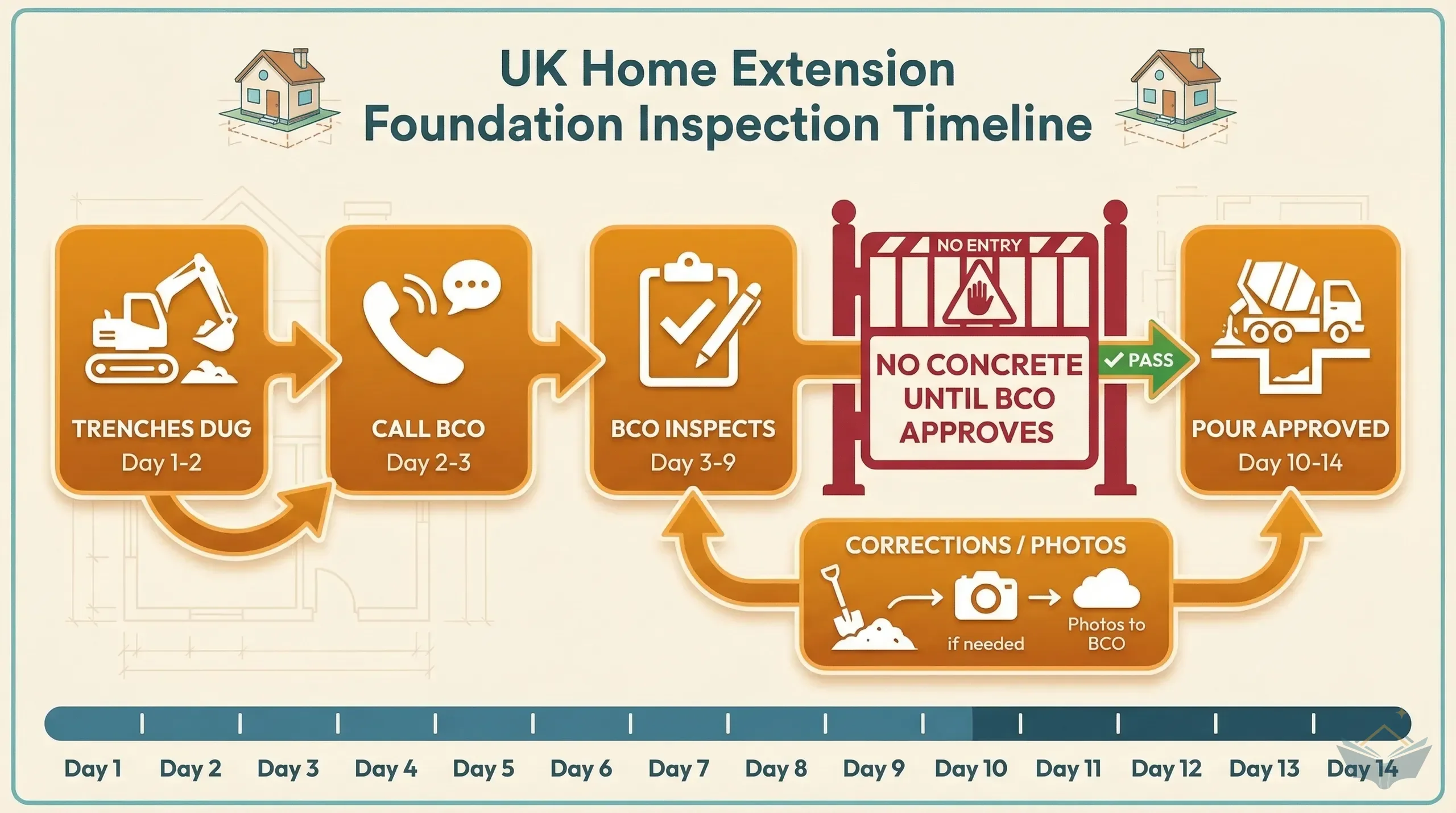
Building control visits your site twice during groundwork, and both visits gate work that is about to be covered up permanently.
The first is the foundation inspection. The inspector wants to see the open trench before any concrete goes in. The second covers drainage and oversite, where the pipework is checked and tested before backfill, and the floor build-up is checked before the slab is poured.
Neither can be done after the fact, which is the whole point of them. An inspector who arrives after the pour has one option available: require the work to be opened up so it can be seen. Timestamped photographs may be accepted at the inspector's discretion, and you should take them at every stage regardless, but discretion is not a plan. Book both visits into the programme alongside the concrete delivery rather than after it, and make sure your groundworker understands that the decision to pour is not his to make. The full sequence of inspections across a build is covered separately.
Why groundwork carries the most cost uncertainty of any phase
Everything above ground can be priced off a drawing. Blockwork, steel, glazing and plaster are all measurable before anyone turns up. Groundwork is different, because nobody knows what is under your lawn until the bucket goes in.
Clay shrinks and swells. Nearby trees push the required depth down. Old foundations, redundant drains, buried slabs and made ground left by a previous owner all surface at exactly the wrong moment. A deeper trench means more concrete going in, more spoil coming out, and more lorry movements to pay for, and those costs move together rather than one at a time.
So treat the quoted figure for this phase as a starting position rather than a price. Reflect that in your budget and contingency, and expect groundwork, more than any other phase, to be where the contingency actually gets spent. A groundworker who volunteers a rate for extra depth before starting is telling you something useful about how they work.
What to have ready before the digger arrives
Four things, and none of them can be sorted out on the morning.
Underground services need locating and marking using a utility search and a scan across the footprint. Striking a live main is dangerous first and expensive second.
If your footprint sits over or close to a public sewer, the build over agreement comes from your water company rather than building control, and larger sewers take months to clear. Start that one while you are still arguing about tiles.
Your structural engineer's foundation design has to be approved, and building control needs formal notice before work starts on site. Then confirm the practical things: grab or skip access, somewhere to stack spoil, and a water supply. A digger standing idle on a booked day still costs you the day.