
Structure
Walls, roof, steels, and making it watertight
9 tasks in this phase
What the structure phase builds, and in what order
Groundwork left you a level base and a damp proof course. Structure gives you a building you can shut a door on.
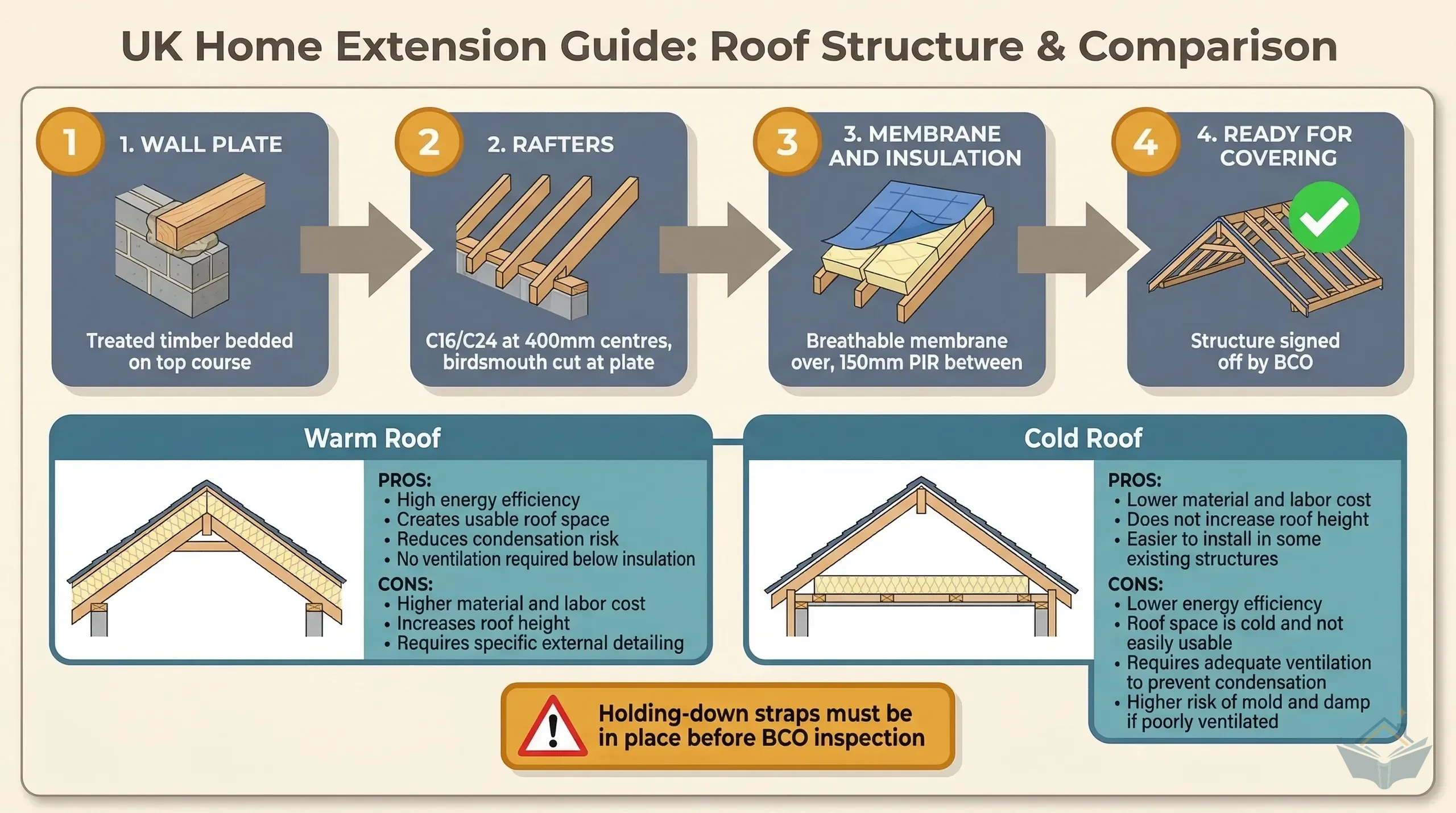
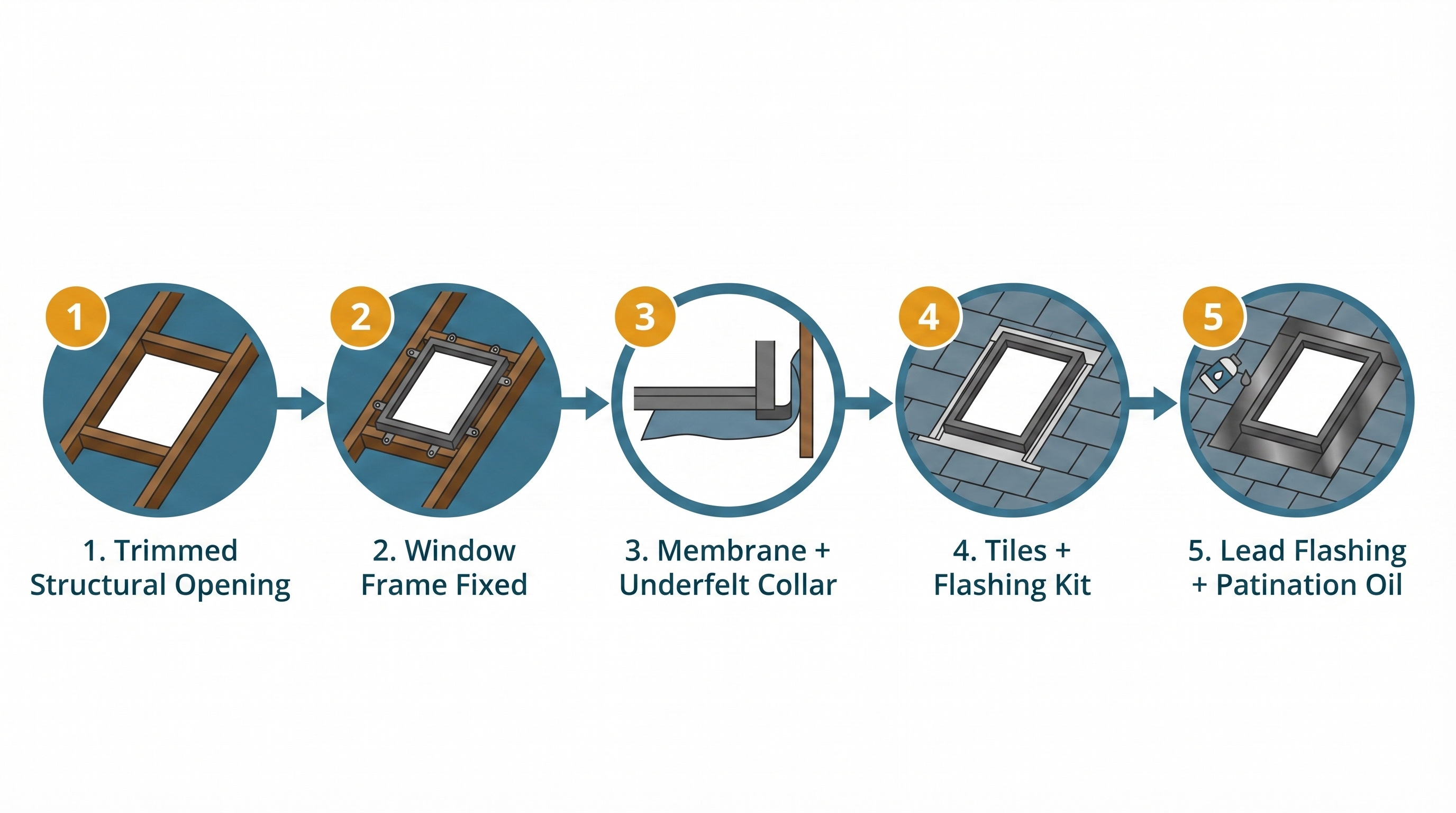
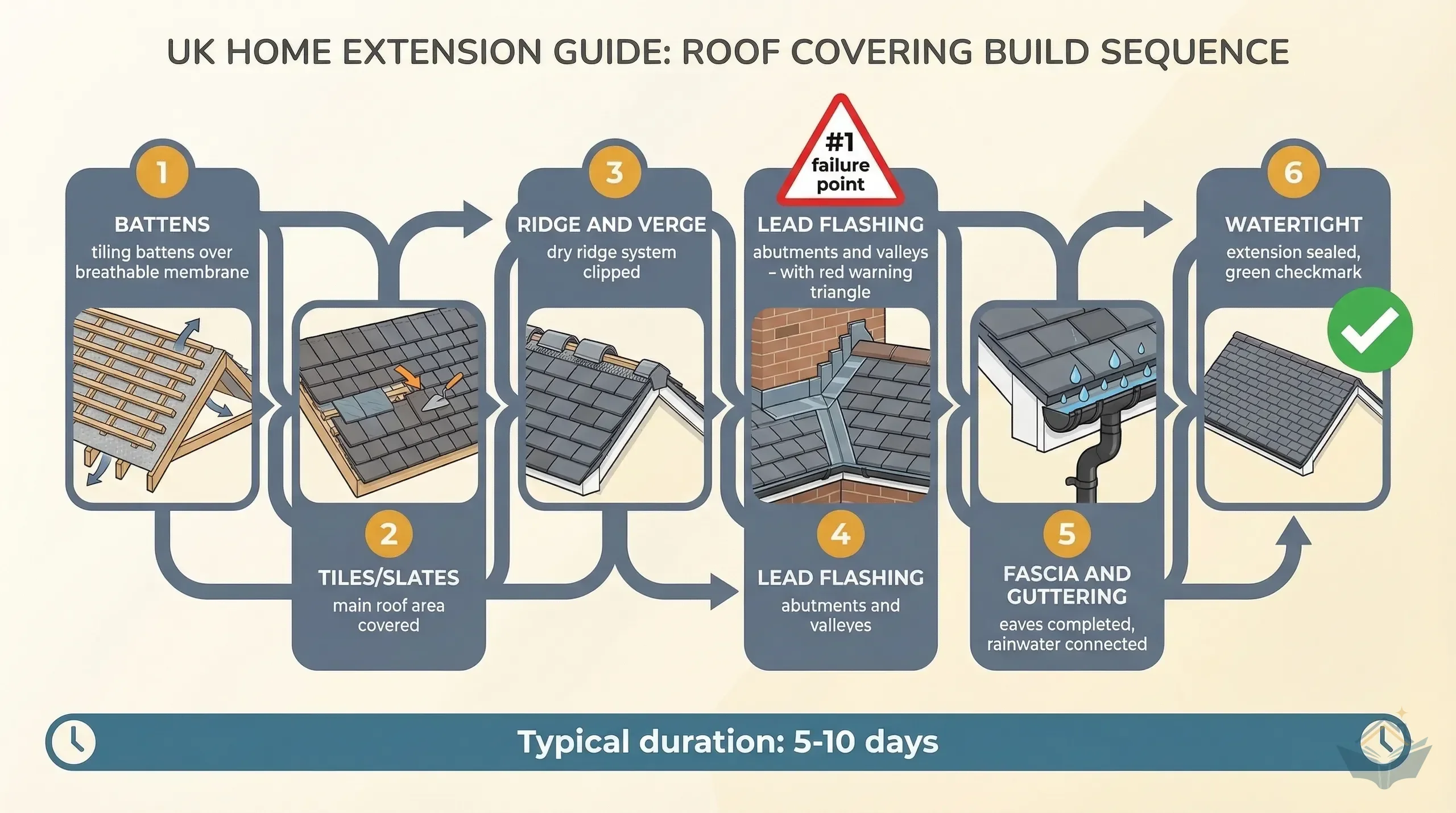
Five jobs sit inside this phase: the walls, the steel and lintels that carry the openings, the roof frame, the roof covering, and the glazing that closes the shell. They do not run in parallel. Each hands over to the next, and the handover points are where programmes slip.
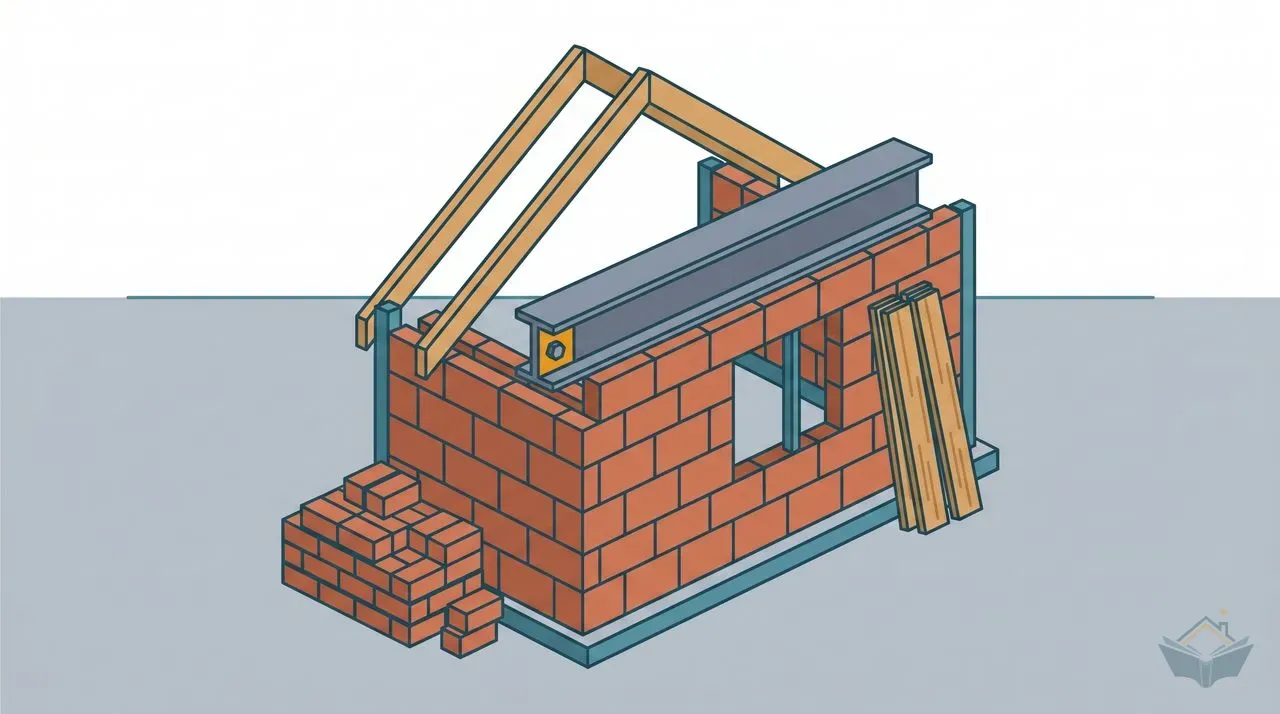
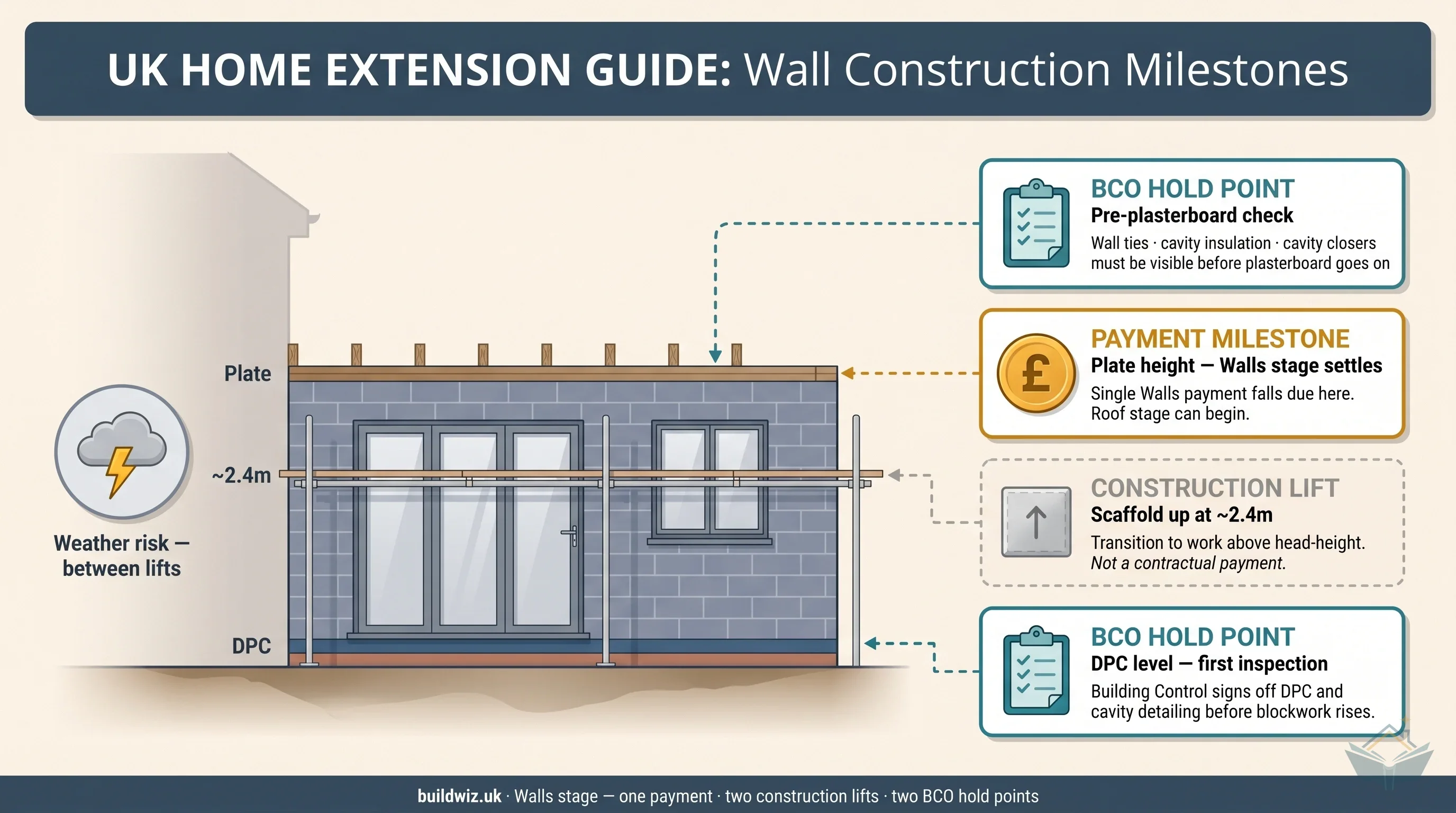
Walls and blockwork comes first, because everything downstream measures off it. Cavity walls rise off the DPC up to plate height, with wall ties and cavity closers built in as the courses go up, and every opening is set out as the blockwork passes it. An error in the setting out here carries all the way to the roofline.
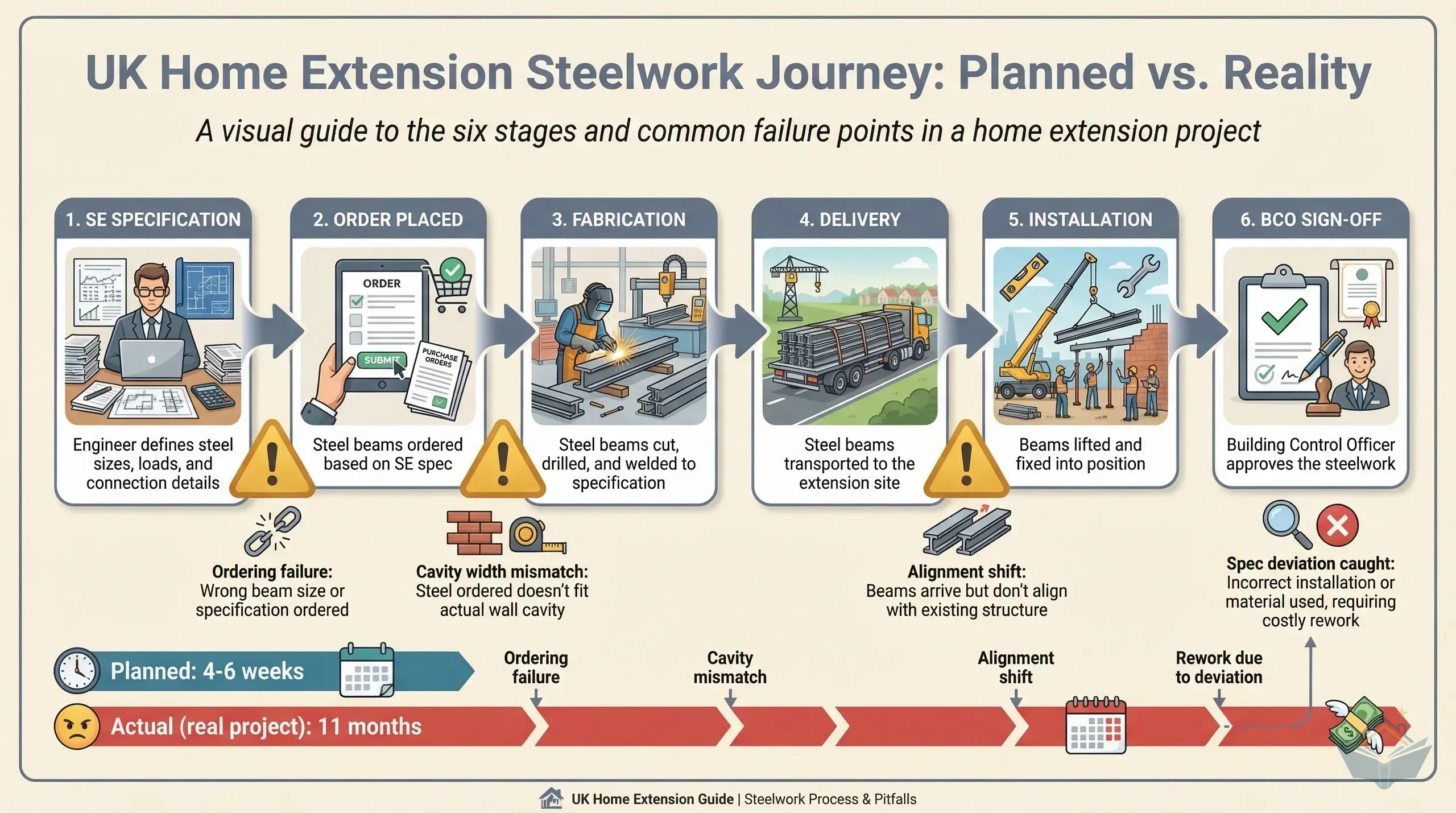
Steel is next, and it behaves differently from the rest of the phase. Your structural engineer specifies the sections and connections; the fabricator then makes them to a survey taken on site, not from a drawing. That survey needs the blockwork at the right height with the supporting piers already built, so the steel order cannot be placed the day the digger leaves. If calculations are not yet issued, that sits back in structural engineer. Steels and lintels covers what happens once they are.
Only when the steels are seated and bearing properly does the roof structure go up, and only when the frame is complete does roof covering follow.
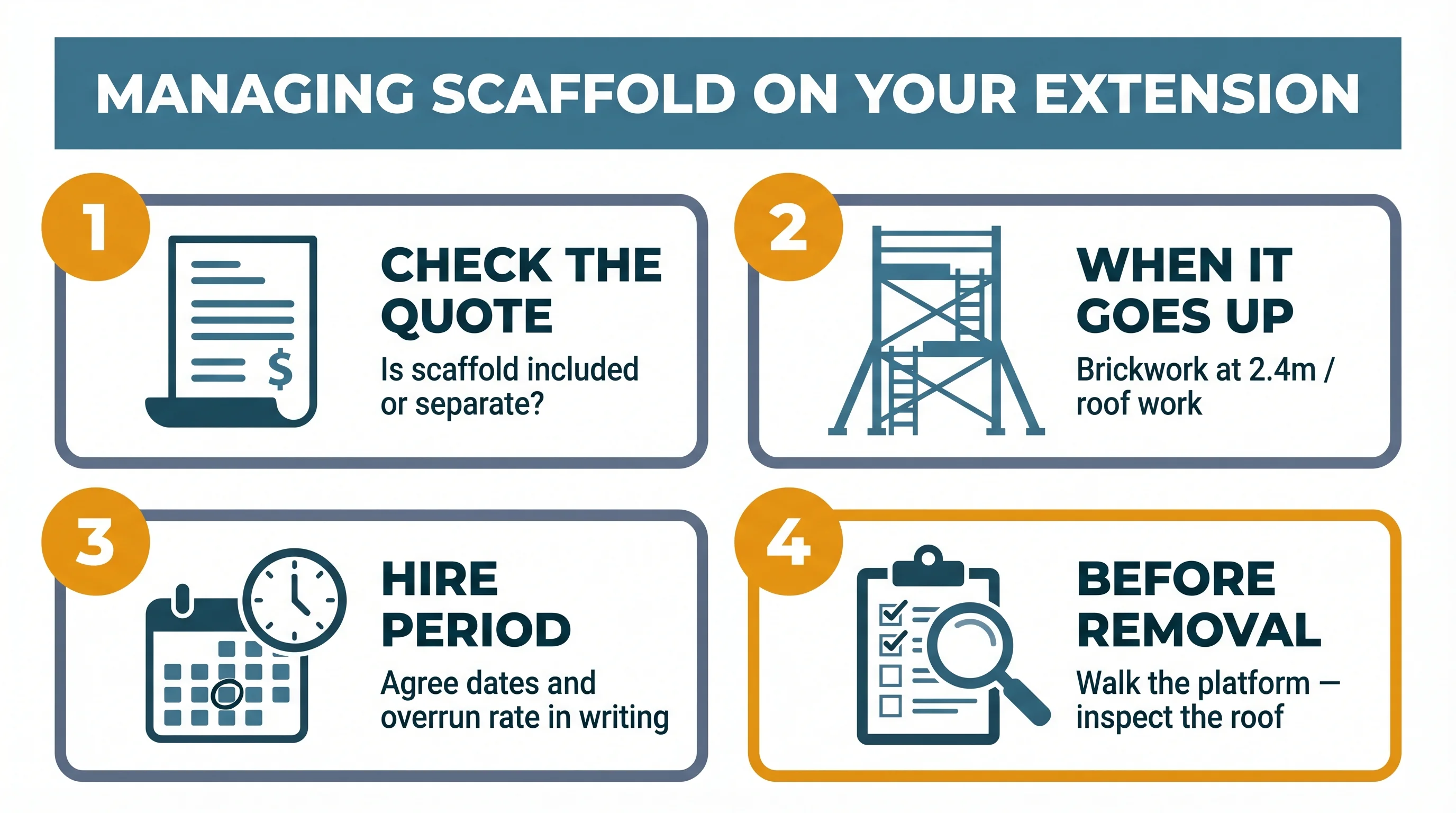
Scaffolding wraps around all of it. It goes up before any roof work starts, and it cannot come down until external finishes are done and inspected, because pointing, render, fascias and gutters are all reached from the boards. Strike it early and you pay to bring it back.
Lead times, not labour, set the length of this phase
The trades on site are rarely what holds a structure phase up. Two ordered items are.
Steel is fabricated for your building alone: cut to length, drilled, plated, primed. Once the order is placed, the queue at the fabricator is the queue, and putting more people on your site does nothing to move it. The lever you have is placing the order the moment the site survey allows, then confirming with the fabricator directly that the order exists rather than taking your builder's word for it.
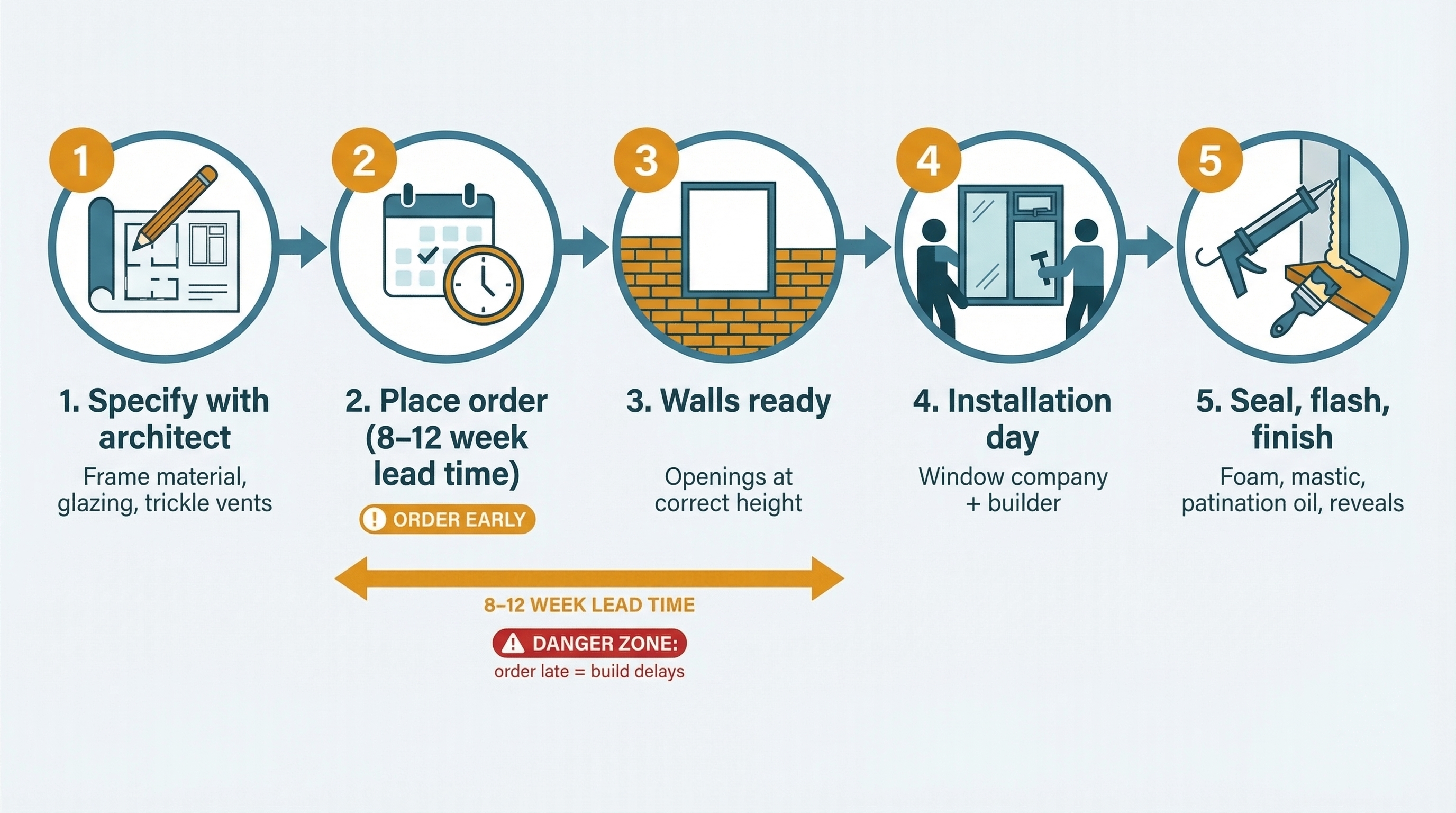
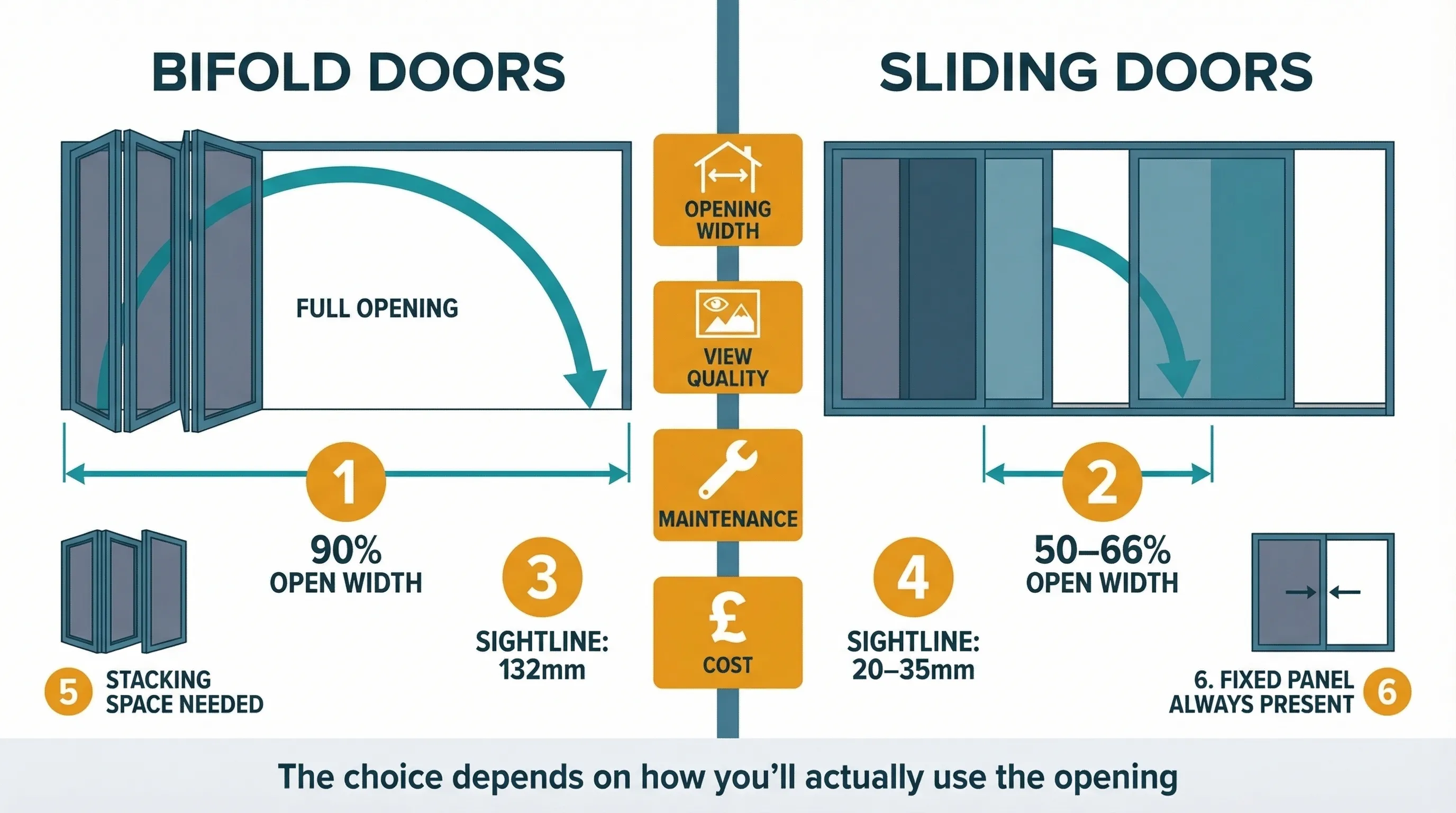
Glazing runs the same way, often worse. Windows, and particularly bifold and sliding doors, are manufactured to order against a survey of the finished opening. That creates a hard dependency running the other way: structural openings cannot be formed until the final window and door sizes are confirmed. Openings get built to the manufacturer's tolerances, not the other way round. Order after the blockwork is up and you are either altering a finished opening or packing the frame out with timber filler that will always show. Windows and doors sets out the survey and order sequence.
Neither can be compressed once ordered. Both can be started early. That asymmetry is the whole game in this phase, and it is the single strongest argument for settling your openings while the trades still have weeks of work in front of them.
The inspection you cannot photograph your way past
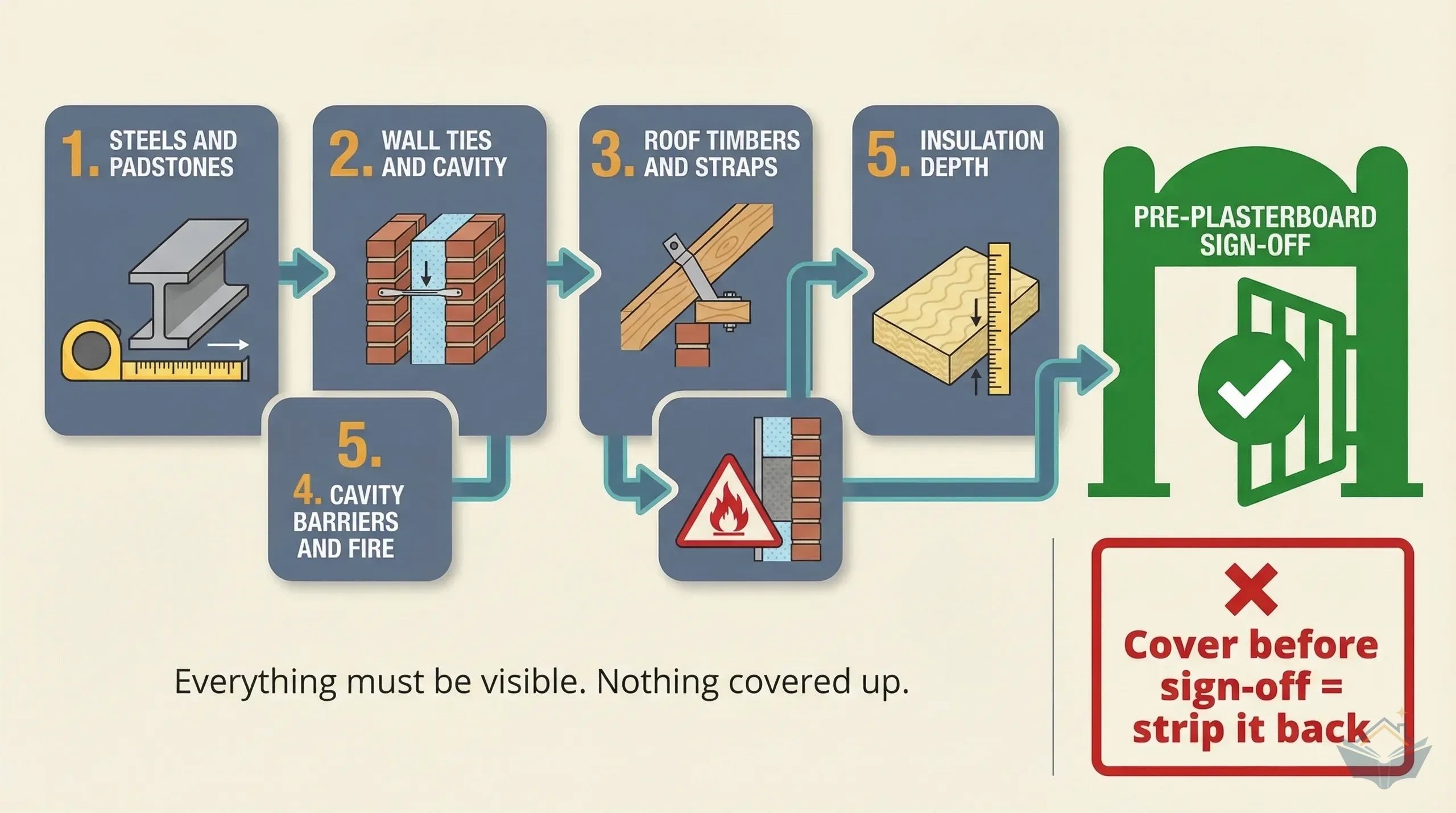
Building control visit once during structure, and it is one of the most searching visits of the whole build. Walls up to plate height, steels and their bearings, straps and ties, cavity barriers, roof timbers: all of it has to be complete and still visible from inside at the same time. Councils call it the structural, superstructure or pre-plasterboard inspection. Same visit.
Miss it and the inspector can require the work to be opened up so it can be seen, which means stripping boarding off a wall that was finished last week, at your cost. Book it, attend it, and let nobody start closing up until it has passed. Building control inspection: structure lists what gets checked.
Weathertight is the milestone that releases everything else
The structure phase ends at weathertight: roof covered, glazing in, openings sealed. Until that point, every trade that follows is exposed to the weather, and no plasterer or electrician worth booking will commit to a firm date.
Once the shell is closed, the building stops being a site and starts being an interior. Insulation, boarding, wiring and pipework can all begin, and the programme becomes far more predictable because nothing hangs on the forecast any more. Push to reach this point before winter. A week lost before weathertight costs more than a week, because it drags every trade behind it into worse conditions.