
Units & Measurements
A homeowner's decoder for the unit notation that shows up on quotes, datasheets, structural engineer's calculations and building regs: what W/mK, kN, N/mm², C24 and 1:40 actually mean, and where you meet them.
Every quote, datasheet and set of structural calculations is written in notation nobody stops to explain. A line on an insulation spec reads 0.022 W/mK, an engineer says the beam carries 45 kN, a block is stamped 7.3 N/mm2, and a drainage drawing notes a 1:40 fall. None of it is hard once you know what each symbol measures and why it matters to your build.
The pages below decode the units you will meet at each stage, so you can cross-check a builder's quote, a manufacturer's datasheet or a building control note with confidence.
Where to start
Begin with the units and symbols decoder, a one-page quick reference to the notation you are most likely to meet. If you have a specific document in front of you, go straight to the matching page: thermal performance units for an insulation datasheet or a U-value on your drawings, and forces and structural loads for a structural engineer's calculations.
The pages, grouped by what they measure
Heat loss. Thermal performance units explains W/mK, R-value and U-value, how they connect, and the Part L targets an extension has to meet.
Strength and load. Forces and structural loads covers kN, N/mm², point and distributed loads, and the grade stamps on timber and concrete such as C24 and C25.
Size, quantity and slope. Length, area, volume and falls explains why drawings are in millimetres, how m² and m³ drive pricing, and how a fall like 1:40 is written. Weight, density and bagged quantities turns a cubic metre of sand, ballast or cement into a count of bags.
Services. Volts, amps and watts explains why circuits are rated in amps and why a high-load appliance needs its own circuit. Pressure, temperature and flow decodes bar, degC and L/min on boiler and water datasheets.
Where you meet them in the build
Loads and grade stamps arrive with the structural engineer, and volumes and bag counts matter from foundations and footings onwards. Falls appear on drainage drawings, thermal units on the insulation spec, and the electrical and water units at first fix electrics and first fix plumbing. The foundation concrete calculator and insulation calculator put several of these units to work.
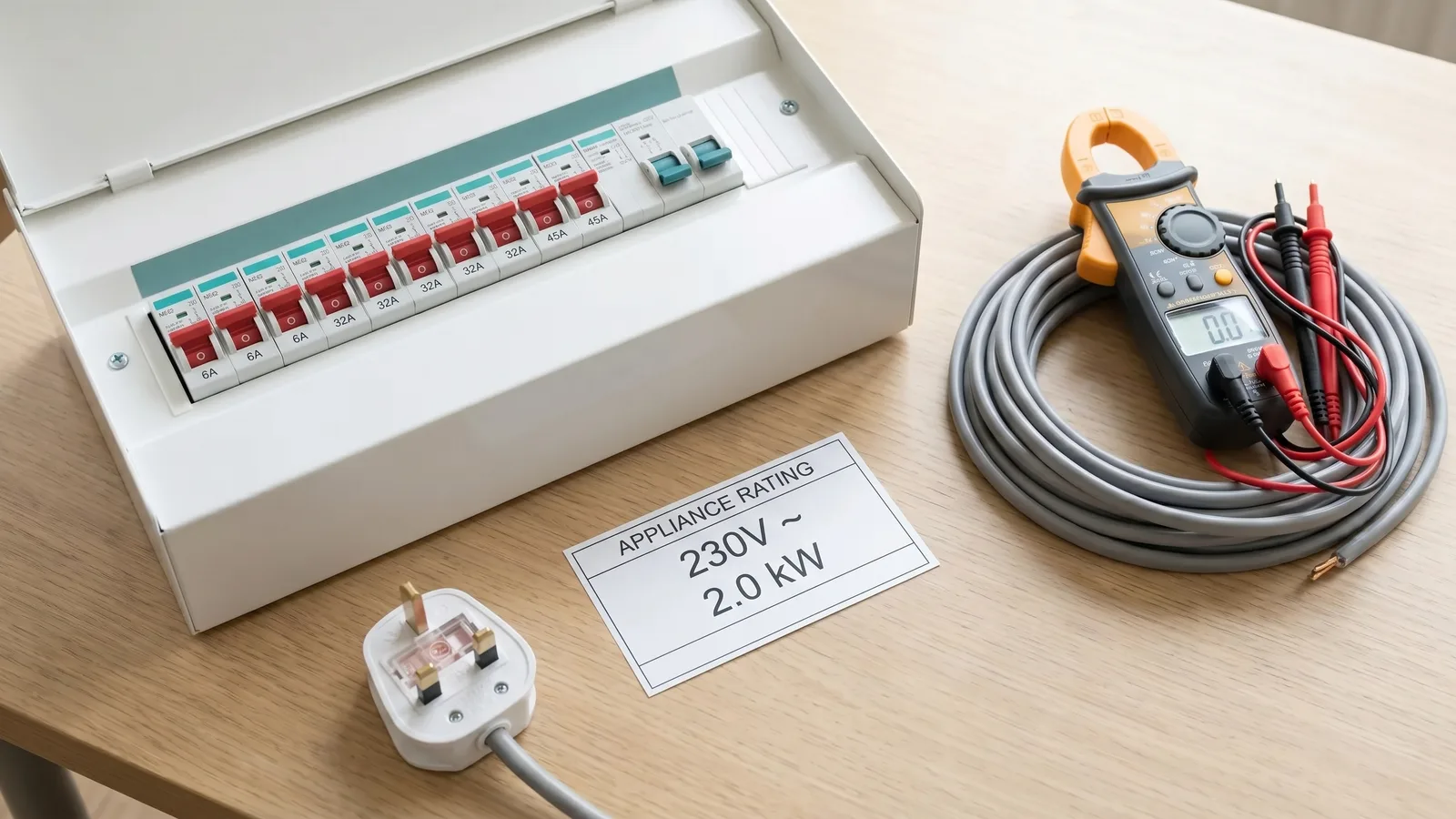
Volts, Amps and Watts: Your Extension's Electrical Units Explained
What volts, amps and watts each measure, how W = V x A ties them together, why circuits and breakers are rated in amps, and why a high-load appliance needs its own circuit.
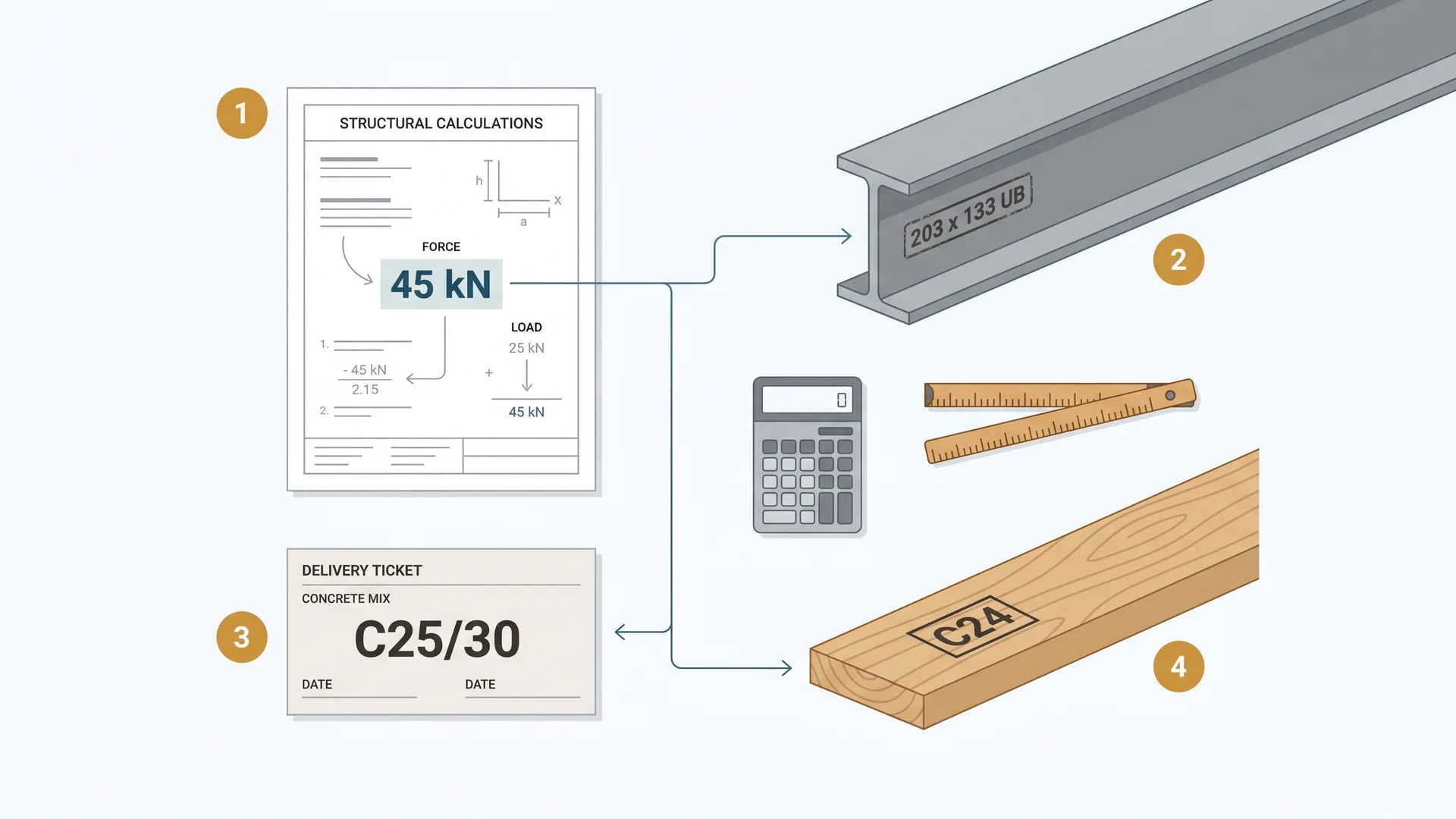
Forces & Structural Loads: Reading kN and N/mm² on Your Calculations
A homeowner's plain-English decoder for the force and strength notation in structural engineer's calculations and on steel, concrete and timber: newtons, kilonewtons (kN), N/mm² (MPa), point vs distributed loads, and the C16/C24 and C20-C30 grade stamps.
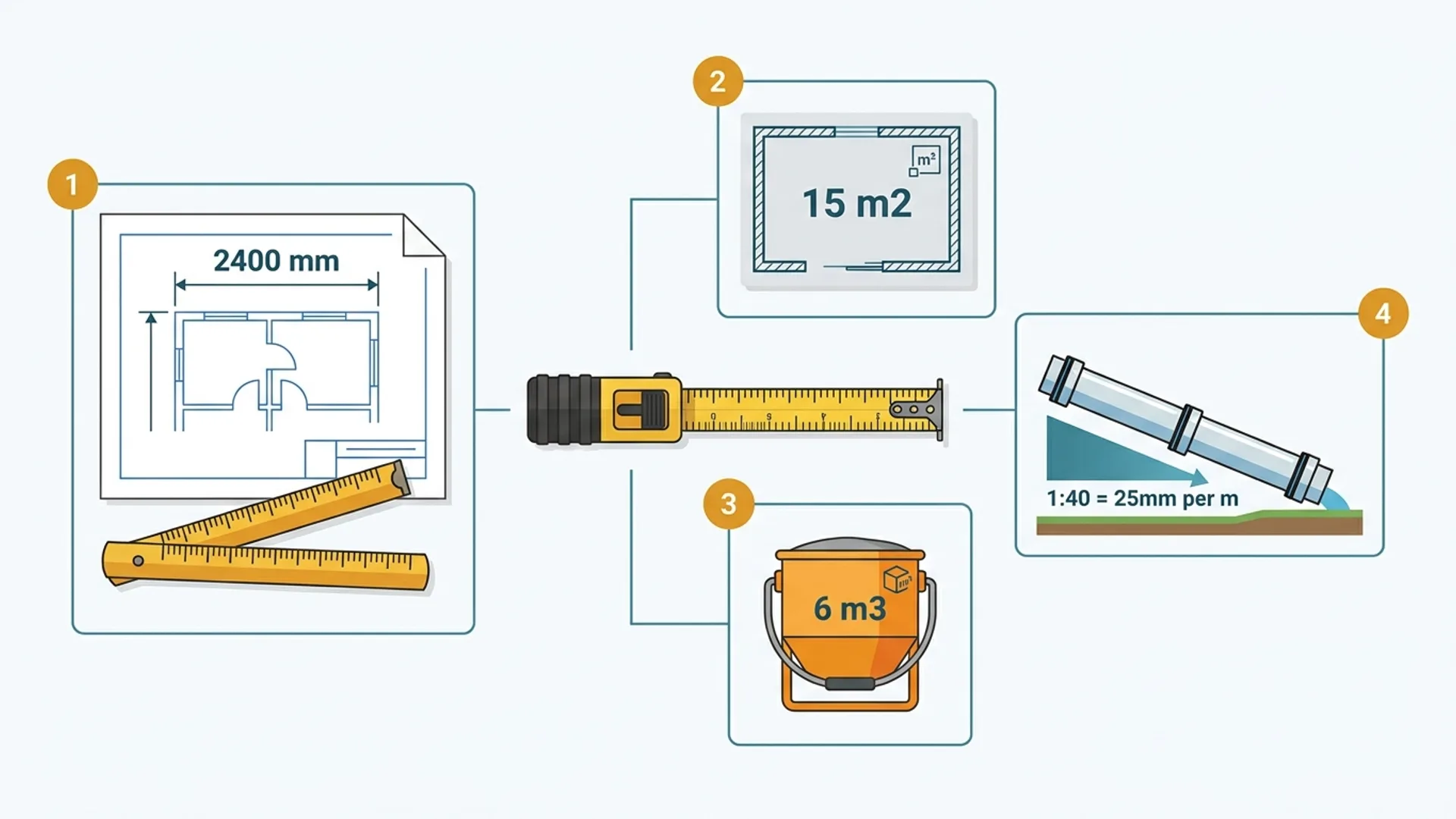
Length, Area, Volume & Falls: Reading mm, m², m³ and 1:40 on Your Drawings
A homeowner's plain-English decoder for the everyday dimensional units on UK extension drawings, quotes and delivery tickets: why drawings work in millimetres, what m² and m³ mean for pricing, and how falls are written as mm per metre and as ratios like 1:40 and 1:80 for drainage and flat roofs.
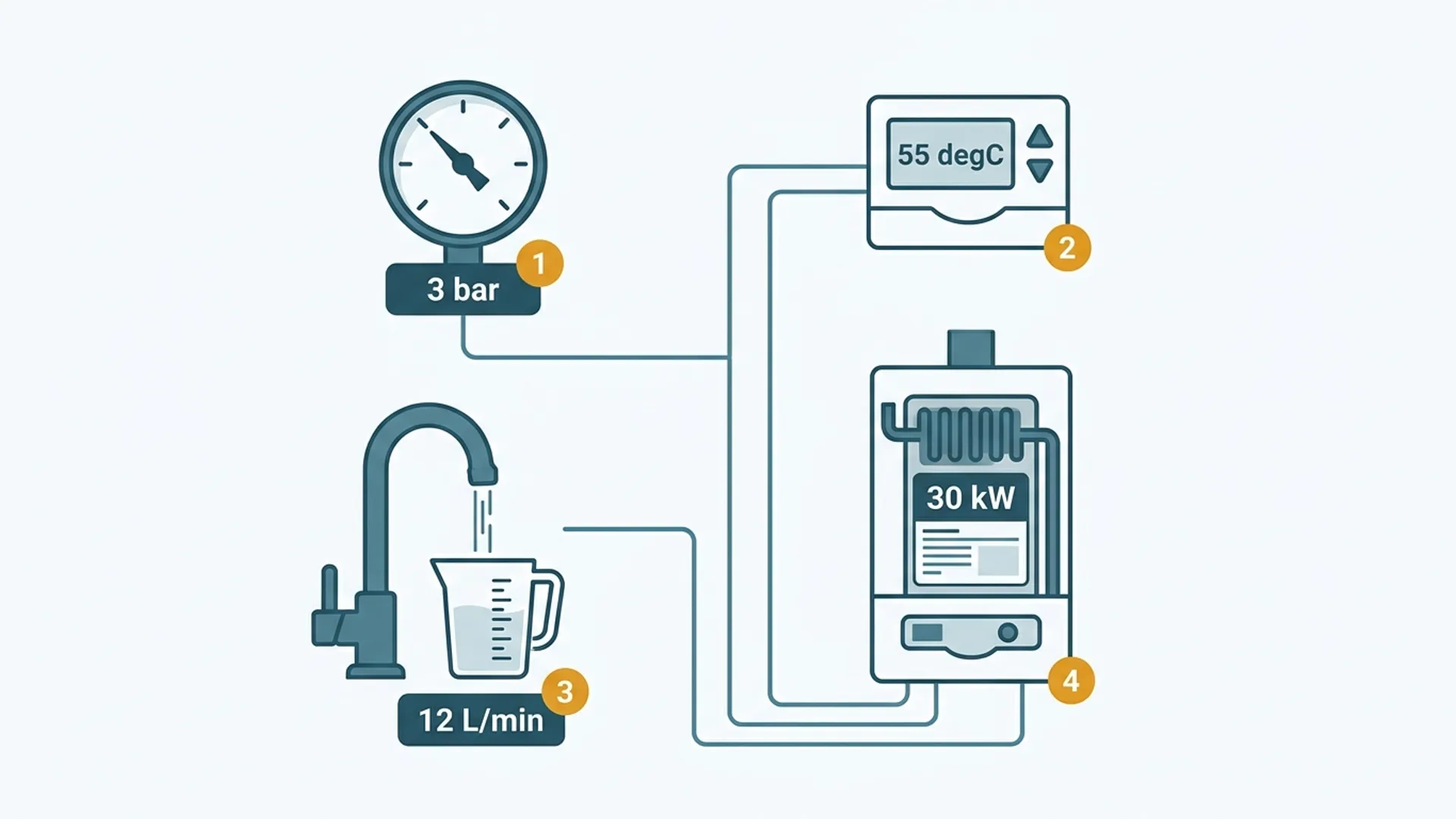
Pressure, Temperature & Flow: Reading bar, degC and L/min on Boiler and Water Datasheets
Decode the units on UK boiler, water and gas datasheets: bar (water and gas pressure), degC (flow and curing temperatures) and litres per minute (flow rate), how they connect, and why mains pressure decides your shower and your combi boiler.
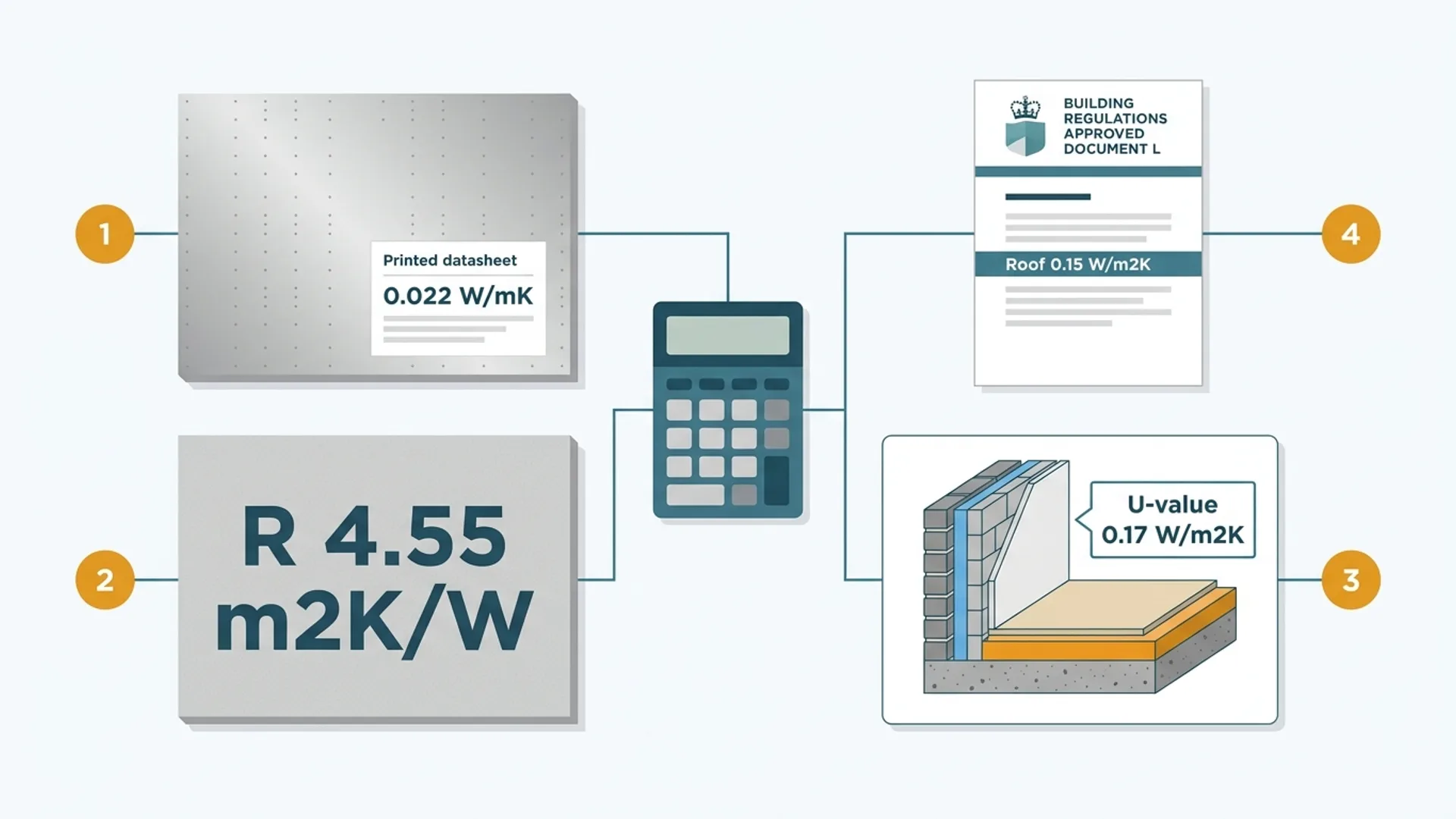
Thermal Performance Units: W/mK, R-value and U-value Decoded
Decode the three thermal units on UK insulation datasheets and building regs: W/mK (lambda), m²K/W (R-value) and W/m²K (U-value), how they connect, and the Part L 2021 extension targets.

Units & Symbols: A Quick-Reference Decoder for Your Build
Decode the unit notation on UK extension quotes, datasheets, structural calculations and building regs: W/mK, U-values, kN, N/mm², strength classes, falls, amps, bar and bagged quantities, in plain English.

Weight, Density & Bagged Quantities: kg, Tonnes and How Many Bags
A homeowner's plain-English decoder for the weights on extension deliveries and skips: kilograms and tonnes, density in kg/m³, and how to turn a cubic metre of sand, ballast or cement into a count of 25kg bags or bulk bags (~850kg).