
Site Protection
Heavy-duty tarpaulins and other sacrificial coverings used to keep an open extension shell weathertight and to protect finished joinery and floors during the messy second-fix trades.
Site protection is the cheap insurance that stops the weather and the following trades wrecking work you have already paid for. A tarp lashed over the rafters when a roof run does not finish takes half an hour and saves a saturated ceiling. Sheets laid over a finished floor before the decorators arrive cost far less than the boards they protect.
These guides cover the sacrificial materials an extension build goes through: blankets that stop fresh concrete freezing, tarpaulins for masonry and open roofs, board and sheets for finished floors and fitted units, and the marker paint used to set out the ground before anyone digs. Each page explains what to buy, which specification matters on site, and where cheap versions let you down.
Where to start
Read the heavy-duty tarpaulin guide first, because the weight rating printed on the pack decides how long a tarp lasts outdoors. If any concrete is going in between autumn and spring, read concrete curing blankets before the pour is booked. Before the second-fix trades come back in, read hardboard floor protection, including when laying it straight over a wet screed traps moisture.
The guides, grouped by job
Groundwork and structure. Line marking spray paint for setting out trenches and marking buried services after they have been scanned, concrete curing blankets for cold-weather pours, and heavy-duty tarpaulins for new blockwork, material stacks and open roofs overnight.
Finished surfaces. Hardboard protection sheets for floors and dust sheets for everything the plasterer and decorator might splash, including the difference between cotton, polythene and poly-backed sheets and why polythene is a hazard on stairs.
Where these fit in the build
Marker paint is used at setting out, after locating underground services. Curing blankets belong to foundations and footings and the ground floor oversite. Tarps earn their keep during walls and blockwork and roof structure. Floor and dust protection comes into its own at plastering, decoration, flooring and once the kitchen installation is in.
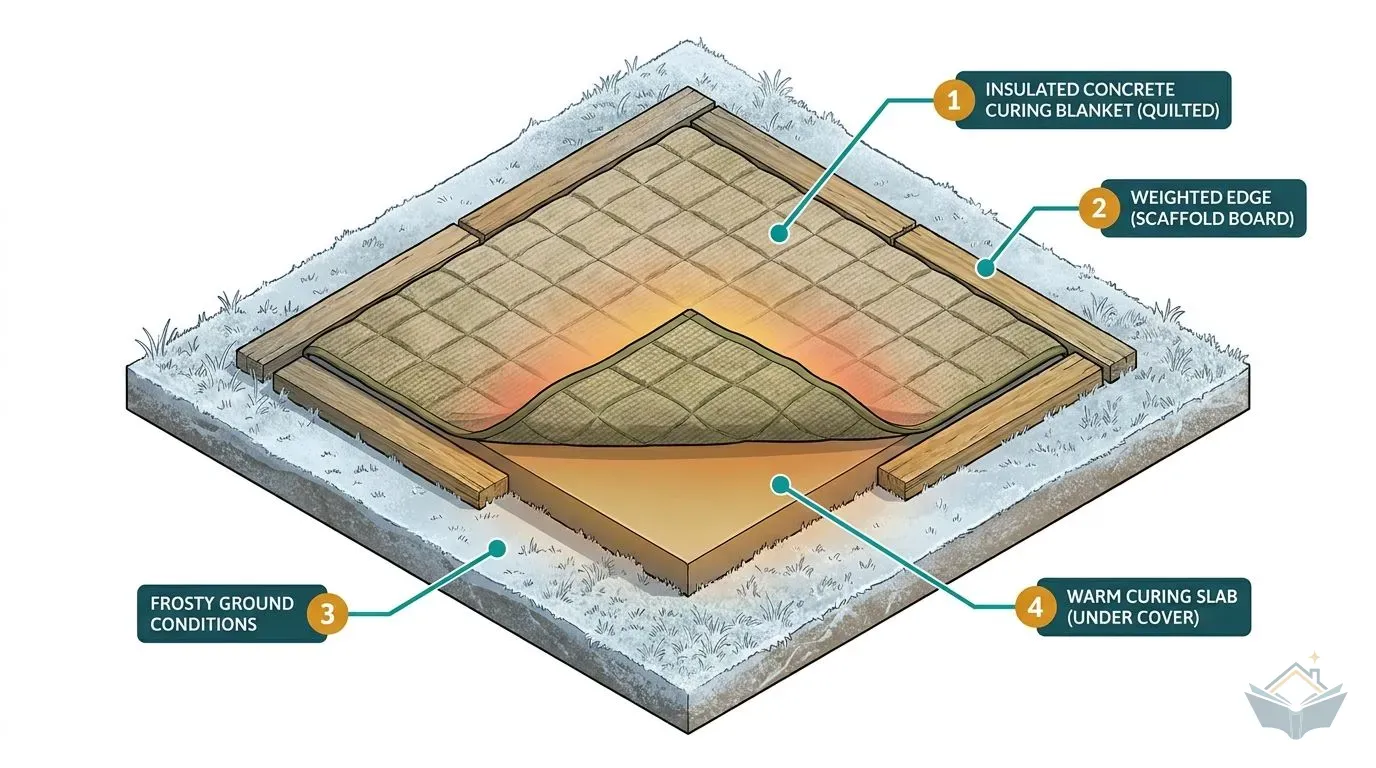
Concrete Curing Blankets: Frost Protection for Fresh Pours, and How to Check Your Groundworker Uses Them
The UK guide to concrete curing blankets. Why fresh concrete must not freeze, the 5 degree rule, insulated blanket vs hessian and polythene, and what to check on a cold-weather pour.
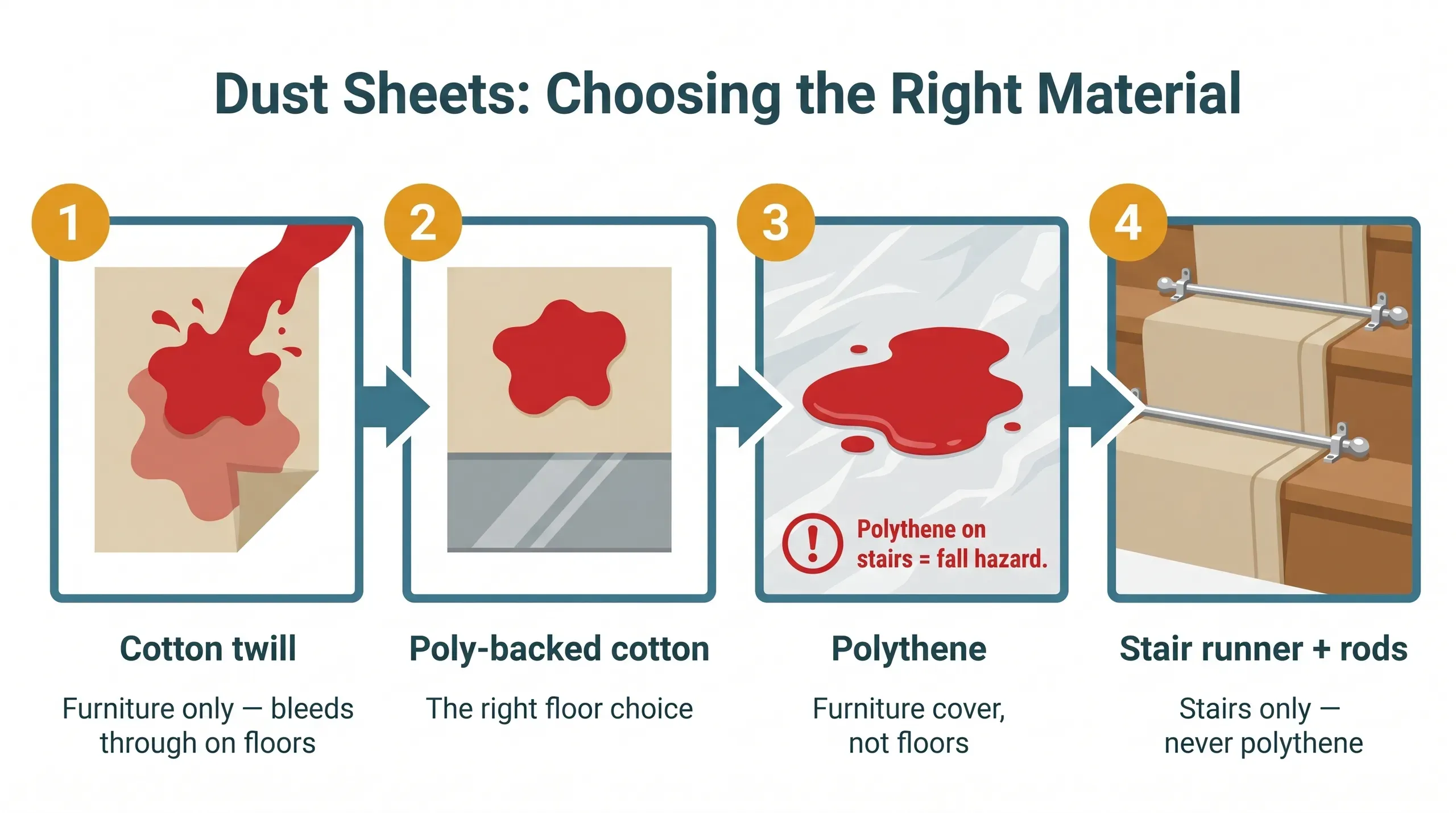
Dust Sheets: Cotton vs Polythene vs Poly-Backed, and How to Pick the Right One for Each Job
The UK guide to decorator's dust sheets. Why plain cotton bleeds emulsion through onto your carpet, why polythene is dangerous on stairs, the fire risk retailers do not mention, and what to actually buy at every price point.

Hardboard Floor Protection: Sheet Sizes, How to Lay and Tape It, and When Not to Use It
The UK guide to hardboard floor protection. Sheet sizes, how to lay and tape it without lifting the finish, the wet-screed moisture trap, and Correx vs film vs ram board.
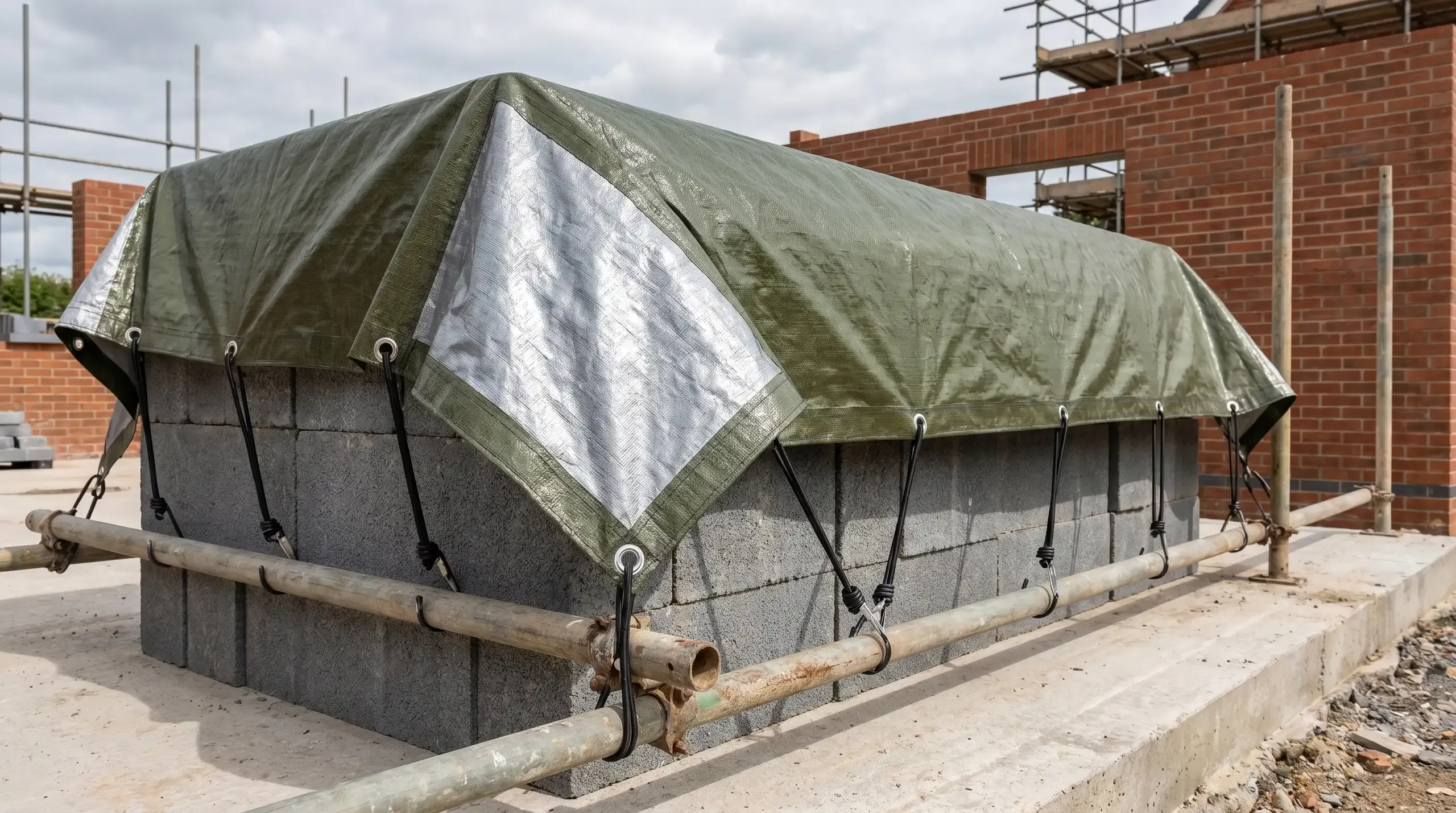
Heavy-Duty Tarpaulin: GSM Ratings, What to Buy, and What Tarp Won't Do
The UK guide to heavy-duty tarpaulins for construction sites. GSM ratings explained, the Wickes 125 gsm trap, when to use battened membrane instead, and current prices from £8 to £55+.
Line Marking Spray Paint: Setting Out Trenches, Drains and Services on the Ground
UK guide to line marking spray paint for setting out: the inverted-can design, colour codes for buried services, marking after a CAT scan, and what to buy.