
Roofing Tools
Specialist hand tools for lead flashing, slate repair, and roof junction detailing: the kit a roofer brings to dress lead at chimneys, valleys, and abutments.
You will rarely buy these tools yourself. But you will almost certainly pay a roofer to use them on your extension, and the difference between a junction that lasts decades and one that needs redoing within ten years comes down to whether the lead was properly bossed, dressed, and chased into the wall.
Lead flashing is the traditional UK weatherproofing detail at roof junctions: chimneys, abutments where a pitched roof meets a wall, valleys, and parapets. Code 4 lead is the residential default. The tools below are how a leadworker shapes that flat sheet to follow a curved or stepped profile without splitting it, and fixes it into the wall so it stays put.
Where to start
Read the plugging chisel guide first. Almost every extension roof meets the existing house wall, and whether the flashing is tucked into a chased mortar joint or held on with a bead of sealant is the detail most worth checking. Sealant ages and lets go; a properly chased flashing does not depend on it.
The guides, grouped by job
Shaping the lead. The bossing mallet stretches and shrinks Code 4 lead cold so it follows a chimney corner or valley without splitting. The lead dresser then flattens and beds it onto the tiles or slates. Three-dimensional details need both.
Fixing it to the wall. The plugging chisel cuts out the mortar joint that the top edge of the flashing is tucked into.
Each guide also covers what good work looks like when you inspect it and the questions to ask a roofer who is quoting for a junction on your build, including whether they are trained in leadwork.
Where these fit in the build
Where the new roof ties into an existing wall, that wall is chased to receive the flashing, which links this work to walls and blockwork. The leadwork itself is done during roof covering, after the roof structure is in. At the snagging checklist, look from below for lead that sits tight to the tiles with no visible gaps.
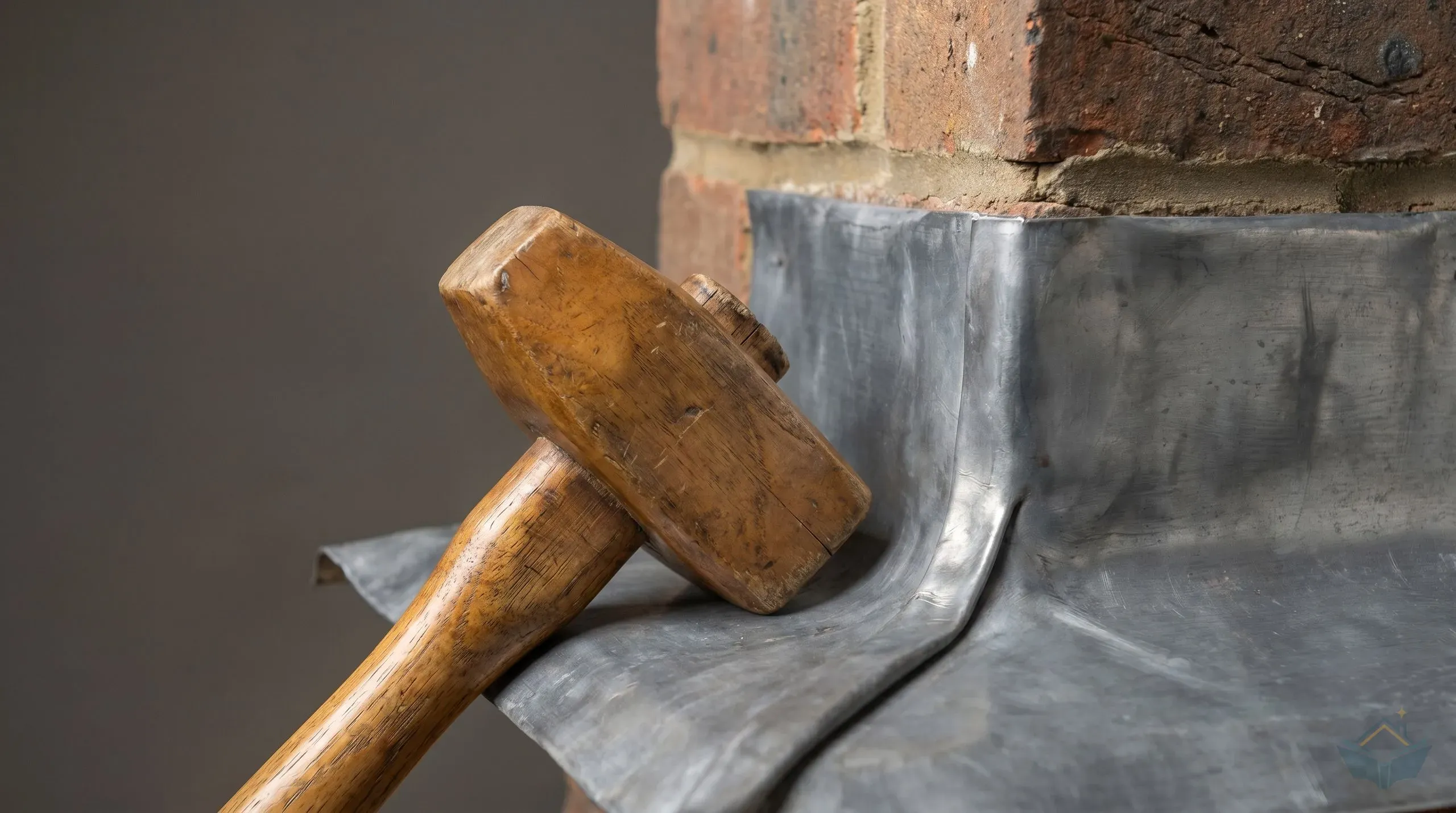
Bossing Mallets: How Lead Gets Shaped Cold Without Splitting
What a bossing mallet is, why boxwood beats hardwood and beats nylon, and how leadworkers stretch and shrink Code 4 lead into chimney junctions. Buy from £45.
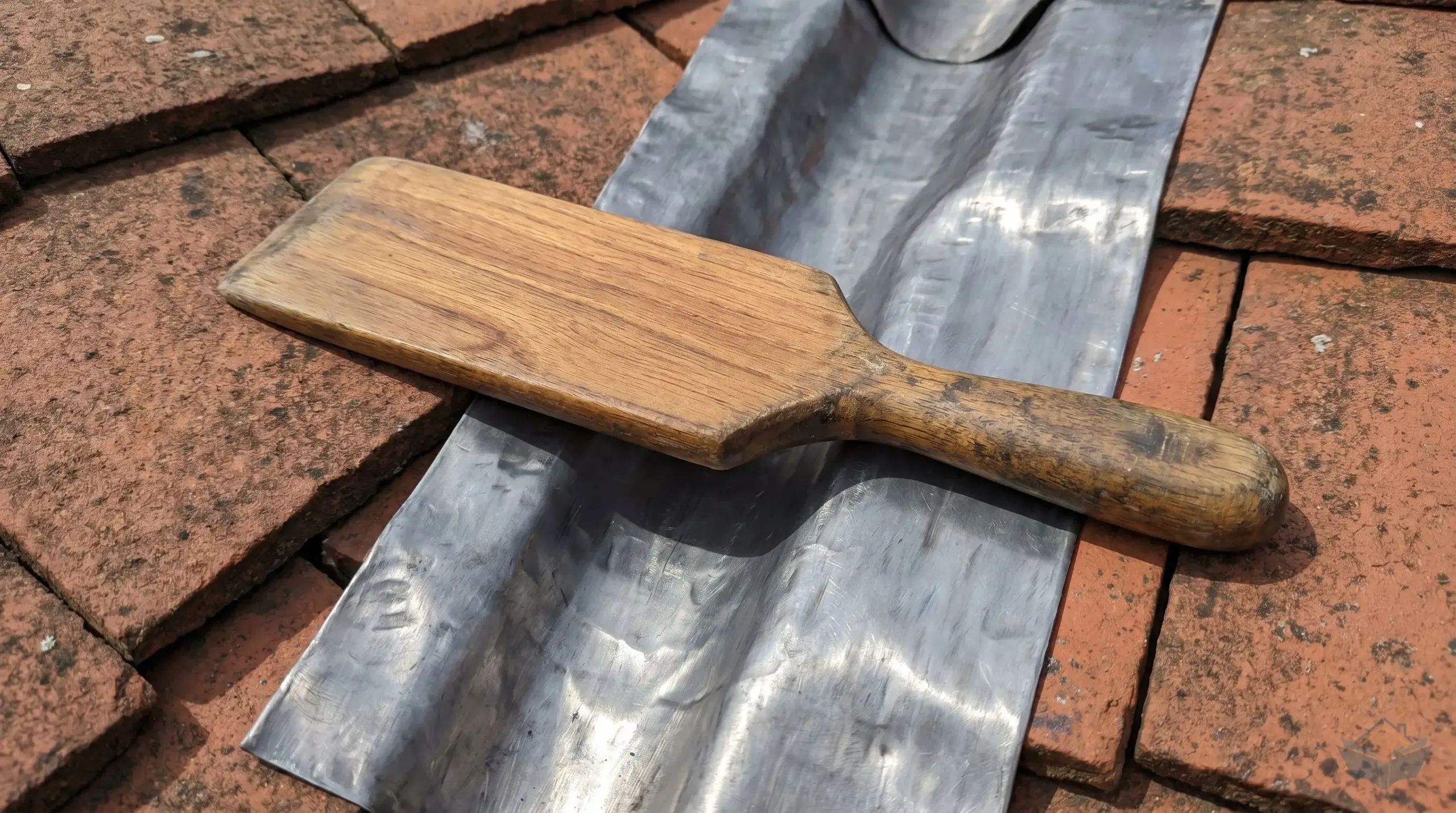
Lead Dressers: The Flat Hardwood Tool That Beds Lead Onto the Roof
What a lead dresser is, why it follows bossing rather than replacing it, and how leadworkers smooth flashing onto tile and slate substrates. Buy from £25.

Plugging Chisels: How a Lead Flashing Anchors Into a Brick Wall
What a plugging chisel is, the chase it cuts that turns into a lead flashing's anchor, and why this detail outlasts silicone or sealant. Buy from £8.